See if AI sends shoppers to your store or to someone else's.
Online shoppers ask ChatGPT and Google's AI for the best product, then click straight through to buy. See whether AI names your brand, links to your own store instead of a marketplace, and what it says about your shipping, returns and reviews.
How buyers choose now
It's Sunday morning and someone in Toronto has just bought an espresso machine. They don't want to drive to a café for beans every week, so they ask ChatGPT for the best coffee subscription for espresso that ships to Canada. The answer names four brands, says what each is known for, and links straight to their stores. Ten minutes later they've signed up for one.
They never searched Google, never scrolled past the ads, and never saw your product page. AI did the comparing for them, and the brands it named got the sale.
For online brands this changes the whole funnel. AI answers often link to Amazon, a reseller or a review roundup instead of your own store, so even when you are named, the click and the margin can go somewhere else.
What we hear from online brandsThe problems that keep coming up, and what your report shows for each one.
Rising ad costs, and now AI sits above the ads
Paid social and search keep getting more expensive. AI answers now sit above both, and you can't buy your way into them.
Your report showsHow often AI recommends you when shoppers ask what to buy, on every AI platform, compared with the brands it picks instead.
AI sends the click to Amazon, not to you
When AI does name you, it often links to a marketplace or reseller, where you pay fees, lose the customer's email and compete on price.
Your report showsHow often AI links to your own store, and which other sites it sends shoppers to for your products.
Old reviews and wrong facts follow you
A shipping problem from two years ago, an old price or a discontinued product can live on in AI answers long after you've fixed it.
Your report showsFacts AI gets wrong about you, like prices, shipping, returns and where you ship, so you know exactly what to correct.
Bigger brands own the “best of” lists
The roundups and Reddit threads AI trusts most tend to mention the same few big names, so newer brands get left out even with better products.
Your report showsYour share of voice against every competing brand, the topics you lose, and the sites AI cites when it picks someone else.
What online shoppers ask AIYour report asks the kinds of questions your buyers really ask, worded for your business, your competitors and the places you serve.
Researching
The shopper is working out what they need.
- “What's the difference between light and dark roast for espresso?”
- “Are coffee subscriptions worth it?”
- “What should I look for in a fragrance-free moisturizer?”
Comparing
The shopper wants a few brands to choose between.
- “What's the best coffee subscription for espresso lovers?”
- “Which online mattress brands have the best trial and free returns?”
- “Is [your brand] or [competitor] better value?”
Buying
The shopper is checking the catch before they pay.
- “Is [your brand] legit, or is it a dropshipper?”
- “Is it cheaper to buy [your product] on Amazon or direct?”
- “Is it hard to cancel a [your brand] subscription?”
Where AI gets its answersThe sources AI leans on most when online shoppers ask about e-commerce. Your report shows which ones it cites for you and for your competitors.
- RedditShoppers trust unfiltered opinions, and so does AI. Reddit threads are among the sources AI cites most for “best” product questions.
- “Best of” roundupsProduct roundups from publishers and review sites are often where AI's shortlist comes from.
- Amazon and marketplacesAI uses marketplace listings and reviews for prices and ratings, and often links there instead of to you.
- Your own storeClear product pages, shipping and returns pages and FAQs are what AI uses to get your facts right.
- YouTube and review sitesVideo reviews and sites like Trustpilot shape what AI says about quality and service.
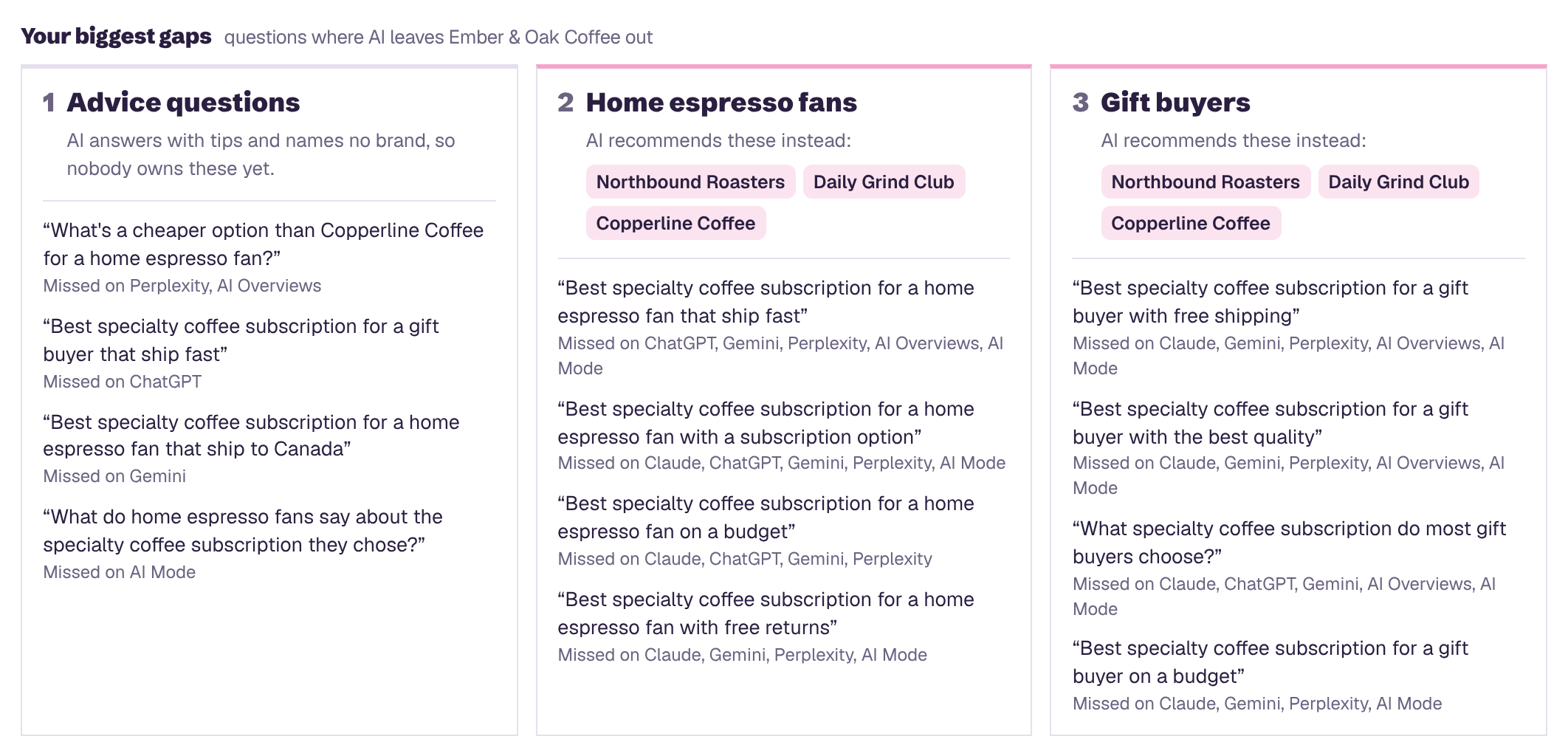
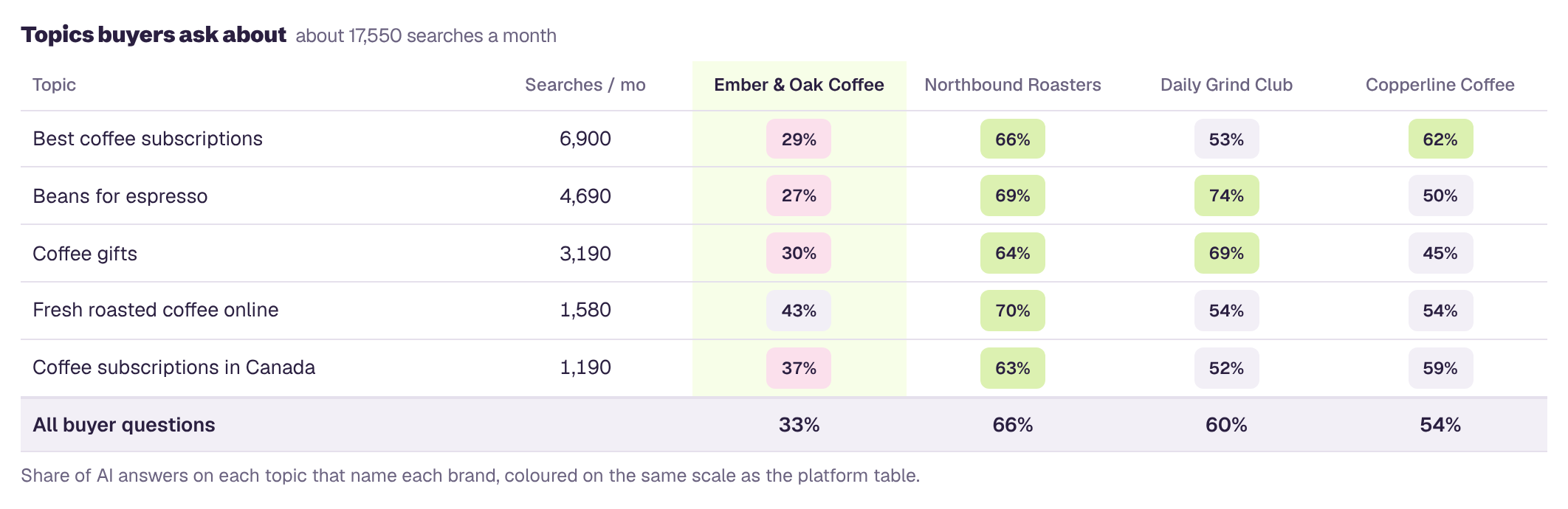
What your report showsScreenshots come from a sample report for a made-up online coffee brand. Your report is built from your own website, buyers and competitors.
Your AI visibility score
One number out of 100 that shows how often AI recommends your brand when shoppers ask what to buy online, with a score for each AI platform.
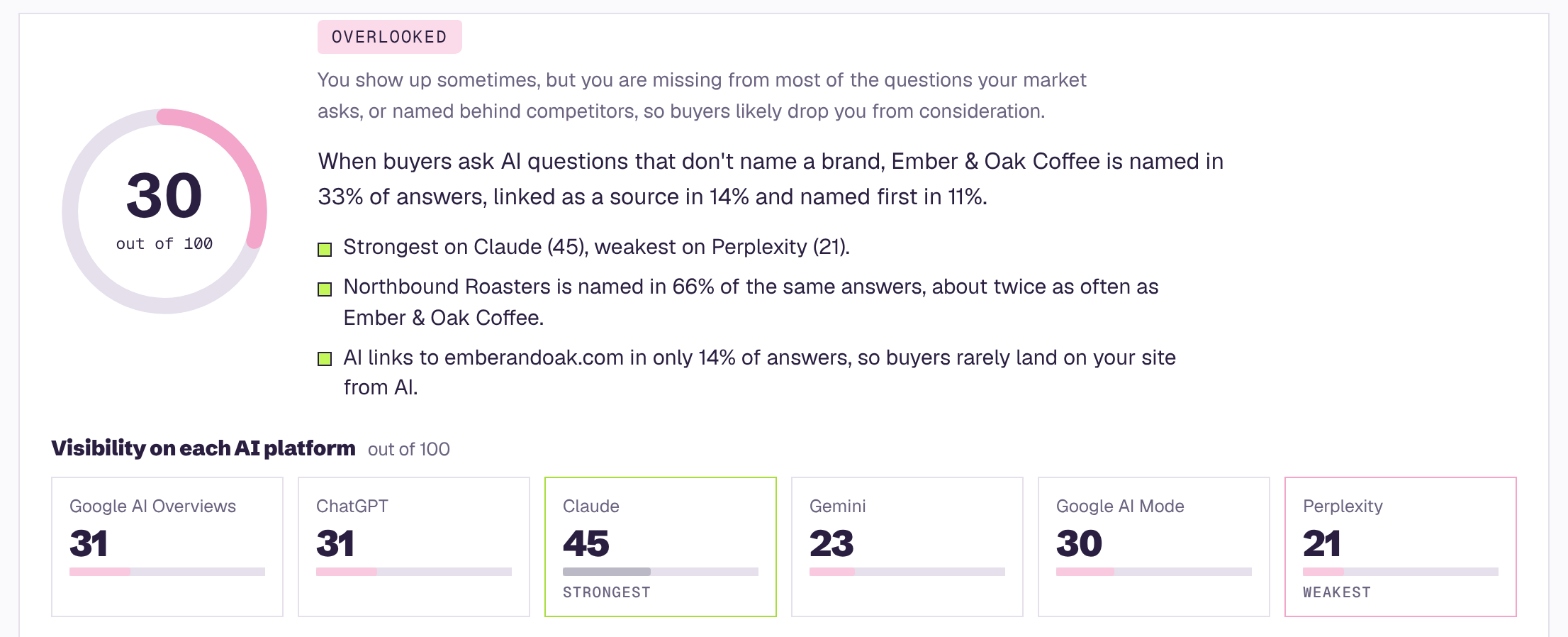
How you show up in answers
How often AI names your brand, links to your own store instead of Amazon or a reseller, names you first, and gets your prices, shipping and returns right.

Which brands win instead
The buyer questions where AI leaves you out, the competing brands it recommends instead, and real example questions.
Topics shoppers ask about
The topics behind questions shoppers ask before they buy online, how often each is searched, and which brands AI names most for each one.
What it's worth
The sales going to competitors in AI answers each year, and what closing the gap is worth.
The bottom line
The few areas to focus on first, in plain language.
Ready to share with your team
A 2-page PDF summary, so everyone sees exactly where you stand against competitors.
Questions
What counts as an e-commerce business?
A brand or store that sells mainly online, through its own website or through marketplaces like Amazon. That includes direct-to-consumer brands, Shopify stores and subscription brands.
Which AI platforms does the report check?
ChatGPT, Claude, Gemini, Perplexity, Google AI Overviews and Google AI Mode, the places shoppers now ask what to buy.
Does the report show if AI links to my store or to Amazon?
Yes. It shows how often AI links to your own site, and which other sites it cites when it talks about you and your competitors.
Do I need to set anything up?
No. Enter your website and the report reads your store, works out your products, shoppers and competitors, and asks the questions your shoppers ask.
See what AI tells online shoppers about you.
Get one free score, side by side with your competitors. Just enter your URL.