What should we do this weekend? How people choose attractions, entertainment and golf through AI
Families and visitors now ask AI what to do on a rainy day, which attractions are worth the money and which golf courses fit their game. Here's what AI tells them, and how attractions, entertainment venues and golf courses get named.
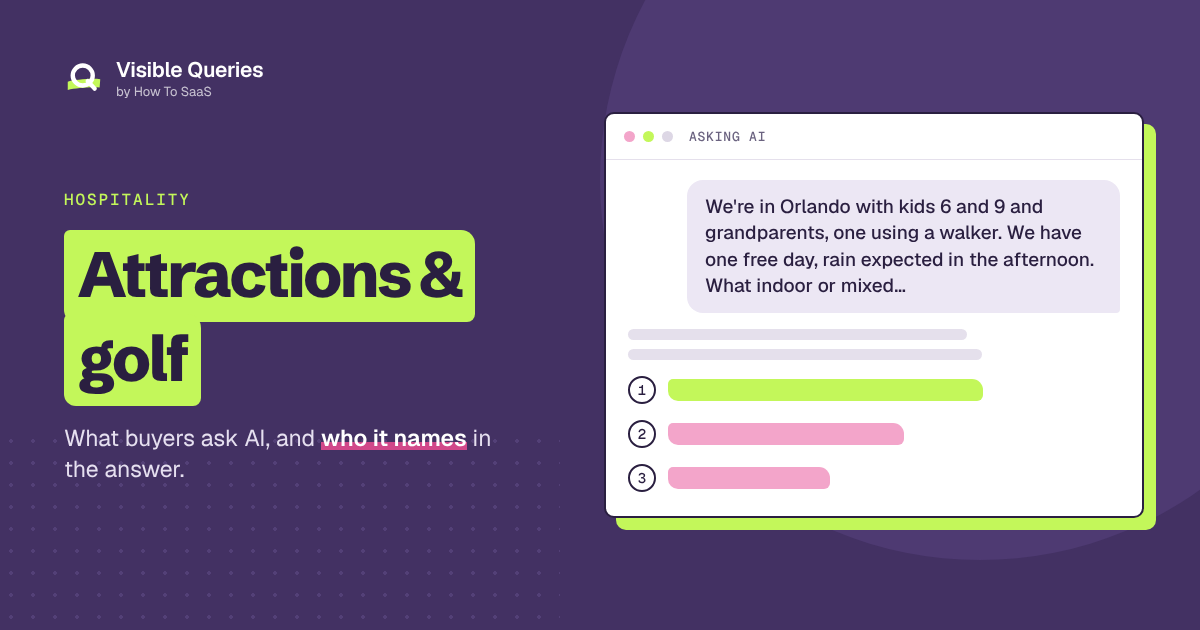
A family visiting Orlando has one day without theme park tickets. It's supposed to rain in the afternoon. The kids are 6 and 9, the grandparents are with them, and one grandparent uses a walker. They ask ChatGPT:
"We're in Orlando with kids 6 and 9 and grandparents, one using a walker. We have one free day, rain expected in the afternoon. What indoor or mixed activities are good for all ages, not too much walking, and not theme parks? What do they cost?"
AI suggests several kinds of activities, like aquariums, science centers, indoor entertainment centers, mini golf with covered areas and dinner shows, with notes on accessibility, ages, time needed and prices. It names specific places. The family buys tickets to one online before leaving the hotel.
Attractions, entertainment venues and golf courses sell experiences. Visitors and locals choose them based on who's going, the weather, the budget, the time available and what's nearby. AI has become one of the main ways people plan a day out.
Our hospitality guide covers how people choose hotels, restaurants and venues in general. This one goes through the questions that decide attraction, entertainment and golf visits, what AI usually says, and what businesses can publish so AI names them.
Here are the questions at a glance:
| The question | What gets you named |
|---|---|
| "What should we do with [group]?" | Who you're great for, by group |
| "Is it worth the price?" | Prices, passes and what's included |
| "When is it least crowded?" | Typical visit length and quiet times |
| "Is it accessible?" | Accessibility details |
| "Which golf courses fit my game?" | Course difficulty, tees and rates |
| "Golf trip to [destination]?" | Packages and nearby stays |
Attractions and entertainment: the questions that decide visits
"What should we do with [group] in [place]?"
This is the defining question for attractions.
What AI usually says: It suggests activities that fit the group: young kids, teens, couples, seniors, mixed ages, accessibility needs, rainy days, hot days, date nights, team outings.
What to publish: Pages for the groups and situations you're great for, with ages, how long a visit takes, accessibility, indoor and outdoor areas, food and nearby things to do.
"Is it worth the price?"
What AI usually says: It weighs ticket prices, time needed, crowds and reviews, and sometimes suggests passes or discounts.
What to publish: Clear prices, what's included, discounts, memberships, combo tickets and the best times to visit. Explain what makes the experience worth it in words.
"How long does it take? When is it least crowded?"
What to publish: Typical visit lengths, the quietest times and days, and tips for planning. These practical details are exactly what AI uses.
"Is it accessible?"
What to publish: Detailed accessibility information: wheelchairs and mobility aids, ramps and elevators, sensory-friendly hours, quiet spaces, service animals and accessible restrooms.
Golf: the questions that decide tee times
"Which golf courses fit my game?"
What AI usually says: It describes courses by difficulty, style, conditions, price and who they suit, from beginners to low handicaps.
What to publish: Your course's character in words: difficulty, yardages by tee, layout, conditions, pace of play and what makes it memorable. Include beginner-friendly and junior options.
"Public courses near me?" "Golf trip to [destination]?"
What to publish: Rates by day and time, how to book tee times, rentals, lessons, practice facilities, stay-and-play packages and nearby lodging. Golf trips are researched carefully, and AI recommends courses that make planning easy.
"Golf simulators," "driving ranges" and "entertainment golf"
Indoor and entertainment golf is a growing search. If you offer simulators, ranges with games or food and drinks, explain it and give it its own page.
What the report's headline shows
For many attractions and courses, the report's headline shows a familiar pattern:
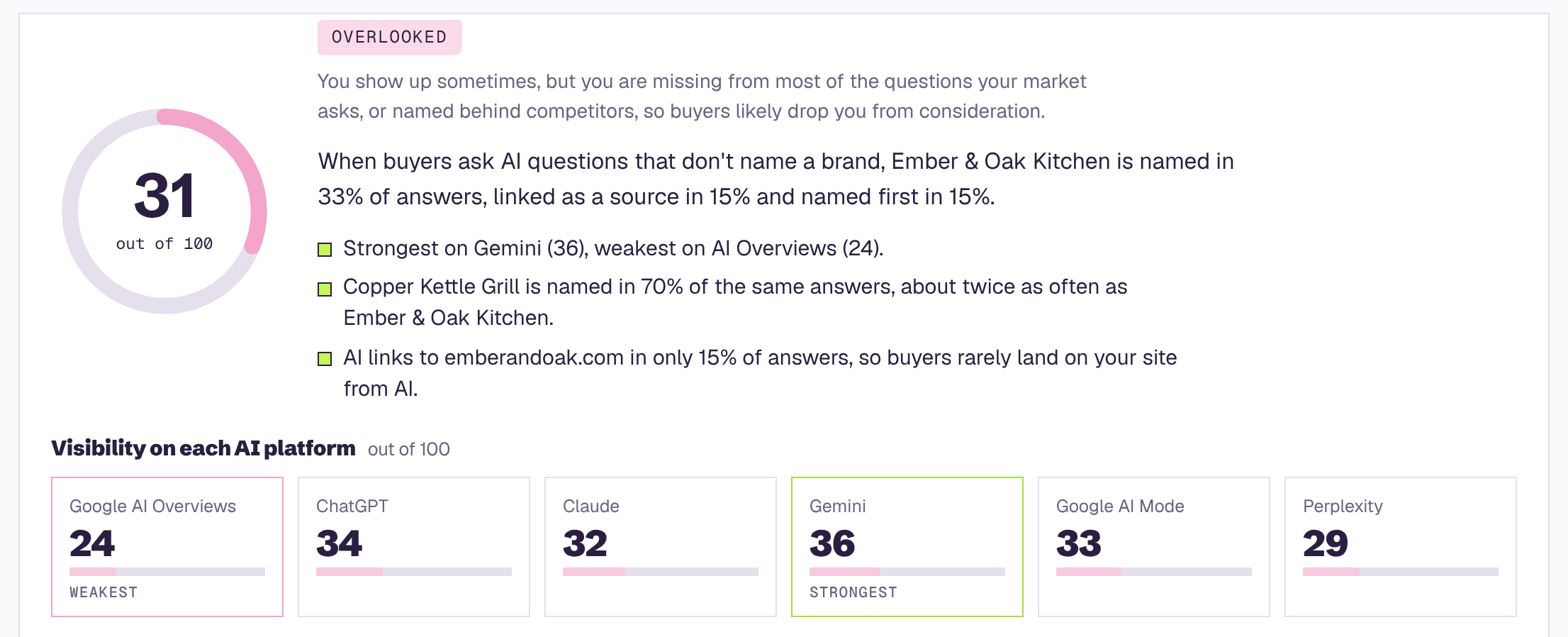
The usual pattern is that AI knows the attraction when asked by name, but rarely recommends it when people ask open questions like "rainy day activities for kids in Orlando" or "best public golf courses near Scottsdale." Pages for those situations close the gap.
Here's more from the same kind of report, for Ember & Oak Kitchen, a fictional restaurant group in the Denver area.
Under the score, the report breaks visibility into the numbers that matter most:

The gap is clearest side by side:
Groups, parties and corporate events
Birthday parties, school trips, team-building outings and corporate events are valuable and heavily researched. Give each its own page with packages, capacity, pricing and how to book.
Seasons and events
Attractions often have seasonal events, like holiday lights, summer nights, Halloween events or special exhibits. People ask AI about them weeks ahead. Publishing event pages early, with dates and prices, helps AI name you while people are still planning.
If you only fix three things
- Give each kind of group and situation its own page. Families, seniors, rainy days, dates and teams.
- Publish prices, visit lengths, best times and accessibility.
- Describe the experience in words. Especially for golf courses and unique attractions.
People are asking AI what to do this weekend. The attraction AI names will be the one that fits their plans most clearly.
Part of our guide: Why AI visibility matters for hospitality businesses
See what AI tells visitors about your attraction or course
Enter your website and get a free AI visibility report. It takes a few minutes, and you'll see:
- Your AI visibility score, overall and for ChatGPT, Gemini, Claude, Perplexity and Google's AI Overviews and AI Mode
- Which attractions AI recommends instead of you, and how often
- Your visibility in every city you serve, and the competitor AI names most in each one
- What AI gets wrong about you, and what to fix first
- Your biggest gaps: the buyer questions where AI leaves you out, and who it recommends instead
- A downloadable PDF you can share with your team