Where should we stay? How travelers choose a hotel or resort through AI
Travelers now ask AI which hotel fits their trip, which neighborhood to stay in and whether a resort is worth the price. Here's what AI tells them, and how hotels and resorts get named.
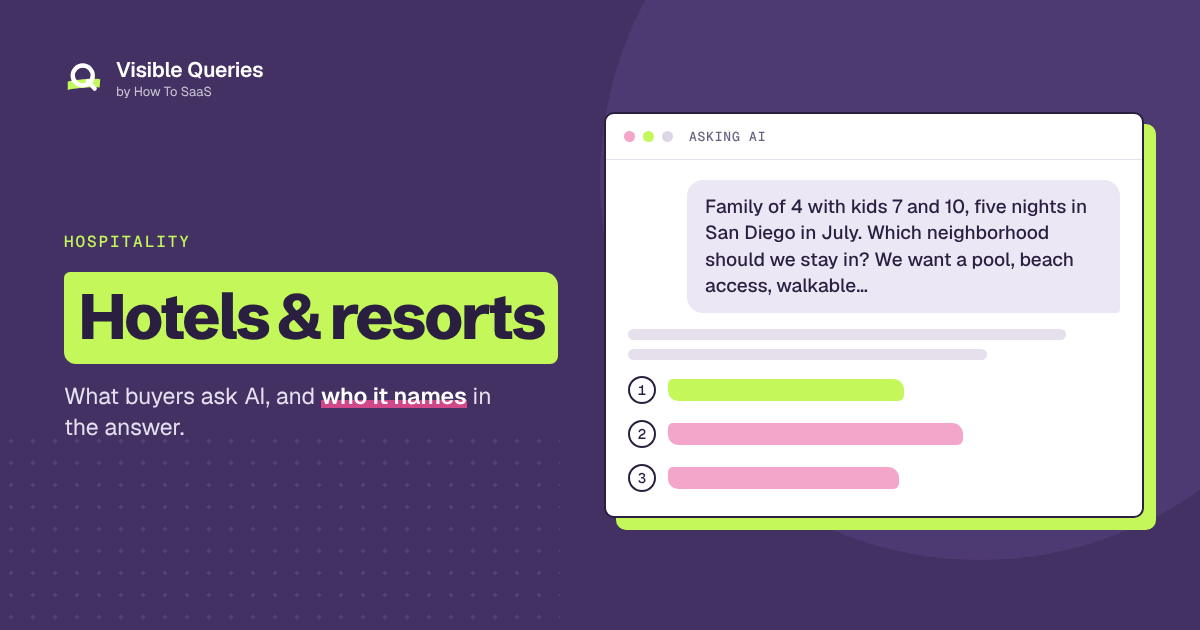
A family of four from Dallas is planning a five-night trip to San Diego in July. The kids are 7 and 10. They want a pool, walkable restaurants, easy beach access, and a room where everyone can actually sleep. They've looked at a booking site and seen 400 options. They ask ChatGPT:
"Family of 4 with kids 7 and 10, five nights in San Diego in July. Which neighborhood should we stay in? We want a pool, beach access, walkable restaurants and a suite or room with space. Budget about $400 a night. Which hotels or resorts are best for families?"
AI explains the main neighborhoods and who each suits, the trade-offs between beachfront resorts and city hotels, what to look for in a family room, which amenities matter for kids, parking and resort fees to watch for, and how July demand affects prices. Then it names four hotels with a line on each. The family books one of them directly that night.
Travel planning has always involved a lot of research. What's changed is that AI now does much of the shortlisting. Instead of scrolling through hundreds of listings, travelers describe their trip and get a handful of names. The hotels on that list get the bookings.
Our hospitality guide covers how people choose hotels, restaurants and venues in general. This one goes through the questions that decide hotel bookings, what AI usually says, and what hotels and resorts can publish so AI names them.
Here are the questions at a glance:
| The question | What gets you named |
|---|---|
| "Which neighborhood should I stay in?" | Your location, and what's nearby, in plain words |
| "Best hotels for [kind of trip]?" | Pages for families, couples, business and events |
| "Are there resort fees?" | Everything that's included and every fee |
| "Is it worth the price?" | Rooms, amenities and what makes a stay special |
| "Pet-friendly? Accessible?" | Clear policies and accessibility details |
"Which neighborhood should I stay in?"
What AI usually says: It describes neighborhoods by vibe, convenience, safety, price and who they suit, then names hotels in the ones that fit.
Why it matters: AI often chooses the neighborhood before it chooses the hotel. If your hotel isn't clearly tied to what makes your area appealing, you can be left out.
What to publish: A guide to your location: what's walkable, how far the beach, convention center, stadium or downtown is, transit and parking, and who your location suits best.
"Which hotels are best for [kind of trip]?"
This is the defining question for hotels.
What AI usually says: It names hotels that clearly match the trip: families, couples, business travelers, conferences, wedding guests, people with dogs, accessibility needs or long stays.
What to publish: Pages for each kind of guest you serve well, with the rooms, amenities, policies and nearby things that matter to them. "Family suites with bunk beds and a kids' pool" or "quiet rooms on high floors for business travelers" are specific enough for AI to match.
"What's included? Are there resort fees?"
What AI usually says: It warns about resort fees, parking fees, deposits and extra charges, and suggests checking the total price.
What to publish: Clear details on fees, parking, breakfast, Wi-Fi, amenities and what's included. Surprise fees are a common complaint, and AI repeats complaints.
"Is it worth the price?"
What AI usually says: It weighs location, rooms, amenities, service and reviews against price, and sometimes suggests alternatives.
What to publish: What makes your hotel worth it, specifically: views, room sizes, service, amenities and experiences. Describe them in words, not only photos.
"Pet-friendly?" "Accessible?" "Good for remote work?"
These narrow questions are high-intent. Publish your pet policy and fees, accessible room features in detail, and remote-work amenities like desks, Wi-Fi speeds and coworking spaces.
Visibility by city and region
Hotels in a destination region compete across nearby towns, and AI's answers change by place:
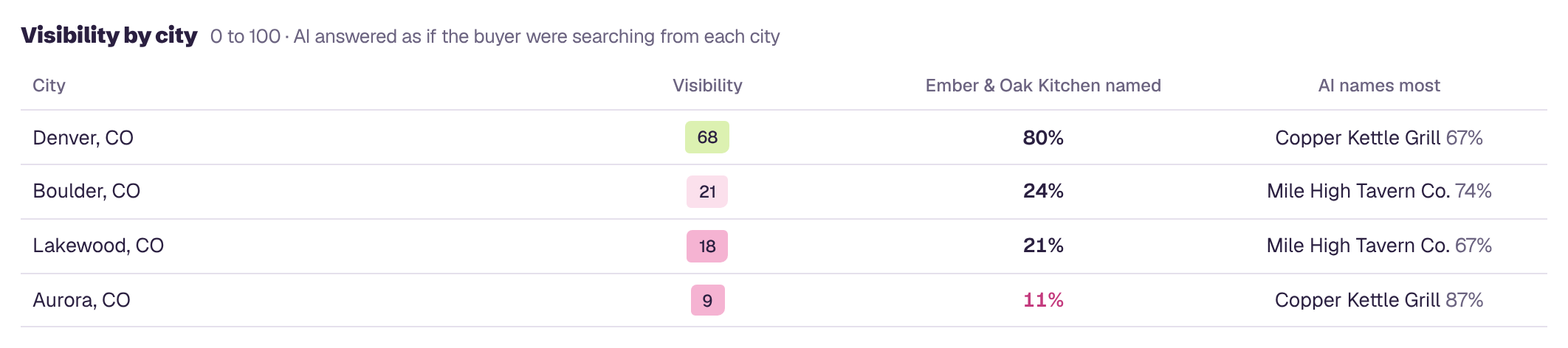
Resorts and hotels in smaller towns near big destinations often find that AI doesn't connect them to the main destination. Explain how close you are and why staying with you works for visitors to the bigger city or attraction.
Booking direct
Travelers often ask AI whether it's better to book direct or through a booking site. If you offer benefits for booking direct, like better rates, upgrades, flexible cancellation or loyalty points, explain them clearly on your site. AI repeats that kind of advice.
Groups, meetings and weddings
Event planners and wedding couples ask AI about room blocks, meeting space and group rates. If you host groups, give meetings, weddings and room blocks their own pages, with capacity, pricing approach and how to request a proposal. See our event venues guide for more.
What the sample report shows
Here's what a Visible Queries report looks like for Ember & Oak Kitchen, the sample restaurant group in the Denver area from our guide. The questions are different for hotels and resorts, but the patterns are the same.
And it shows the actual questions, platform by platform, with who was named:
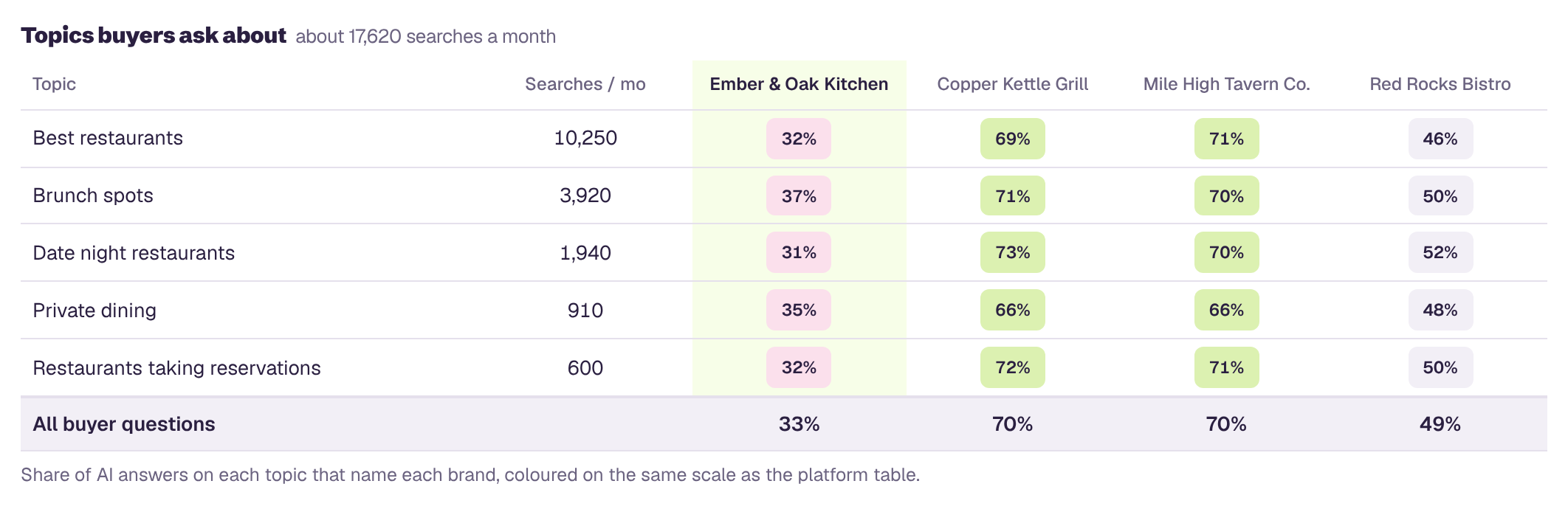
The gap is clearest side by side:
If you only fix three things
- Explain your location and who it suits. Neighborhood, distances and transport.
- Give each kind of guest its own page. Families, business, pets, accessibility and long stays.
- Be clear about fees and what's included. Parking, resort fees and amenities.
Travelers are asking AI where they should stay. The hotel AI names will be the one that matches their trip most clearly.
Part of our guide: Why AI visibility matters for hospitality businesses
See what AI tells travelers about your hotel
Enter your website and get a free AI visibility report. It takes a few minutes, and you'll see:
- Your AI visibility score, overall and for ChatGPT, Gemini, Claude, Perplexity and Google's AI Overviews and AI Mode
- Which hotels AI recommends instead of you, and how often
- Your visibility in every city you serve, and the competitor AI names most in each one
- What AI gets wrong about you, and what to fix first
- Your biggest gaps: the buyer questions where AI leaves you out, and who it recommends instead
- A downloadable PDF you can share with your team