Where should we eat tonight? How diners choose a restaurant through AI
Diners now ask AI where to eat for a birthday, which places handle allergies and who takes reservations. Here's what AI tells them, and how restaurants and restaurant franchises get named.
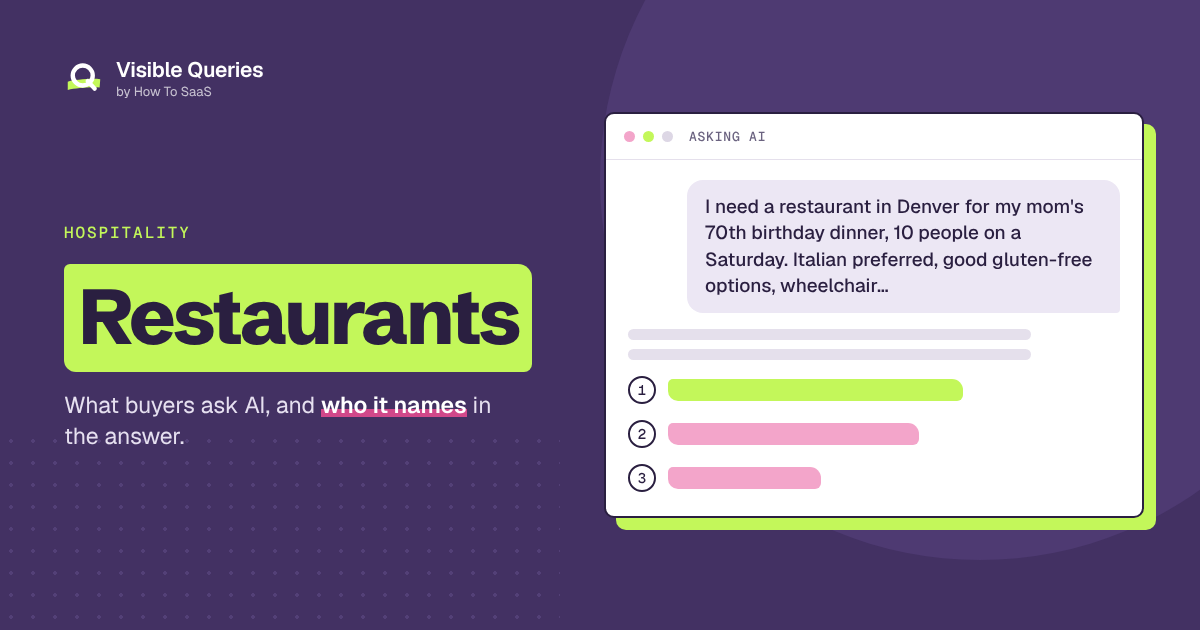
Someone in Denver is planning their mother's 70th birthday dinner for ten people on a Saturday in three weeks. Mom loves Italian food, two guests are gluten-free, one uses a wheelchair, and they want a private or semi-private space where people can hear each other. They ask ChatGPT:
"I need a restaurant in Denver for my mom's 70th birthday dinner, 10 people on a Saturday. Italian preferred, good gluten-free options, wheelchair accessible, and a private or quiet space. Around $75 a person. Which restaurants take reservations for groups like this?"
AI suggests what to look for, mentions booking early for Saturday groups, explains private dining minimums, and names four restaurants with notes on each. The person calls the first one the next morning.
Restaurants have always lived on word of mouth, maps and review sites. AI is now part of that word of mouth. When diners describe what they want, AI gives them a short list, and it relies on what it knows about menus, hours, reservations, atmosphere and reviews.
Our hospitality guide covers how people choose hotels, restaurants and venues in general. This one goes through the questions that decide restaurant visits, what AI usually says, and what restaurants can publish so AI names them.
Here are the questions at a glance:
| The question | What gets you named |
|---|---|
| "Where should we go for [occasion]?" | The occasions you're great for, in words |
| "Do they take reservations?" | Your reservation and walk-in policy |
| "Gluten-free, vegan or allergy-friendly?" | A text menu with dietary notes |
| "Is it worth it? What should I order?" | Signature dishes, described |
| "Open late? Kid-friendly? Patio?" | Hours and practical details, kept current |
"Where should we go for [occasion]?"
This is the defining question for restaurants.
What AI usually says: It names restaurants that fit the occasion: birthdays, date nights, business dinners, family meals, brunch with friends, celebrations, groups.
What to publish: Pages or sections for the occasions you're great for, with private dining, group menus, celebration touches and what the atmosphere is like. "Great for a quiet date night" or "lively and loud, perfect for groups" are useful details.
"Do they take reservations?"
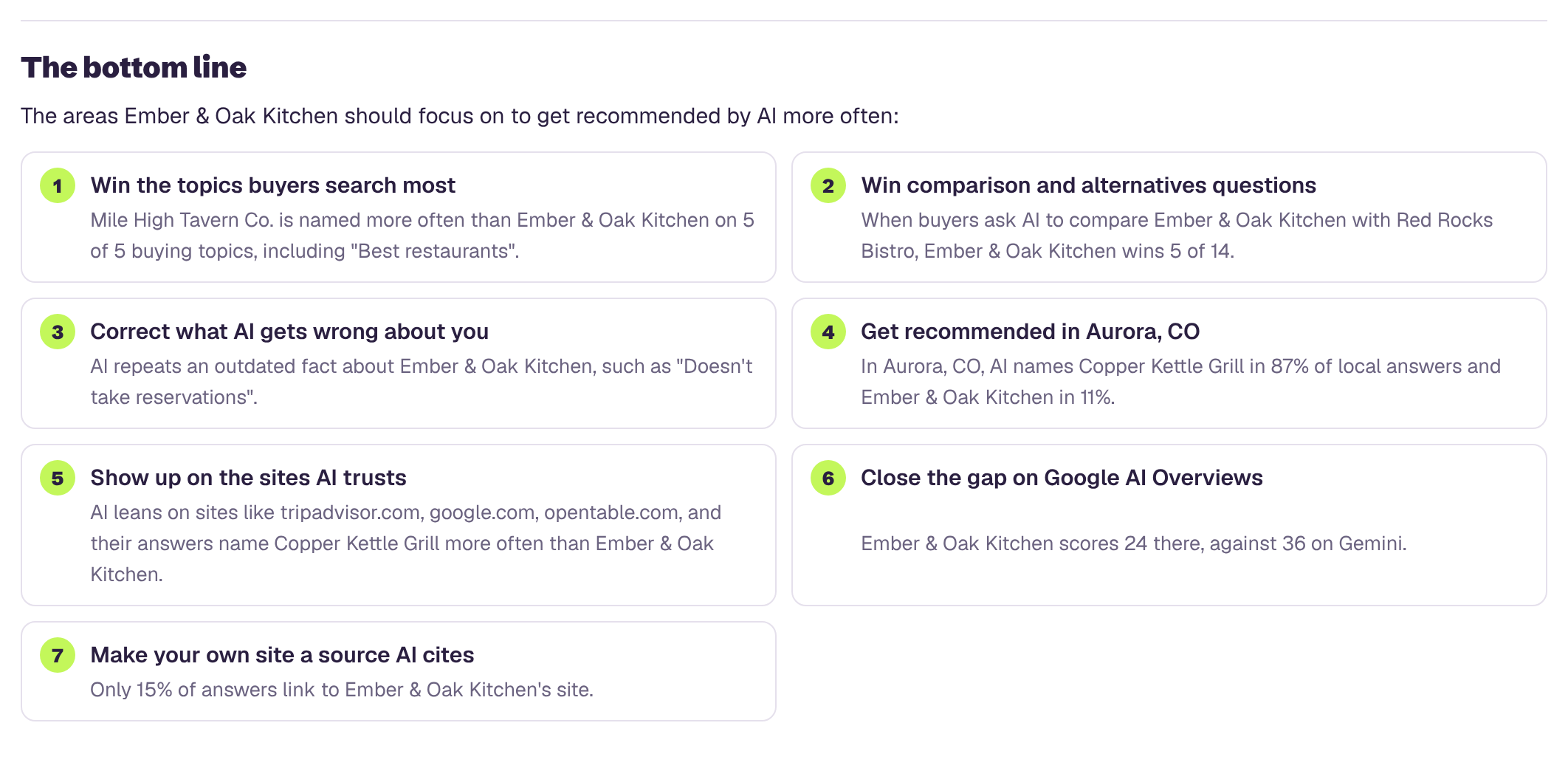
What AI usually says: It states whether a restaurant takes reservations, often from listings that may be out of date.
Why it matters: Wrong facts like this send diners elsewhere. Here's how the report shows one:
What to publish: Your reservation policy, how to book, group sizes, walk-in policy, and private dining details. Keep them consistent across your site and listings.
"Restaurants with gluten-free, vegan or allergy-friendly options?"
What AI usually says: It names restaurants it believes handle dietary needs well, often from menus and reviews.
What to publish: Your menu in text, not just a PDF or an image, with dietary labels and how you handle allergies and cross-contamination. AI can't recommend dishes it can't read.
"Is it worth it?" "What should I order?"
What AI usually says: It summarizes reviews and often names signature dishes.
What to publish: Descriptions of signature dishes, the story behind your food, and what regulars love. Encourage guests to mention dishes in reviews.
"Open late?" "Kid-friendly?" "Patio?" "Parking?"
These practical questions decide many visits. Publish hours, happy hours, kids' menus, high chairs, patio seating, dog-friendly patios, parking and accessibility clearly.
Franchises and multi-location groups
Franchise and multi-location restaurants face a specific problem: AI often knows the brand but mixes up locations, hours and menus. Every location needs its own page with its address, hours, menu differences, reservation options and local reviews. Franchise owners also benefit from local content about their community and events.
Delivery, takeout and catering
Diners ask AI about takeout, delivery and catering: "who delivers good Thai food in Capitol Hill?" or "catering for a 40-person office lunch." If you offer them, give them their own pages, with ordering options, minimums and lead times. Catering, in particular, is high value and often overlooked.
What the sample report shows
Here's what a Visible Queries report looks like for Ember & Oak Kitchen, the sample restaurant group in the Denver area from our guide. The questions are different for restaurants, but the patterns are the same.
For a business that serves more than one city, the report checks each one separately:
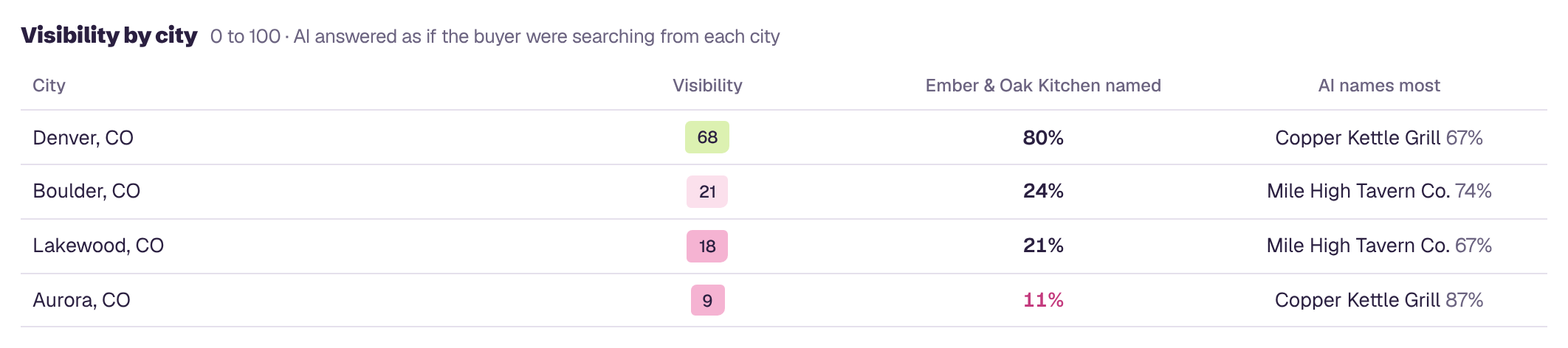
The gap is clearest side by side:
If you only fix three things
- Put your menu, hours and reservation policy on your site in text.
- Describe the occasions and atmosphere you're best for. With private dining and groups.
- Label dietary options and explain how you handle allergies.
Diners are asking AI where to eat tonight. The restaurant AI names will be the one it understands best.
Part of our guide: Why AI visibility matters for hospitality businesses
See what AI tells diners about your restaurant
Enter your website and get a free AI visibility report. It takes a few minutes, and you'll see:
- Your AI visibility score, overall and for ChatGPT, Gemini, Claude, Perplexity and Google's AI Overviews and AI Mode
- Which restaurants AI recommends instead of you, and how often
- Your visibility in every city you serve, and the competitor AI names most in each one
- What AI gets wrong about you, and what to fix first
- Your biggest gaps: the buyer questions where AI leaves you out, and who it recommends instead
- A downloadable PDF you can share with your team