Software, a storefront preparer or a CPA: how people choose tax preparation help through AI
People now ask AI whether they need a professional to file, what tax preparation should cost and who can handle their situation. Here's what AI tells them, and how tax preparation services get named.
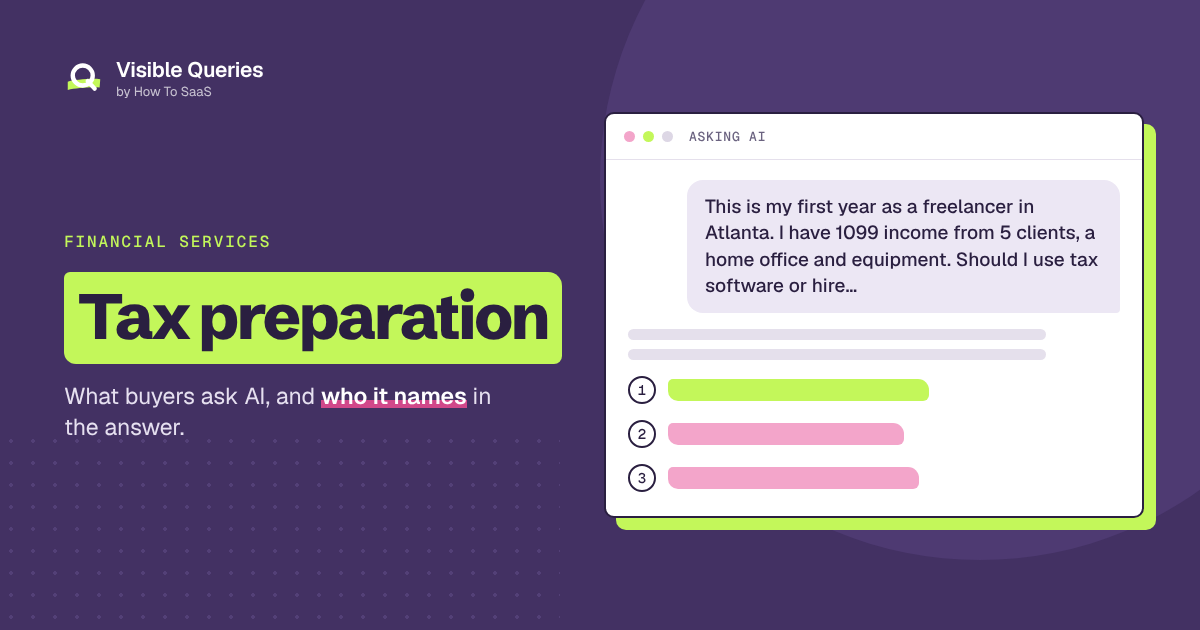
A freelance graphic designer in Atlanta just finished their first full year self-employed. They have income from five clients, a home office, a new laptop and no idea whether they paid enough estimated taxes. Last year a simple software program was fine. This year it feels risky. In February they ask ChatGPT:
"This is my first year as a freelancer in Atlanta. I have 1099 income from 5 clients, a home office and equipment. Should I use tax software or hire someone? What's the difference between a tax preparer, an enrolled agent and a CPA? What should it cost, and who's good with freelancers near me?"
AI explains when software is usually enough and when a professional helps, the differences between preparers, enrolled agents and CPAs, typical fees for self-employed returns, common deductions and mistakes, and what documents to gather. Then it names three local options. One books a consultation for the following week.
Tax preparation is seasonal, deadline-driven and personal. Most people only think about it from January to April, and when they need help, they need it now. AI is increasingly where they decide whether they need help and who to hire.
Our financial services guide covers how people choose financial firms in general. This one goes through the questions that decide tax clients, what AI usually says, and what tax practices can publish so AI names them.
Here are the questions at a glance:
| The question | What gets you named |
|---|---|
| "Professional or software?" | Honest guidance on when a pro is worth it |
| "Preparer, enrolled agent or CPA?" | Your credentials and what they mean |
| "How much does tax prep cost?" | Prices by return type |
| "Tax help for [situation]" | Pages for the situations you handle most |
| "I got a letter from the IRS (or CRA)." | A calm guide to notices, and how you help |
"Do I need a professional, or can I use software?"
This is the defining question for the category.
What AI usually says: It says simple returns can often be done with software, while self-employment, rental properties, investments, business ownership, moves between states or countries, and life changes often benefit from a professional.
What to publish: An honest guide to when you need help, and who you're best for. Practices that admit some people don't need them earn trust from those who do.
"Preparer, enrolled agent or CPA?"
What AI usually says: It explains the credentials and what each can do, including representation if there's an audit or notice.
What to publish: Your team's credentials, what they can do, and when each matters. Many people don't know the difference and appreciate a clear explanation.
"How much does tax preparation cost?"
What AI usually says: Ranges by complexity, with notes about flat fees, per-form pricing and hourly rates.
What to publish: Your pricing, or at least starting prices by return type, and what drives cost. Cost uncertainty is a big reason people delay hiring help.
"Tax help for [specific situation]"
Specific searches are where tax practices win:
- "Tax preparer for freelancers and 1099 workers."
- "Accountant for rental property owners."
- "Tax help for US citizens living in Canada."
- "Tax preparer for rideshare drivers."
- "Crypto tax accountant near me."
- "Tax help for new immigrants."
Each one you serve deserves its own page, with the issues those clients face and how you help.
"I got a letter from the IRS (or CRA). What do I do?"
What AI usually says: It suggests reading the notice carefully, not ignoring deadlines, and getting professional help for audits or large balances.
What to publish: Pages about notices, audits, back taxes and payment plans, if you handle them. These clients are anxious and ready to hire.
Where you're named, city by city
Many people still want a local preparer they can meet. AI's answers change by city:
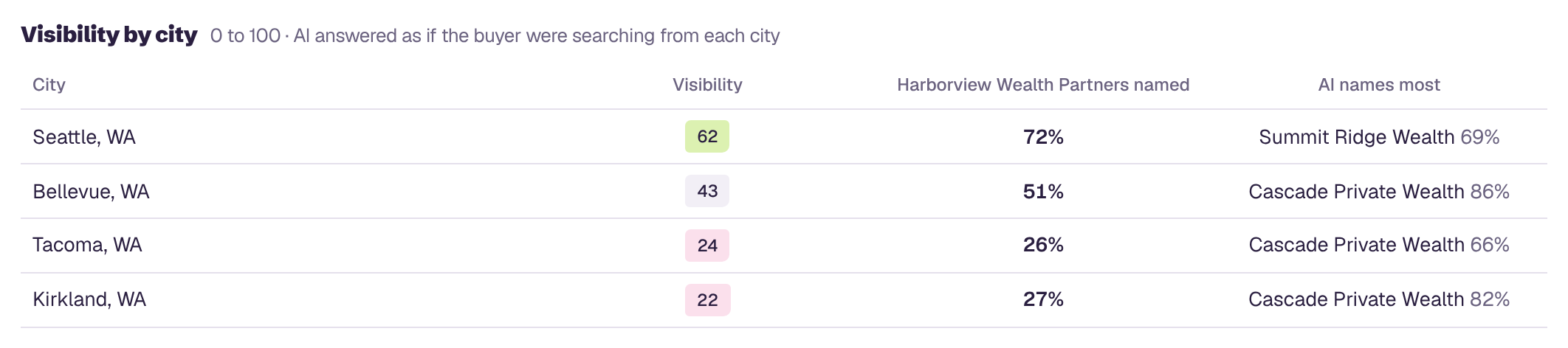
If you have several offices, give each one its own page, with hours, services and seasonal availability.
Tax season starts earlier than you think
People start asking tax questions in January, and some in December: "what should I do before year end to lower my taxes?" Publishing timely content, like year-end planning, document checklists, deadline reminders and changes for the new tax year, helps AI name you at the start of the season, not after people have already chosen.
Beyond tax season
Year-round services like bookkeeping, payroll, tax planning for business owners and estate and trust returns keep clients engaged. Describe them clearly. AI recommends practices that look like they can help all year, not only in April.
What the sample report shows
Here's what a Visible Queries report looks like for Harborview Wealth Partners, the sample independent wealth management firm in the Seattle area from our guide. The questions are different for tax preparers, but the patterns are the same.
Under the score, the report breaks visibility into the numbers that matter most:

The gap is clearest side by side:
If you only fix three things
- Explain who needs professional help and who you serve best.
- Publish credentials and pricing.
- Give each situation its own page. Freelancers, landlords, cross-border, notices and more.
People are asking AI whether they need help with their taxes. The practice AI names will be the one that answers that question most honestly.
Part of our guide: Why AI visibility matters for financial services
See what AI tells people about your tax practice
Enter your website and get a free AI visibility report. It takes a few minutes, and you'll see:
- Your AI visibility score, overall and for ChatGPT, Gemini, Claude, Perplexity and Google's AI Overviews and AI Mode
- Which tax preparers AI recommends instead of you, and how often
- Your visibility in every city you serve, and the competitor AI names most in each one
- What AI gets wrong about you, and what to fix first
- Your biggest gaps: the buyer questions where AI leaves you out, and who it recommends instead
- A downloadable PDF you can share with your team