Falling behind in math: how parents choose a tutor or learning centre through AI
Parents now ask AI whether their child needs a tutor, whether a learning centre or private tutor is better and what it should cost. Here's what AI tells them, and how tutoring companies and learning centres get named.
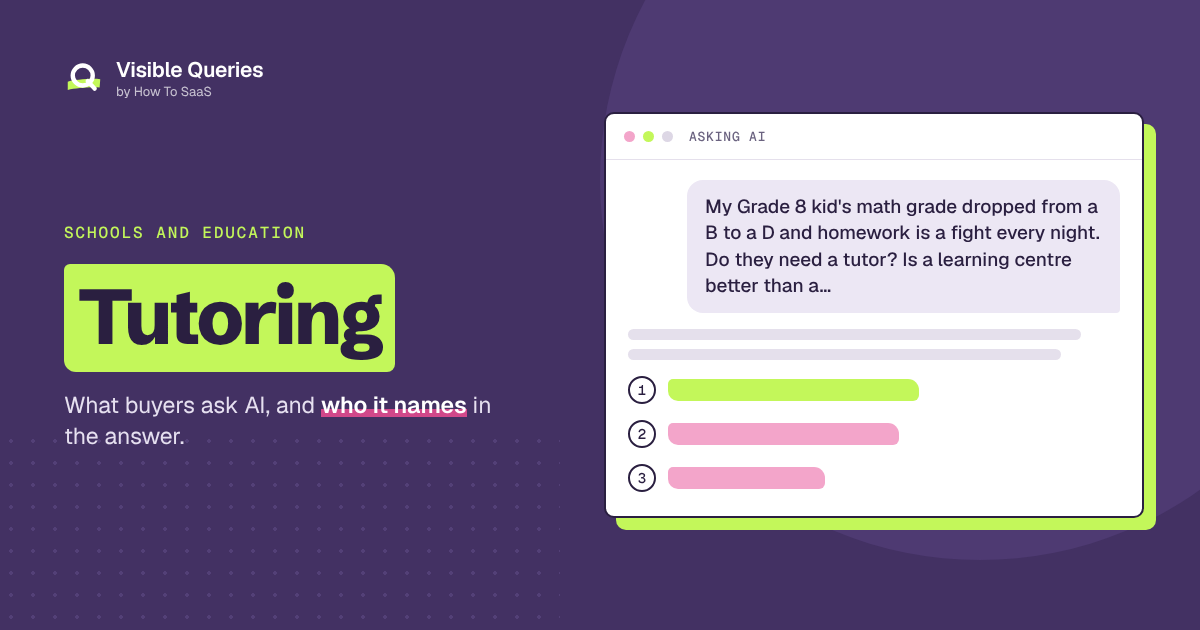
A parent in Markham just saw their Grade 8 child's report card. Math dropped from a B to a D. The child says they "just don't get" fractions and algebra, and homework has become a nightly fight. High school is a year away. The parent asks ChatGPT:
"My Grade 8 kid's math grade dropped from a B to a D and homework is a fight every night. Do they need a tutor? Is a learning centre better than a private tutor or online tutoring? What does it cost in Markham, and which tutoring options are good for building confidence, not just homework help?"
AI explains signs a child needs extra help, the differences between private tutors, learning centres and online tutoring, why diagnosing gaps matters (algebra struggles often go back to fractions), typical costs, and what to look for, including assessments, progress tracking and tutors who build confidence. Then it names three options. The parent books a free assessment at one of them.
Tutoring is bought by worried parents. Something has gone wrong, a grade, a test, a teacher's comment, and they want help quickly. They choose by subject, approach, schedule, cost and whether their child will actually like going. AI is now often the first place they ask.
Our education guide covers how families choose schools and programs in general. This one goes through the questions that decide tutoring clients, what AI usually says, and what tutoring businesses can publish so AI names them.
Here are the questions at a glance:
| The question | What gets you named |
|---|---|
| "Does my child need a tutor?" | Honest signs that tutoring will help |
| "Learning centre, private tutor or online?" | A fair comparison, and where you fit |
| "How much does tutoring cost?" | Hourly rates and packages |
| "Will it actually help?" | How you assess and report progress |
| "Tutor for [subject or need]" | A page for each subject and need |
"Does my child need a tutor?"
What AI usually says: It lists signs like falling grades, homework avoidance, anxiety about a subject, or a teacher's concern, and suggests talking to the teacher and considering an assessment.
What to publish: A plain guide to signs a child might need help, by age and subject, and how you figure out what's actually going on. Parents who find your explanation helpful remember you.
"Learning centre, private tutor or online?"
This is the defining question for the category.
What AI usually says: It compares structure, personalization, cost, scheduling, the consistency of the tutor, and whether the child needs accountability or a specific approach.
What to publish: Make the case for how you work, honestly. Who are your tutors? Is it one-on-one or small group? In person, online or both? How do you match tutors to students? What curriculum or method do you use?
"How much does tutoring cost?"
What AI usually says: Hourly ranges for private tutors and monthly ranges for learning centres, with notes on packages, contracts and assessment fees.
What to publish: Your prices, packages, contract terms, and whether the first assessment or session is free. Cost questions are common, and businesses that hide pricing often lose to those that don't.
"Will it actually help? How do you measure progress?"
What AI usually says: It suggests looking for an initial assessment, clear goals, regular progress reports and communication with parents and teachers.
What to publish: How you assess, set goals, track progress and report to parents. Real examples, like "a Grade 8 student who moved from a D to a B over a term," are persuasive when they're honest and specific.
"Tutor for [subject or need]"
Many searches are specific: "Grade 11 chemistry tutor," "reading tutor for a child with dyslexia," "French immersion tutor," "IB math tutor," "executive function coaching for ADHD." Each one you truly support deserves a page, with tutors' qualifications and how you approach it.
When AI gets your facts wrong
Tutoring businesses are often described inaccurately: "online only" when they have a centre, "elementary only" when they teach high school, or a location that closed years ago. Here's how the report shows a wrong fact:
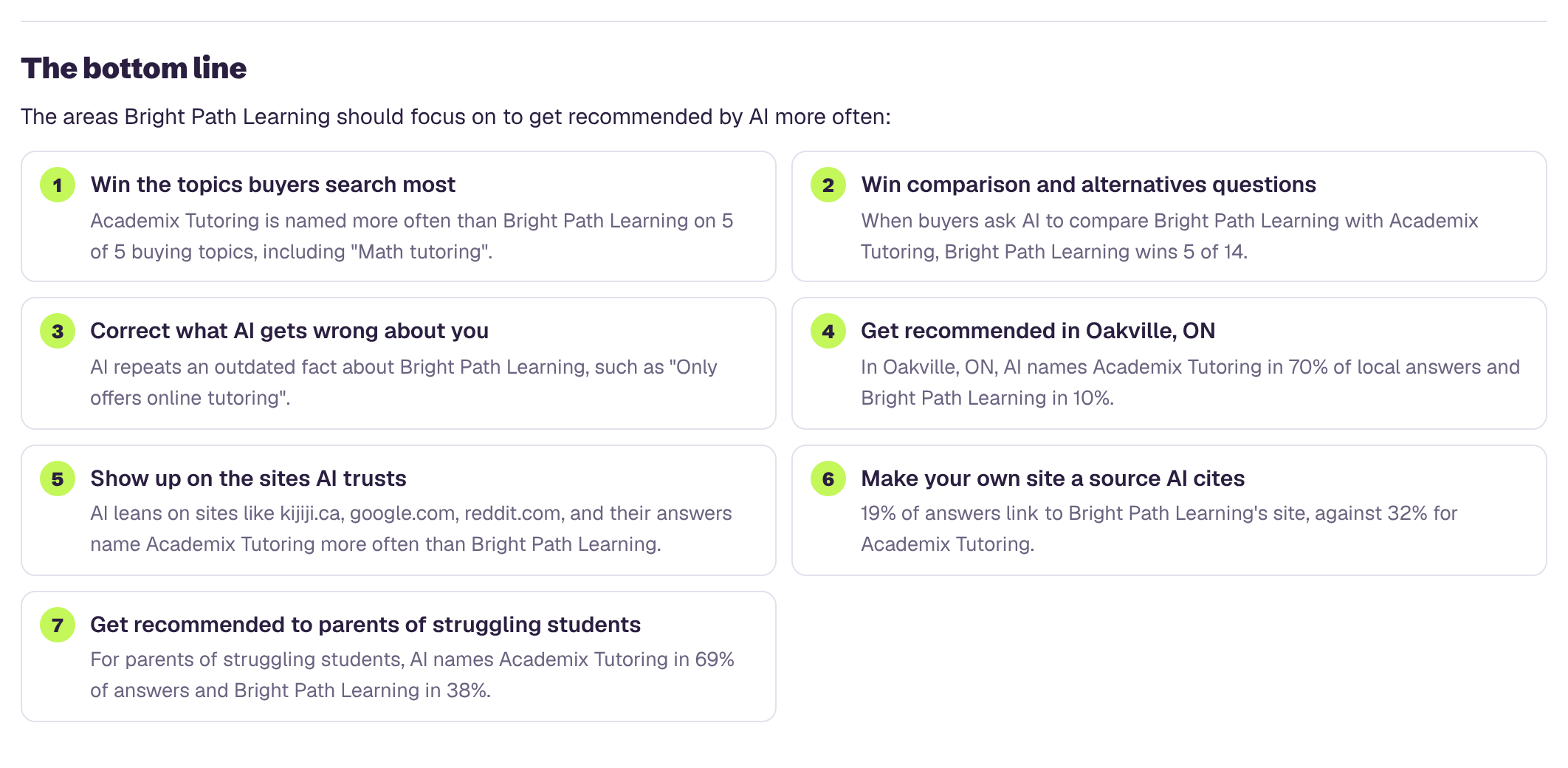
What to fix: Make your formats, grades, subjects and locations clear on your site and listings, and correct anything outdated.
Franchises and independents
Tutoring has big franchise brands that AI knows well. Franchise locations need strong local pages so AI can tell them apart. Independent tutors and small centres compete by being specific about subjects, methods, tutors and results.
Timing matters
Tutoring demand rises after report cards, before exams, in late summer before school starts and before high school or university applications. Publishing timely content, like "how to help your child after a disappointing report card" or "getting ready for Grade 9 math," helps AI name you when parents ask.
What the sample report shows
Here's what a Visible Queries report looks like for Bright Path, the sample tutoring and learning centre in the Greater Toronto Area from our guide. The questions are different for tutoring providers, but the patterns are the same.
For a business that serves more than one city, the report checks each one separately:
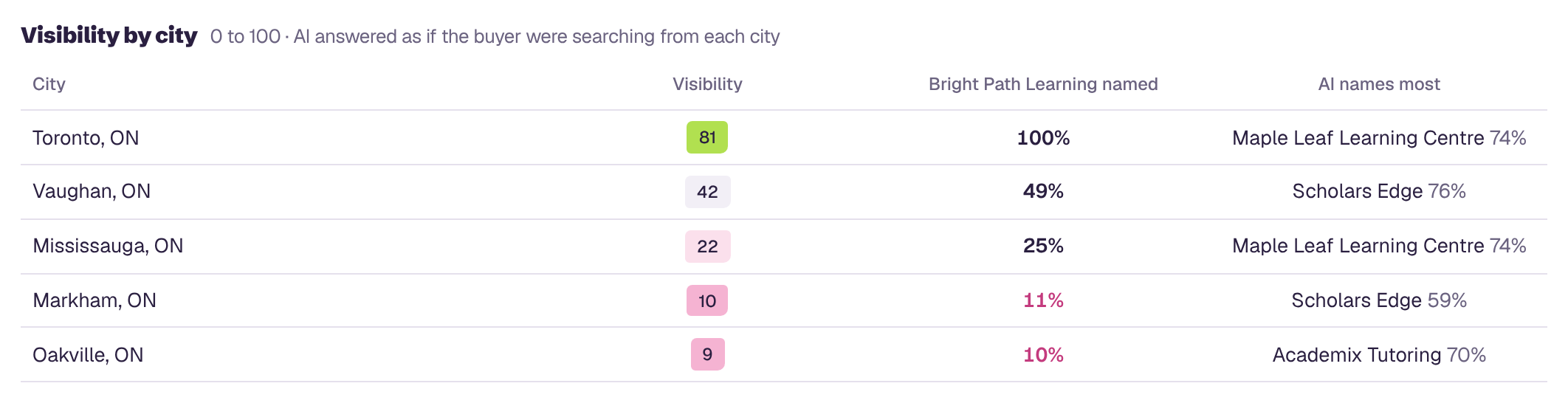
The gap is clearest side by side:
If you only fix three things
- Explain how you work and who your tutors are. Format, approach, matching and qualifications.
- Publish prices and how you measure progress. Packages, assessments and reports.
- Give every subject, grade and learning need its own page. Especially specialized support.
Parents are asking AI how to help a struggling child. The tutoring business AI names will be the one that explains its help most clearly.
Part of our guide: Why AI visibility matters for schools and education
See what AI tells parents about your tutoring business
Enter your website and get a free AI visibility report. It takes a few minutes, and you'll see:
- Your AI visibility score, overall and for ChatGPT, Gemini, Claude, Perplexity and Google's AI Overviews and AI Mode
- Which tutoring businesses AI recommends instead of you, and how often
- Your visibility in every city you serve, and the competitor AI names most in each one
- What AI gets wrong about you, and what to fix first
- Your biggest gaps: the buyer questions where AI leaves you out, and who it recommends instead
- A downloadable PDF you can share with your team