First piano lessons and portfolio prep: how families choose a music, dance or art school through AI
Families and adults now ask AI when to start music lessons, what lessons should cost and which schools prepare students for exams and auditions. Here's what AI tells them, and how music, dance and art schools get named.
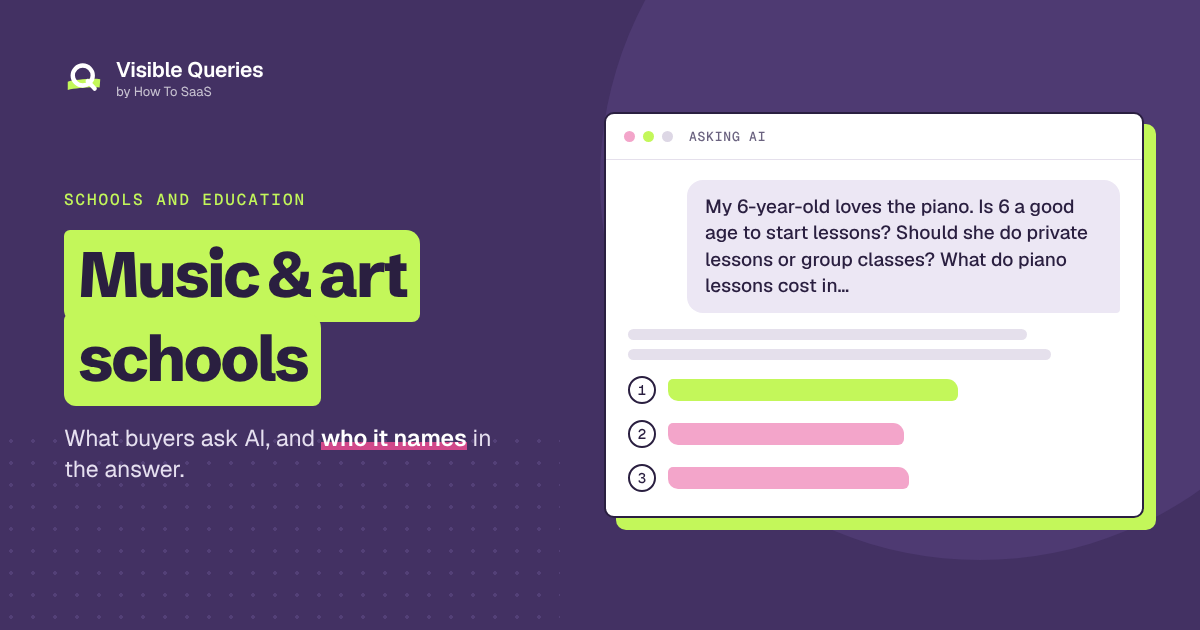
A parent in Vancouver has a six-year-old who bangs on every piano she sees. The parent never learned an instrument and doesn't know where to start. They ask ChatGPT:
"My 6-year-old loves the piano. Is 6 a good age to start lessons? Should she do private lessons or group classes? What do piano lessons cost in Vancouver, do we need a real piano or is a keyboard okay, and which music schools are good for young beginners?"
AI explains why many children start around that age, the differences between private and group lessons and methods like Suzuki, typical prices, why a weighted keyboard can work at first, how exam programs work for students who want structure, and what to look for in a teacher. Then it names three schools. The parent books a trial lesson.
Music, dance and art schools teach skills that take years to build. Parents choose them for young children, teenagers choose them for exams, auditions and portfolios, and adults choose them to finally learn something they always wanted to. AI is now part of how all three groups decide.
Our education guide covers how families choose schools and programs in general. This one goes through the questions that decide music, dance and art enrollment, what AI usually says, and what schools can publish so AI names them. (For recreational dance studios and kids' activities, see our martial arts and dance studios guide.)
Here are the questions at a glance:
| The question | What gets you named |
|---|---|
| "What age should my child start?" | Starting ages and first instruments, by program |
| "Private or group lessons?" | How each format works and who it suits |
| "How much do lessons cost?" | Lesson prices and instrument rental options |
| "Exam programs and auditions" | The exams and auditions you prepare students for |
| "Art classes for kids near me?" | Classes by age and level, with schedules |
| "Adult beginner classes?" | Classes built for adults starting out |
Music: the questions that decide lessons
"What age should my child start? Which instrument?"
What AI usually says: It suggests typical starting ages by instrument, notes that readiness matters more than age, and suggests trial lessons.
What to publish: A guide to starting ages and instruments you teach, what early lessons look like, and how you work with young beginners.
"Private or group lessons? In person or online?"
What AI usually says: It compares cost, attention, motivation and flexibility.
What to publish: The formats you offer, who each suits, and lesson lengths by age and level.
"How much do lessons cost? Do I need to buy an instrument?"
What AI usually says: Typical ranges for lesson lengths, notes about registration fees, and advice on renting versus buying instruments.
What to publish: Your prices, packages, term structures, cancellation and makeup policies, and instrument rental or purchase advice.
"Exam programs, competitions and auditions"
Many students and parents ask about structured paths: conservatory exam levels, school credits for music exams, competitions, festivals, and auditions for arts high schools or university programs. If you prepare students for these, explain what you offer, your results, and which teachers specialize in it.
Art: the questions that decide classes
"Art classes for kids near me?" "Portfolio prep for art school?"
What AI usually says: It names schools and studios offering classes by age and medium, and for older students, explains what art school portfolios usually require.
What to publish: Classes by age, medium and level, camps, and portfolio preparation programs with what students produce and where past students have been accepted.
"Adult beginner art classes?"
Adults ask for drawing, painting, pottery, photography and digital art classes. Give each its own page, with schedules, materials and what a beginner can expect.
Dance as a serious study
Pre-professional dance students and their families ask different questions than recreational families: "ballet schools that prepare for professional training," "dance programs for arts high school auditions," "summer intensives." If you offer pre-professional training, explain your syllabus, faculty, exam and audition results, and expectations.
Being named, and named first
Music, dance and art schools often find they're named, but rarely first:

For most schools, the fix is specificity: a page per instrument, medium, age group and program, with teachers and prices.
Teachers are the product
Families choose teachers more than schools. Publish bios for every teacher with their training, performance or exhibition experience, teaching style, and the ages and levels they teach best. When teachers leave or join, keep it current.
Recitals, showcases and community
Recitals, gallery shows, concerts and festivals are part of why families choose a school. Show them on your site with dates, photos and descriptions. They give AI a sense of how active and established your school is.
What the sample report shows
Here's what a Visible Queries report looks like for Bright Path, the sample tutoring and learning centre in the Greater Toronto Area from our guide. The questions are different for music and art schools, but the patterns are the same.
And it shows the actual questions, platform by platform, with who was named:
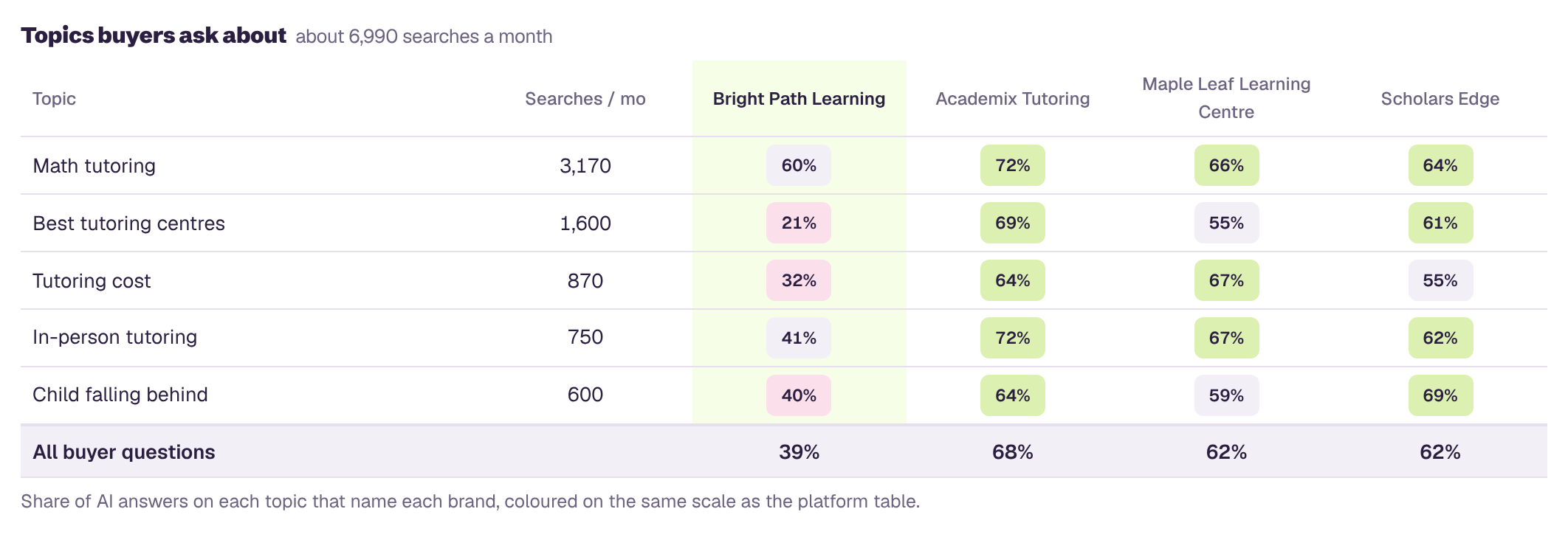
The gap is clearest side by side:
If you only fix three things
- Give every instrument, medium and program its own page. By age and level.
- Publish prices, policies and formats clearly.
- Show your teachers and student achievements. Bios, exams, auditions and portfolios.
Families are asking AI where their child should start lessons, and adults are asking where to finally learn. The school AI names will be the one that answers most specifically.
Part of our guide: Why AI visibility matters for schools and education
See what AI tells families about your school
Enter your website and get a free AI visibility report. It takes a few minutes, and you'll see:
- Your AI visibility score, overall and for ChatGPT, Gemini, Claude, Perplexity and Google's AI Overviews and AI Mode
- Which schools AI recommends instead of you, and how often
- Your visibility in every city you serve, and the competitor AI names most in each one
- What AI gets wrong about you, and what to fix first
- Your biggest gaps: the buyer questions where AI leaves you out, and who it recommends instead
- A downloadable PDF you can share with your team