Fit, materials and the gift question: how shoppers choose apparel, footwear and jewelry brands through AI
Shoppers now ask AI which brands fit their body, which shoes are best for standing all day and where to buy an ethical engagement ring. Here's what AI tells them, and how apparel, footwear and jewelry brands get named.
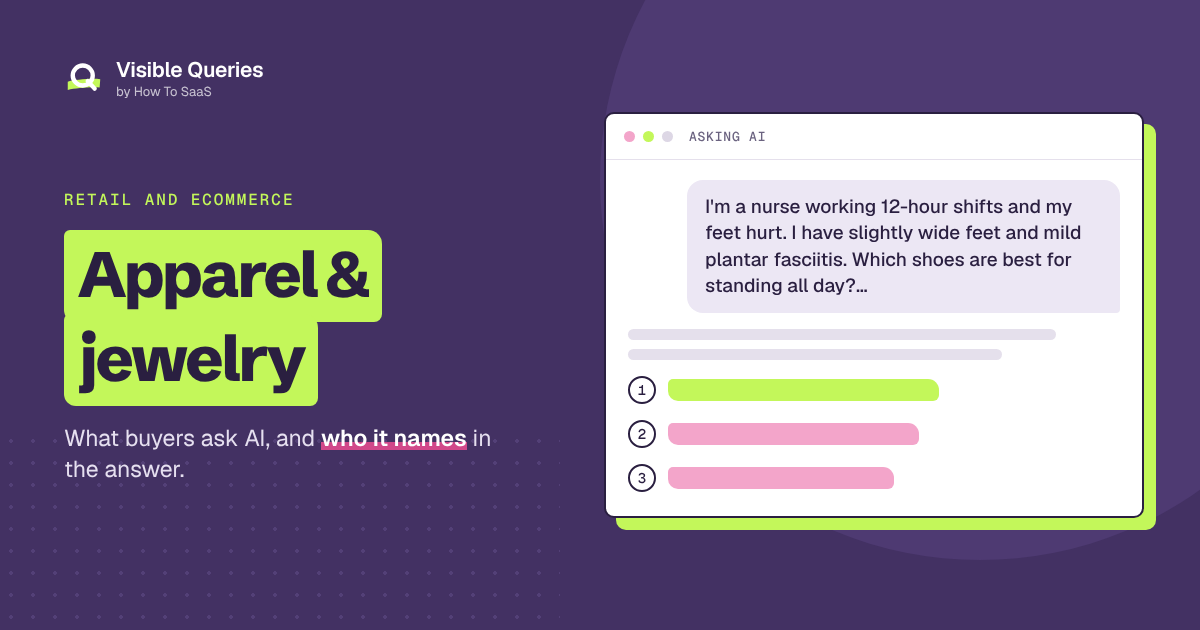
A nurse in Houston works twelve-hour shifts and their feet hurt by hour six. Their current shoes are worn out. They've seen a dozen brands advertised and don't trust any of them. They ask ChatGPT:
"I'm a nurse working 12-hour shifts and my feet hurt. I have slightly wide feet and mild plantar fasciitis. Which shoes are best for standing all day? Clogs or sneakers? Which brands come in wide sizes, and are any worth the price?"
AI explains what makes a shoe good for long shifts (cushioning, support, rocker soles, slip resistance), the trade-offs between clogs and sneakers, why wide sizes matter, when to see a podiatrist, and names several brands and specific models. The nurse orders one pair that night.
Fashion and accessories shopping has always been visual. But more and more shoppers start with a question about fit, comfort, quality, values or a specific occasion. AI answers those questions with brand names, and brands with clear, specific product information are the ones it recommends.
Our retail and ecommerce guide covers how shoppers research in general. This one goes through the questions that decide apparel, footwear and jewelry purchases, what AI usually says, and what brands can publish so AI names them.
Here are the questions at a glance:
| The question | What gets you named |
|---|---|
| "Brands that fit [body type or need]?" | Fit guides by body type and size |
| "Best [product] for [use]?" | Pages for each use |
| "Is it good quality?" | Materials and construction details |
| "Ethical or made in [country]?" | Where and how things are made |
"Which brands fit [body type or need]?"
This is the defining question for apparel and footwear.
What AI usually says: It names brands known for specific fits: tall, petite, plus size, athletic builds, wide feet, narrow feet, maternity, adaptive clothing.
What to publish: Detailed fit information: size charts with measurements, fit notes ("runs small," "relaxed through the hip"), inseams, widths and model measurements. Fit guides by body type help AI match you to shoppers.
"What's the best [product] for [use]?"
What AI usually says: It names products for specific uses: shoes for standing all day, hiking boots for wide feet, work pants for women in trades, travel clothes that don't wrinkle, jewelry for sensitive skin.
What to publish: Pages for the uses your products are great for, with the features that matter.
"Is it good quality? Is it worth the price?"
What AI usually says: It summarizes reviews about durability, materials, construction and value.
What to publish: Specific materials and construction details: fabric weight, fiber content, stitching, sole construction, metal purity, stone sourcing. "Premium quality" tells AI nothing.
"Ethical, sustainable or made in [country]?"
What AI usually says: It names brands with clear claims about materials, labor, certifications and manufacturing locations, and is cautious about vague claims.
What to publish: Specific, verifiable information about materials, factories, certifications and sourcing. For jewelry, explain metal and stone sourcing, lab-grown versus mined, and certifications.
Which topics AI gives to competitors
Here's how the report shows which topics a brand wins and loses:
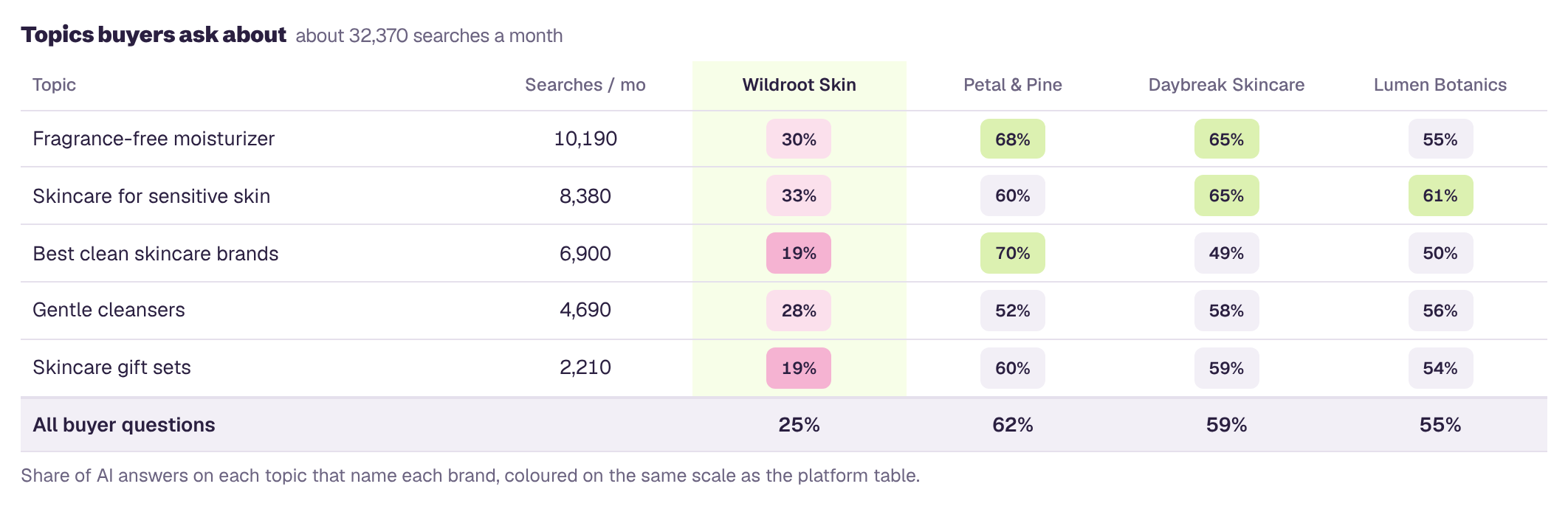
Smaller brands usually win on specific questions, like "wide-width nursing shoes" or "hypoallergenic earrings for sensitive ears," rather than "best shoe brands."
Here's more from the same kind of report, for Wildroot Skin, a fictional skincare brand.
Under the score, the report breaks visibility into the numbers that matter most:

The gap is clearest side by side:
Jewelry and big purchases
Engagement rings, wedding bands and fine jewelry are researched for weeks. Shoppers ask about diamond grading, lab-grown versus natural, settings, warranties and buying online versus in store. Publish educational guides, clear pricing, certifications and return policies.
Returns, exchanges and sizing help
Fit uncertainty is the biggest reason shoppers hesitate online. Clear return and exchange policies, fit quizzes and virtual try-on options reduce hesitation. Explain them in text so AI can repeat them.
If you only fix three things
- Publish detailed fit and sizing information.
- Describe materials and construction specifically.
- Make values claims specific and verifiable.
Shoppers are asking AI which brands will actually fit and last. The brand AI names will be the one that answers those questions most specifically.
Part of our guide: Why AI visibility matters for retail and ecommerce brands
See what AI tells shoppers about your brand
Enter your website and get a free AI visibility report. It takes a few minutes, and you'll see:
- Your AI visibility score, overall and for ChatGPT, Gemini, Claude, Perplexity and Google's AI Overviews and AI Mode
- Which brands AI recommends instead of you, and how often
- Which topics you win and lose, and how often each one is searched
- What AI gets wrong about you, and what to fix first
- Your biggest gaps: the buyer questions where AI leaves you out, and who it recommends instead
- A downloadable PDF you can share with your team