Ingredients, skin types and proof: how shoppers choose beauty, skincare and supplement brands through AI
Shoppers now ask AI which products suit their skin, which ingredients work and which supplement brands are tested. Here's what AI tells them, and how beauty, skincare and supplement brands get named.
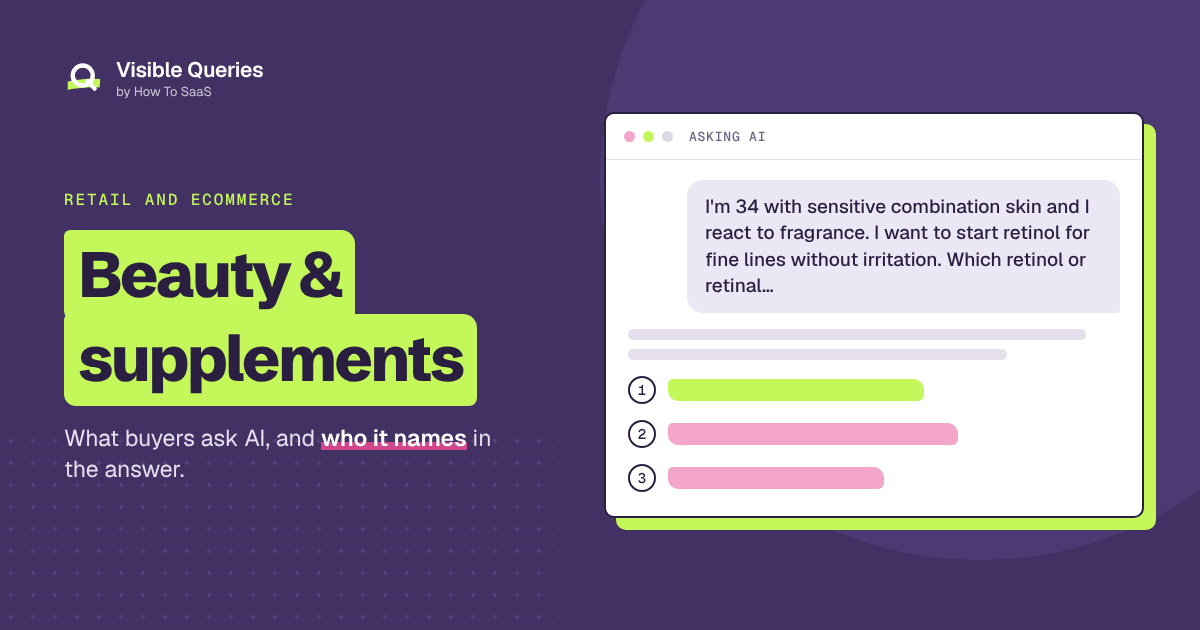
A 34-year-old in Denver has sensitive, combination skin and has started noticing fine lines. They've reacted to fragranced products before and they're overwhelmed by the number of retinol products online. They ask ChatGPT:
"I'm 34 with sensitive combination skin and I react to fragrance. I want to start retinol for fine lines without irritation. Which retinol or retinal products are gentle for beginners? What concentration should I start with, and which brands are fragrance-free and well reviewed?"
AI explains the differences between retinoid types, starting concentrations, how to introduce them slowly, buffering and moisturizing, why sunscreen matters, which ingredients to avoid alongside retinoids, and when to see a dermatologist. Then it names several fragrance-free products. The shopper buys one that week.
Beauty, skincare and supplement shoppers are some of the most ingredient-literate consumers anywhere. They ask AI about specific ingredients, concentrations, skin types, certifications and evidence. Brands with clear, specific, honest product information are the ones AI recommends.
Our retail and ecommerce guide covers how shoppers research in general. This one goes through the questions that decide beauty and supplement purchases, what AI usually says, and what brands can publish so AI names them.
Here are the questions at a glance:
| The question | What gets you named |
|---|---|
| "What's best for [skin type or concern]?" | Pages for each concern |
| "Is this ingredient safe? Does it work?" | Full ingredient lists and what each does |
| "Fragrance-free, vegan, cruelty-free?" | Certifications and claims, stated precisely |
"What's best for [skin type or concern]?"
This is the defining question for skincare.
What AI usually says: It names products and ingredients for specific concerns: acne, rosacea, hyperpigmentation, fine lines, dryness, sensitivity, eczema-prone skin.
What to publish: Product pages with full ingredient lists, key active concentrations, who each product is for and who should avoid it, and how to use it.
"Is this ingredient safe? Does it work?"
What AI usually says: It summarizes what's generally known about ingredients and their evidence, and is cautious about exaggerated claims.
What to publish: Honest, specific explanations of your key ingredients and what they do. Avoid miracle claims. AI and regulators are both skeptical of them.
"Fragrance-free," "vegan," "cruelty-free," "clean"
What AI usually says: It names brands that clearly meet these criteria, often checking certifications.
Why it matters: Wrong facts here disqualify you for the shoppers who care most. Here's how a wrong fact looks in the report:
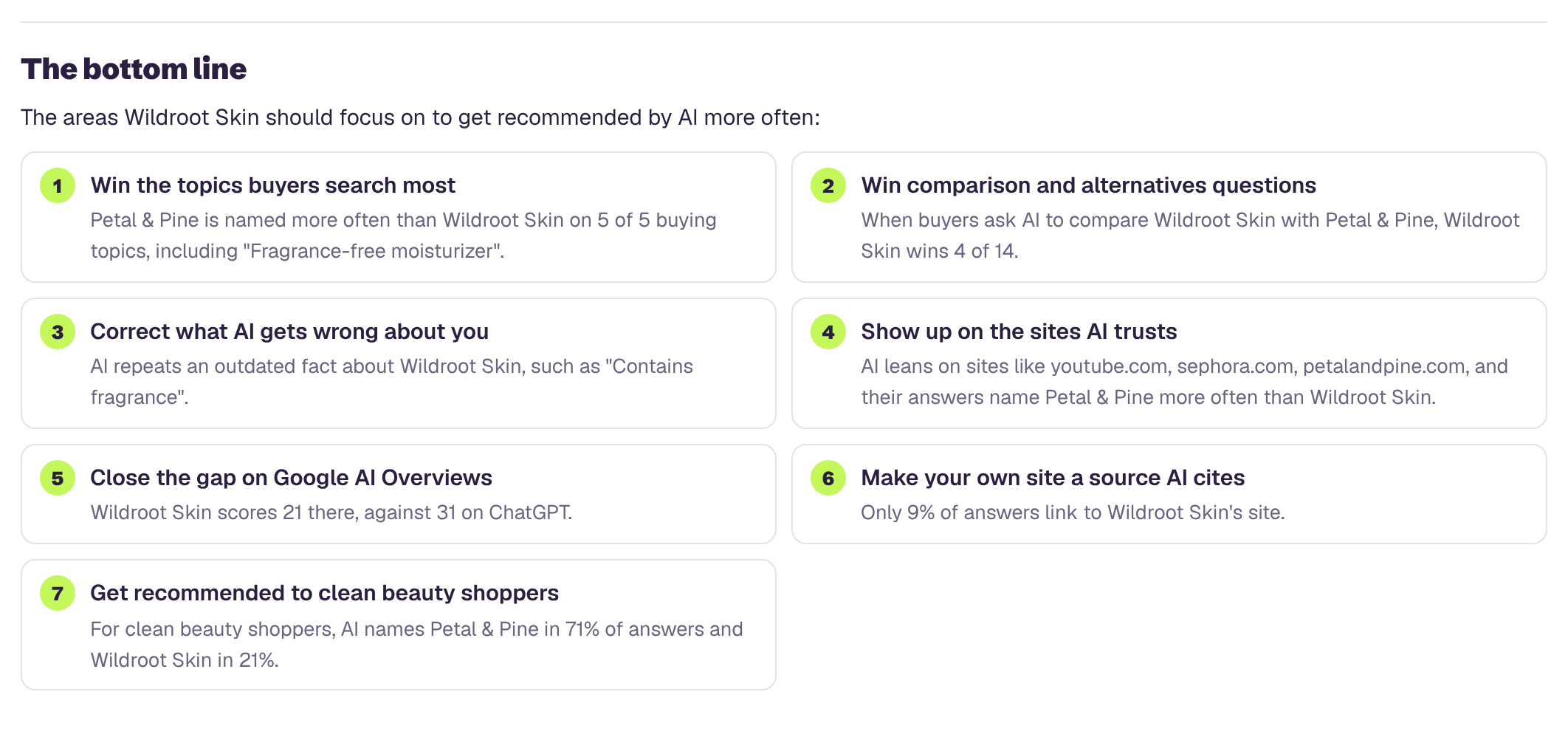
What to publish: Clear, consistent claims across your site, retailers and marketplaces, with certifications listed.
Supplements: "Which brands are tested? Which is best for [goal]?"
What AI usually says: It suggests looking for third-party testing, clear labeling, appropriate doses and talking to a doctor, and is cautious about health claims.
What to publish: Third-party testing and certifications, full supplement facts, sourcing, manufacturing standards and responsible descriptions of what products are for. Avoid disease claims.
Makeup: shade, finish and wear
Makeup shoppers ask about shade matching, undertones, finishes and wear time. Shade descriptions in words ("light with neutral-olive undertones"), finder tools that explain their logic, and honest wear-time information help AI recommend you.
Retailers and marketplaces
Many beauty brands sell through big retailers and marketplaces, where product information can be inconsistent. Keep ingredients, claims and descriptions consistent everywhere. AI notices contradictions.
What the sample report shows
Here's what a Visible Queries report looks like for Wildroot Skin, the sample skincare brand from our guide. The questions are different for beauty and supplement brands, but the patterns are the same.
And it shows the actual questions, platform by platform, with who was named:
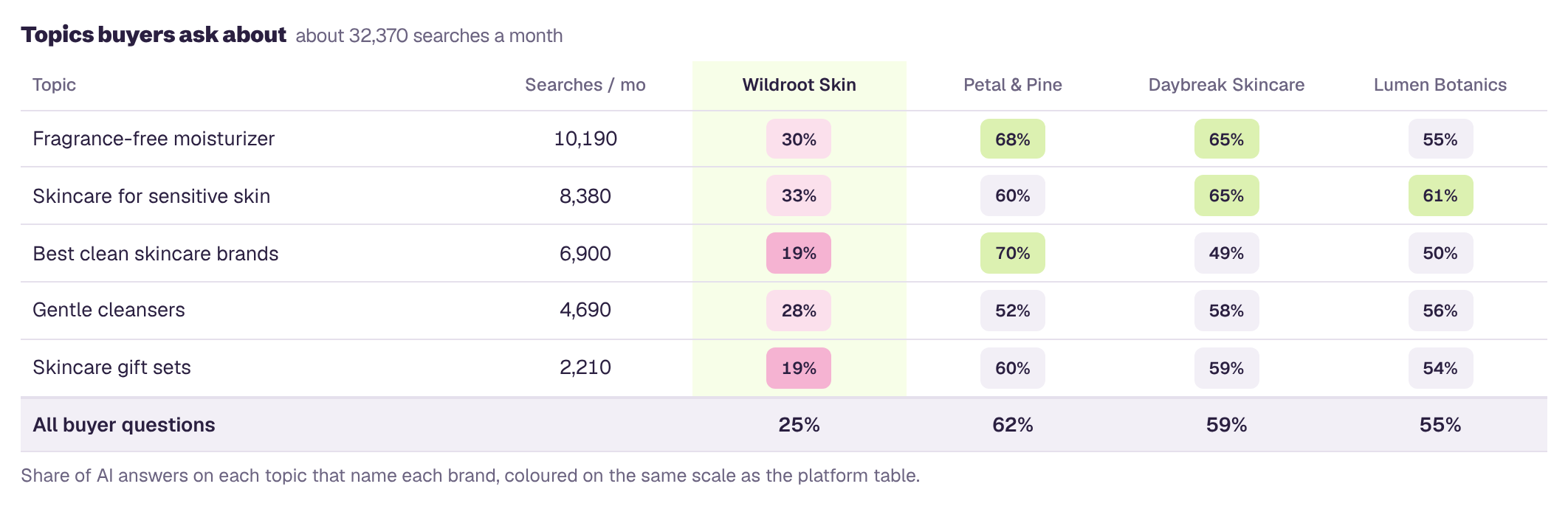
The gap is clearest side by side:
If you only fix three things
- Publish full ingredients, actives and who each product is for.
- Make claims specific, consistent and verifiable.
- Show testing and certifications. Especially for supplements.
Shoppers are asking AI which products will actually work for them. The brand AI names will be the one that explains its products most honestly.
Part of our guide: Why AI visibility matters for retail and ecommerce brands
See what AI tells shoppers about your brand
Enter your website and get a free AI visibility report. It takes a few minutes, and you'll see:
- Your AI visibility score, overall and for ChatGPT, Gemini, Claude, Perplexity and Google's AI Overviews and AI Mode
- Which brands AI recommends instead of you, and how often
- Which topics you win and lose, and how often each one is searched
- What AI gets wrong about you, and what to fix first
- Your biggest gaps: the buyer questions where AI leaves you out, and who it recommends instead
- A downloadable PDF you can share with your team