Taste, diet and where to buy it: how shoppers choose food, beverage and alcohol brands through AI
Shoppers now ask AI which snacks fit their diet, which non-alcoholic drinks taste good and what wine to bring to dinner. Here's what AI tells them, and how food, beverage and alcohol brands get named.
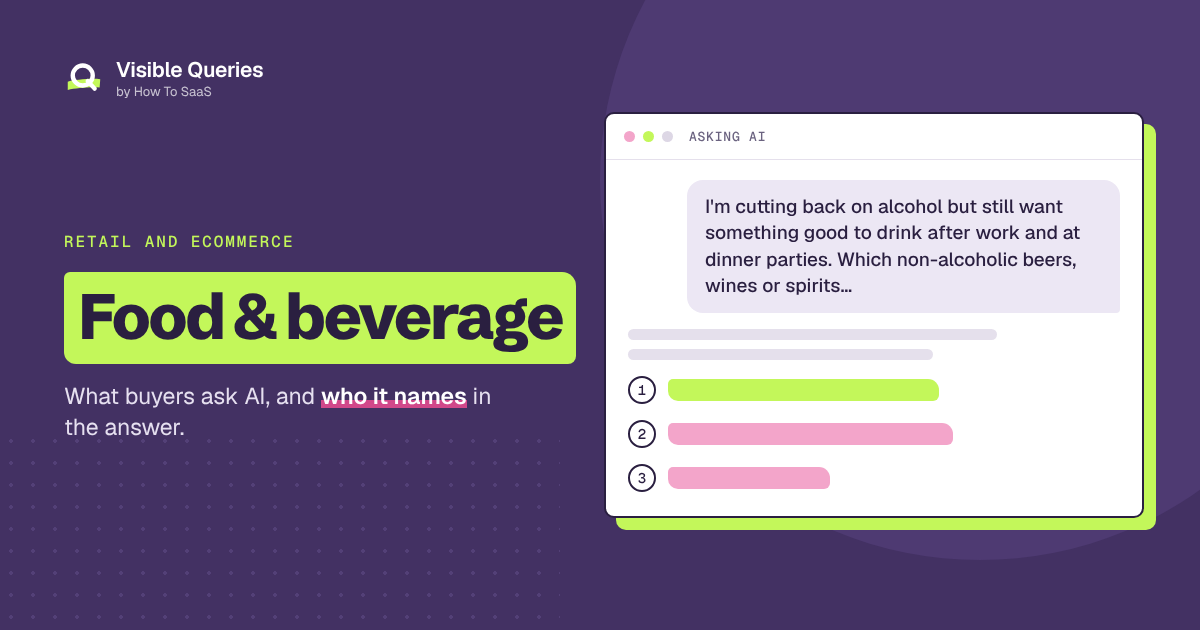
Someone in Chicago has decided to cut back on drinking, but they love the ritual of a drink after work and at dinner parties. They've tried a few non-alcoholic beers and didn't like them. They ask ChatGPT:
"I'm cutting back on alcohol but still want something good to drink after work and at dinner parties. Which non-alcoholic beers, wines or spirits actually taste good? Which are lowest in sugar? Where can I buy them in Chicago?"
AI explains the main categories of non-alcoholic drinks, how they're made, what to expect in taste, which styles tend to work best, sugar and calorie differences, and names several brands and specific products, with notes on where to find them. The shopper buys two that weekend.
Food and beverage purchases used to happen almost entirely in store aisles. Now shoppers ask AI about diets, ingredients, taste, pairings, occasions and where to buy. Brands with clear product information and distribution details are the ones AI names.
Our retail and ecommerce guide covers how shoppers research in general. This one goes through the questions that decide food, beverage and alcohol purchases, what AI usually says, and what brands can publish so AI names them.
Here are the questions at a glance:
| The question | What gets you named |
|---|---|
| "What's good for [diet or need]?" | Nutrition, ingredients and diets in text |
| "Which [product] tastes best?" | Specific taste descriptions |
| "What should I pair with [food]?" | Pairing and occasion guides |
| "Where can I buy it?" | Retailers and shipping, in text |
"What's good for [diet or need]?"
This is the defining question for food brands.
What AI usually says: It names products that fit diets and needs: gluten-free, keto, high-protein, low-sugar, vegan, allergen-free, kid-friendly, diabetic-friendly.
What to publish: Full nutrition facts and ingredients in text, allergen information, certifications and the diets each product fits.
"Which [product] tastes best?"
What AI usually says: It summarizes reviews and taste descriptions.
What to publish: Specific taste and texture descriptions, flavor notes and how to use products. For drinks, describe flavor profiles and serving suggestions.
"What should I pair with [food or occasion]?"
What AI usually says: It suggests wines, beers, spirits or drinks for meals and occasions, often naming specific products.
What to publish: Pairing guides, occasion pages and recipes using your products. Wine, beer and spirits brands benefit most from this.
"Where can I buy it?"
What AI usually says: It names retailers or online stores when it knows them.
What to publish: A store locator explained in text (retailers and regions), online ordering options and direct-to-consumer shipping rules where they apply. For alcohol, explain which states or provinces you ship to.
Being named, and named first
Food and beverage brands often find they're named, but after bigger brands:

The way up the list is usually specificity: occasion pages, diet pages and clear taste descriptions.
Local and regional brands
Local breweries, wineries, distilleries, bakeries and specialty food makers can be named for local questions, like "best local coffee roasters in Portland" or "Ontario wines for a gift." Tell your story, your region and where to find you.
What the sample report shows
Here's what a Visible Queries report looks like for Wildroot Skin, the sample skincare brand from our guide. The questions are different for food and beverage brands, but the patterns are the same.
The report then picks out your biggest gaps: the buyer questions where AI leaves you out, and who it recommends instead:
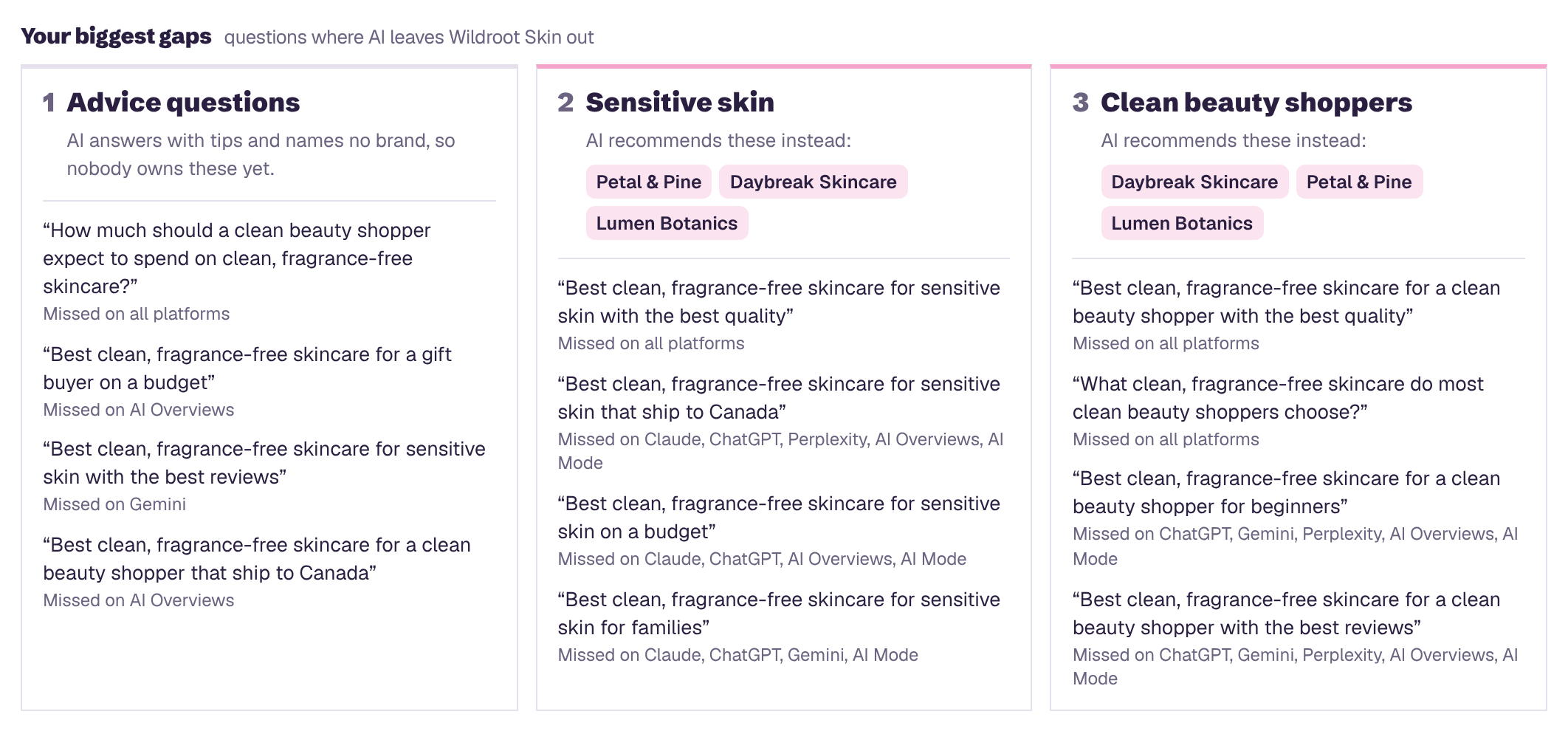
The gap is clearest side by side:
If you only fix three things
- Publish full ingredients, nutrition and diet information in text.
- Describe taste and give pairing and occasion ideas.
- Make it clear where to buy.
Shoppers are asking AI what to eat and drink. The brand AI names will be the one that describes its products most clearly.
Part of our guide: Why AI visibility matters for retail and ecommerce brands
See what AI tells shoppers about your brand
Enter your website and get a free AI visibility report. It takes a few minutes, and you'll see:
- Your AI visibility score, overall and for ChatGPT, Gemini, Claude, Perplexity and Google's AI Overviews and AI Mode
- Which brands AI recommends instead of you, and how often
- Which topics you win and lose, and how often each one is searched
- What AI gets wrong about you, and what to fix first
- Your biggest gaps: the buyer questions where AI leaves you out, and who it recommends instead
- A downloadable PDF you can share with your team