Fair price, trade-in and no games: how car buyers choose a dealership through AI
Car buyers now ask AI what a fair price is, which dealers are honest and how to get the most for their trade-in. Here's what AI tells them, and how car dealerships get named.
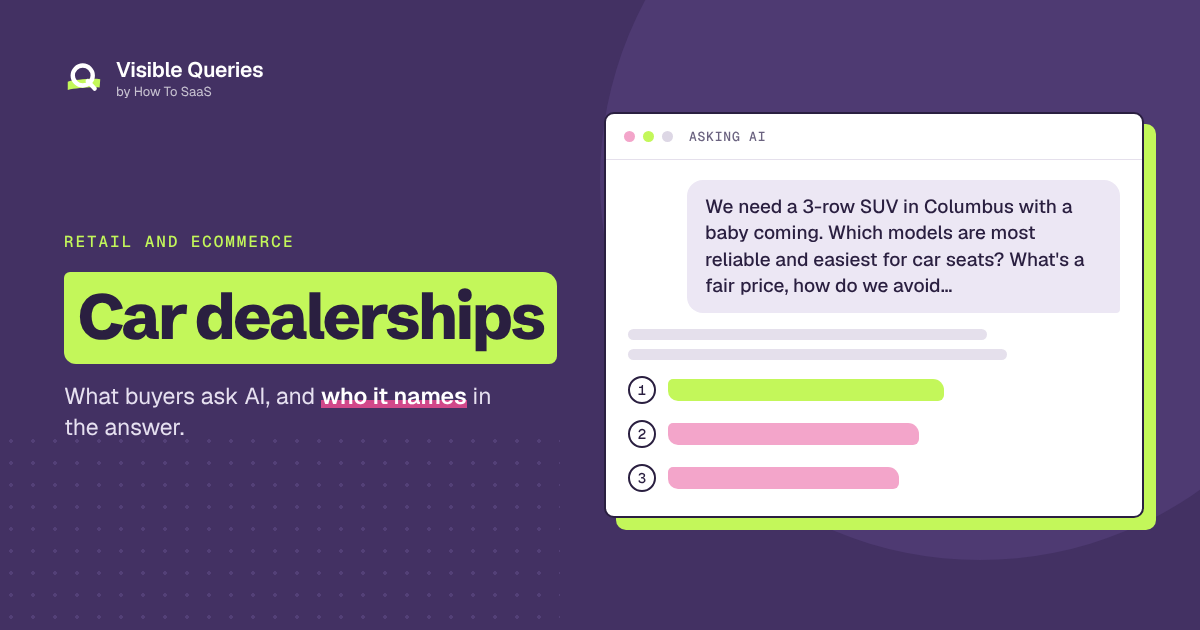
A family in Columbus needs a three-row SUV before their third child arrives. They're trading in a 2018 sedan. Last time they bought a car, it took six hours at the dealership and they felt pressured into add-ons. They ask ChatGPT:
"We need a 3-row SUV in Columbus with a baby coming. Which models are most reliable and easiest for car seats? What's a fair price, how do we avoid add-on pressure, and how do we get a good trade-in value for our 2018 sedan? Which dealerships near Columbus are known for no-hassle buying?"
AI compares three-row SUVs for reliability, car seat fit and space, explains how to research fair prices, what common add-ons are and how to decline them, how to get trade-in quotes from several sources, and the value of pre-approved financing. Then it names several dealerships. The family contacts two of them by email to get out-the-door prices.
Car buying has changed. Buyers research models, prices, financing and dealers before they ever visit. They're wary of pressure and hidden fees. AI is now a big part of that research, and it's often deciding which dealerships sound trustworthy.
Our retail and ecommerce guide covers how shoppers research in general. This one goes through the questions that decide car purchases, what AI usually says, and what dealerships can publish so AI names them.
Here are the questions at a glance:
| The question | What gets you named |
|---|---|
| "Which dealerships are no-hassle?" | How you sell, and your add-on policy |
| "What's a fair price?" | Clear online pricing and fees |
| "How do I get the best trade-in?" | How you appraise trade-ins |
| "Financing with [credit situation]?" | Financing options and programs |
"Which dealerships are honest? Which are no-hassle?"
This is the defining question for dealerships.
What AI usually says: It summarizes reviews about pricing transparency, pressure, add-ons, the finance office and service.
What to publish: How you sell: upfront pricing, add-on policies, the buying process, how long it takes, online buying options and delivery. Encourage reviews that mention specifics, like "no pressure" or "the price online was the price we paid."
"What's a fair price?"
What AI usually says: It suggests checking market prices, getting out-the-door quotes, and comparing several dealers.
What to publish: Clear online pricing, what's included, dealer fees and how you handle markups or discounts.
"How do I get the best trade-in value?"
What to publish: How you appraise trade-ins, whether you offer instant online offers and whether you buy cars without a purchase.
"Financing options? Can I get approved with [credit situation]?"
What to publish: Your financing options, pre-approval tools, lenders you work with, and programs for first-time buyers or credit rebuilding.
Which topics AI gives to competitors
Here's how the report shows which topics a dealership wins and loses:
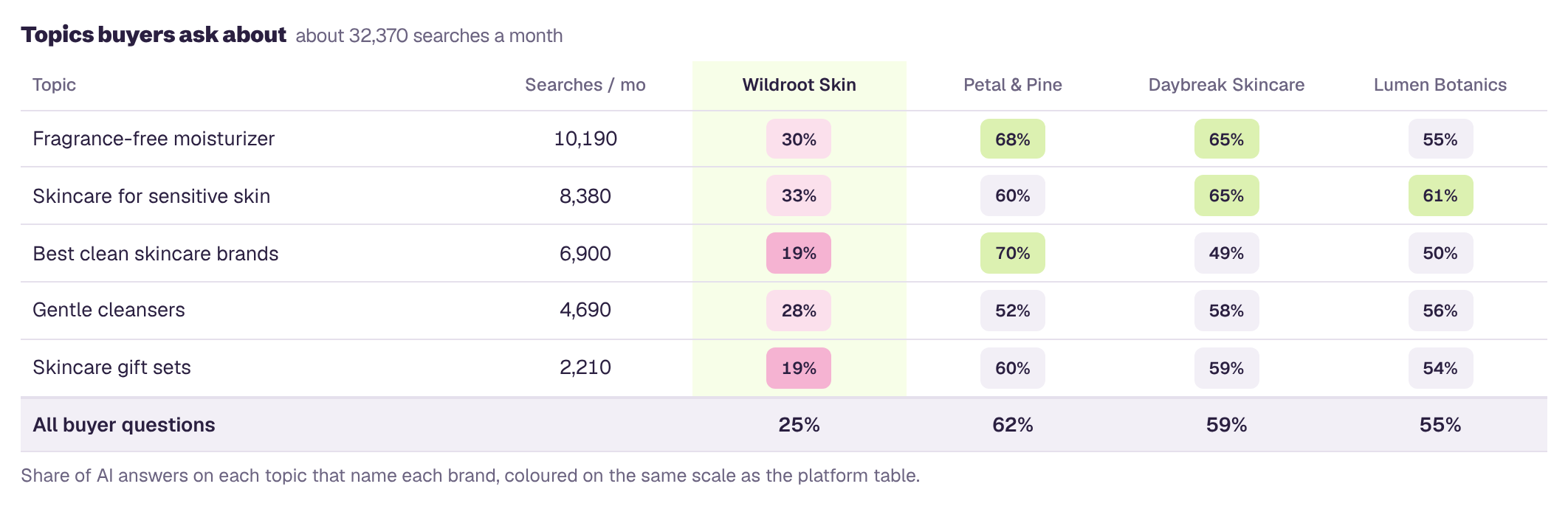
For dealerships, the topics to watch are trust questions and specific needs, like "dealership with no-haggle pricing" or "used EV dealer with battery reports."
Here's more from the same kind of report, for Wildroot Skin, a fictional skincare brand.
The report starts with one score out of 100, a score for each AI platform, and the competitor AI names most:
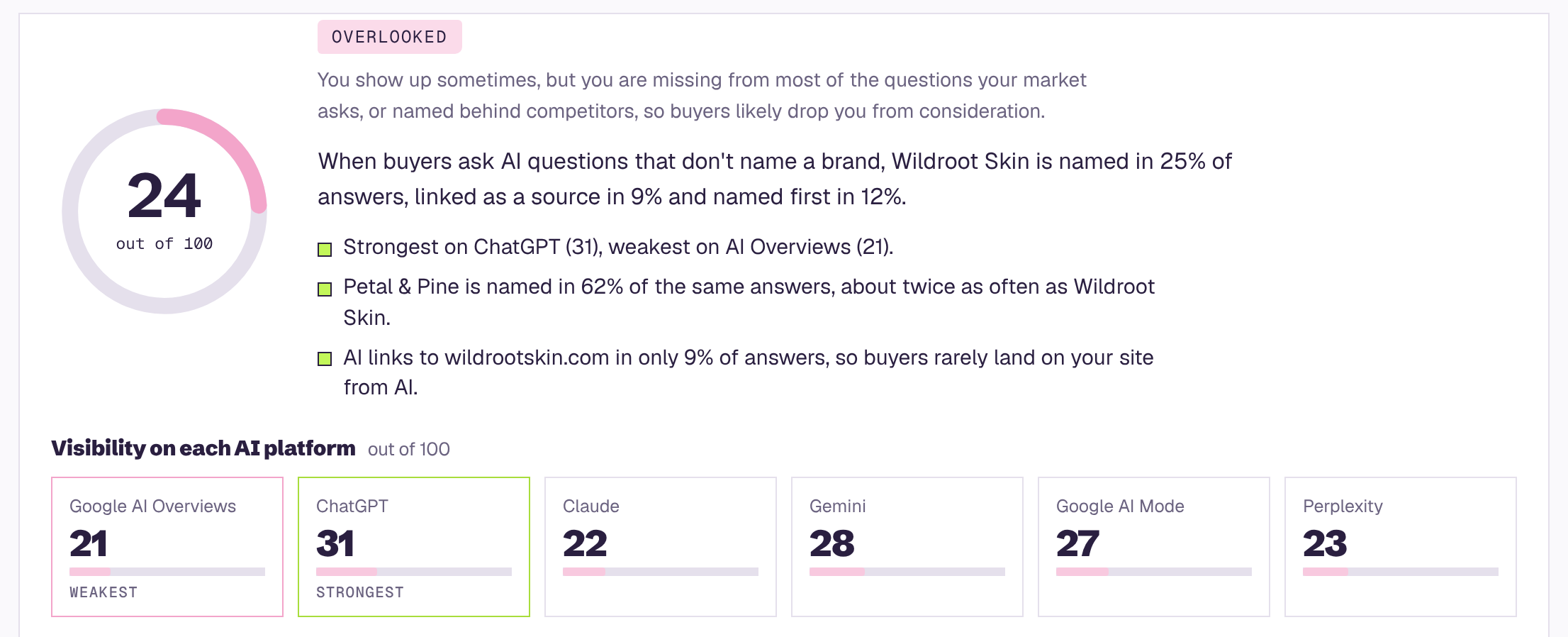
The gap is clearest side by side:
Service departments
Service customers ask AI about maintenance costs, recall work, loaner cars and whether dealer service is worth it. Service pages with pricing, hours, loaners and online booking keep customers and lead to future sales.
Used, certified and EV buyers
Used car buyers ask about inspections, vehicle history and warranties. EV buyers ask about charging, battery health, incentives and home charger installation. Give each its own page.
If you only fix three things
- Explain how you sell, and your pricing and fees.
- Make trade-in and financing simple to understand.
- Give service, used, certified and EV buyers their own pages.
Car buyers are asking AI which dealerships won't play games. The dealership AI names will be the one that makes its process most transparent.
Part of our guide: Why AI visibility matters for retail and ecommerce brands
See what AI tells car buyers about your dealership
Enter your website and get a free AI visibility report. It takes a few minutes, and you'll see:
- Your AI visibility score, overall and for ChatGPT, Gemini, Claude, Perplexity and Google's AI Overviews and AI Mode
- Which dealerships AI recommends instead of you, and how often
- Which topics you win and lose, and how often each one is searched
- What AI gets wrong about you, and what to fix first
- Your biggest gaps: the buyer questions where AI leaves you out, and who it recommends instead
- A downloadable PDF you can share with your team