Which app should I download? How people choose consumer apps through AI
People now ask AI which budgeting, fitness, language or productivity app to use, whether it's worth paying for and how it handles their data. Here's what AI tells them, and how consumer apps get named.
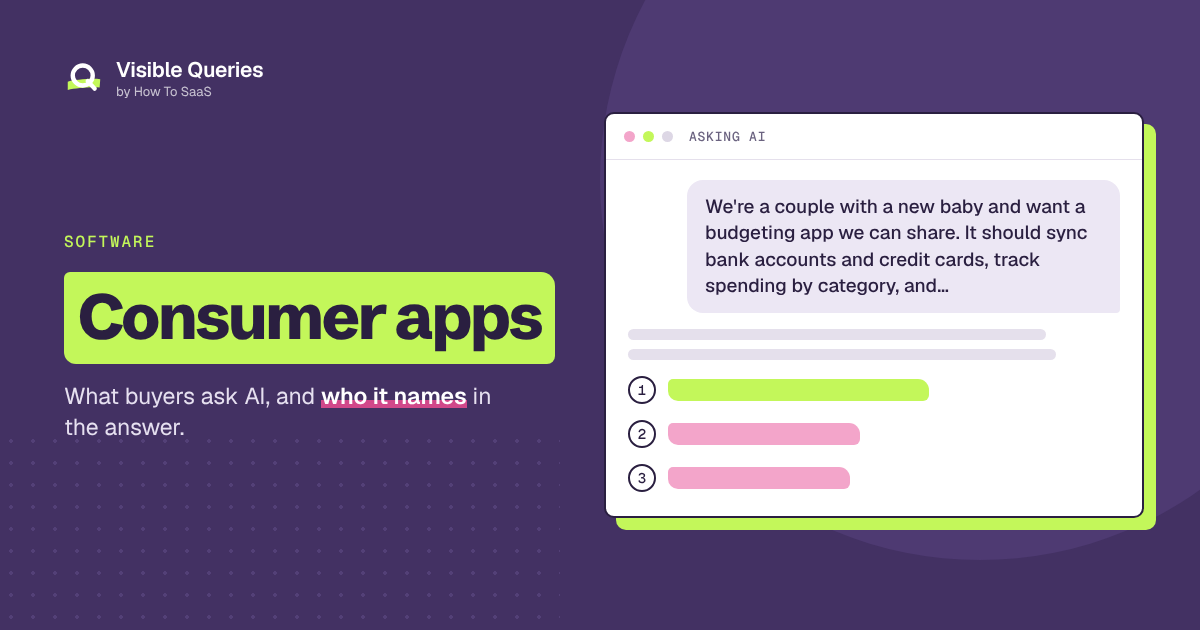
A couple in Columbus just had a baby and realized they have no idea where their money goes each month. They've tried spreadsheets. They want an app they'll both use, that connects to their bank accounts and credit cards, and that doesn't sell their data. They ask ChatGPT:
"We're a couple with a new baby and want a budgeting app we can share. It should sync bank accounts and credit cards, track spending by category, and help us save for childcare. Which apps are best for couples? Are the paid ones worth it, and which ones are good on privacy?"
AI explains the main budgeting approaches, features to look for in shared budgets, how bank syncing usually works, pricing models, and privacy questions to ask. Then it names four apps with a line on each. The couple downloads two and keeps one.
App stores are crowded, and most app discovery used to happen through store search, ads and word of mouth. Now people ask AI directly, describing their situation in detail. AI gives them a short list, and it relies on what it knows about features, pricing, privacy and reviews.
Our software guide covers how software buyers research in general. This one goes through the questions that decide app downloads, what AI usually says, and what app companies can publish so AI names them.
Here are the questions at a glance:
| The question | What gets you named |
|---|---|
| "Best app for [need]?" | Pages for each need your app meets |
| "Is the paid version worth it?" | What paid adds, with prices |
| "[App] vs [competitor]?" | Honest comparison pages |
| "Is my data safe?" | A plain privacy summary |
| "Does it work on [platform]?" | Supported platforms and devices |
"What's the best app for [need]?"
This is the defining question for consumer apps.
What AI usually says: It names a few apps, often with a line on who each is best for.
What to publish: Pages for each kind of user and need you serve best: couples, students, freelancers, beginners, people with ADHD, families. App store descriptions are short. Your website can explain who your app is for in much more detail, and AI reads it.
"Is the paid version worth it?"
What AI usually says: It compares free and paid features and suggests trying the free version or trial first.
What to publish: A clear comparison of free and paid tiers, pricing, trials and cancellation. Clear pricing builds trust, and confusing subscriptions are a common complaint AI repeats.
"[App] vs [competitor]?"
What AI usually says: It compares features, ease of use, pricing, platforms and reviews.
What to publish: Honest comparisons and guides for switching from competitors, like importing data.
"Is it private? Is my data safe?"
What AI usually says: It discusses what data apps collect, whether they sell or share it, and what security measures they use.
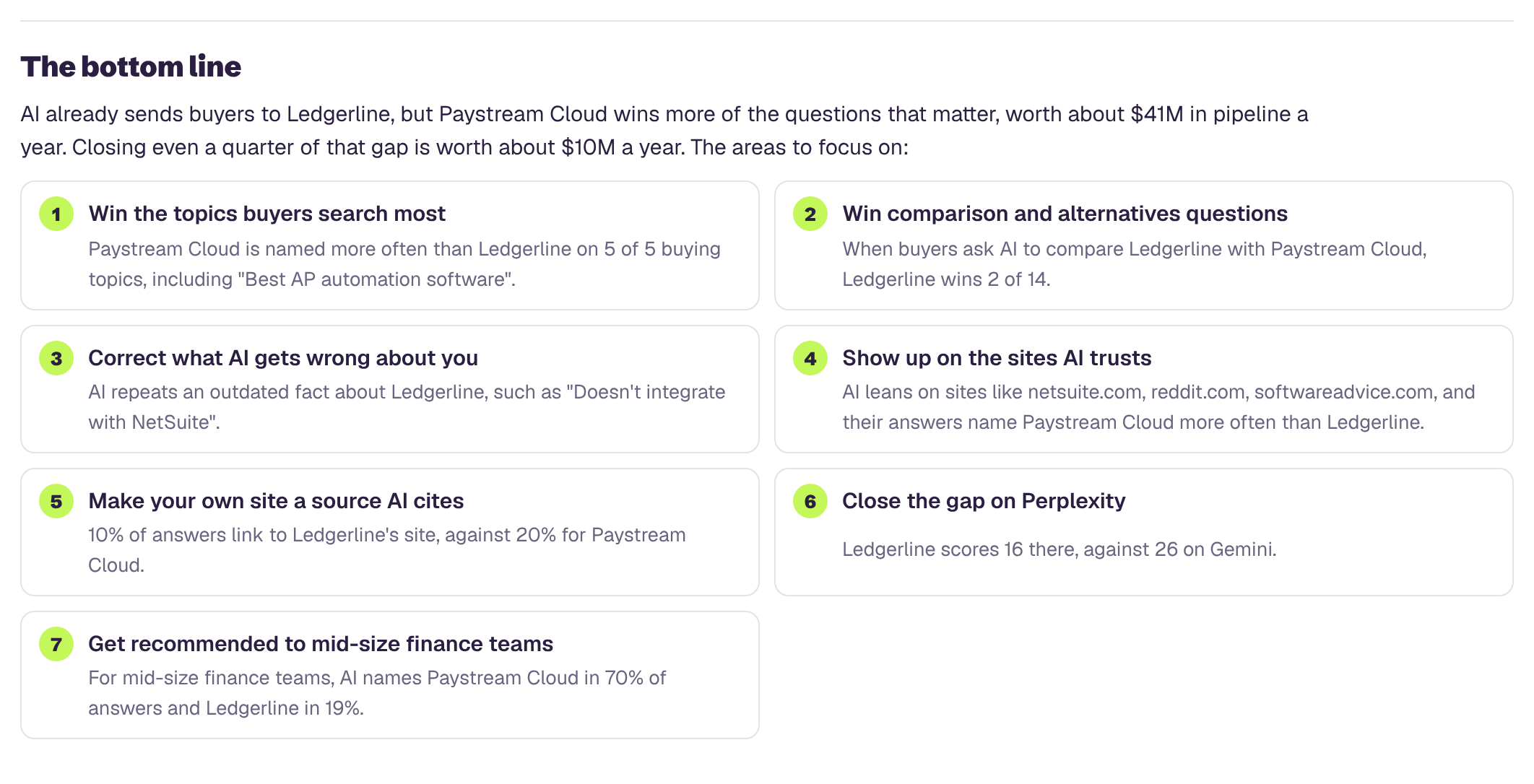
Why it matters: Wrong facts about privacy can be costly. Here's how the report shows a wrong fact:
What to publish: A plain-language privacy page: what you collect, what you don't, whether you sell data, how data is secured, and how people can delete their data. Write it for people, not only for lawyers.
"Does it work on [platform]?"
What to publish: Every platform you support, offline features, syncing across devices, and integrations with wearables or other apps.
Reviews and changes
App reviews change quickly after updates. AI may repeat complaints about bugs or features that have been fixed. Publish release notes and respond to reviews, and make sure your site reflects your current product.
What the sample report shows
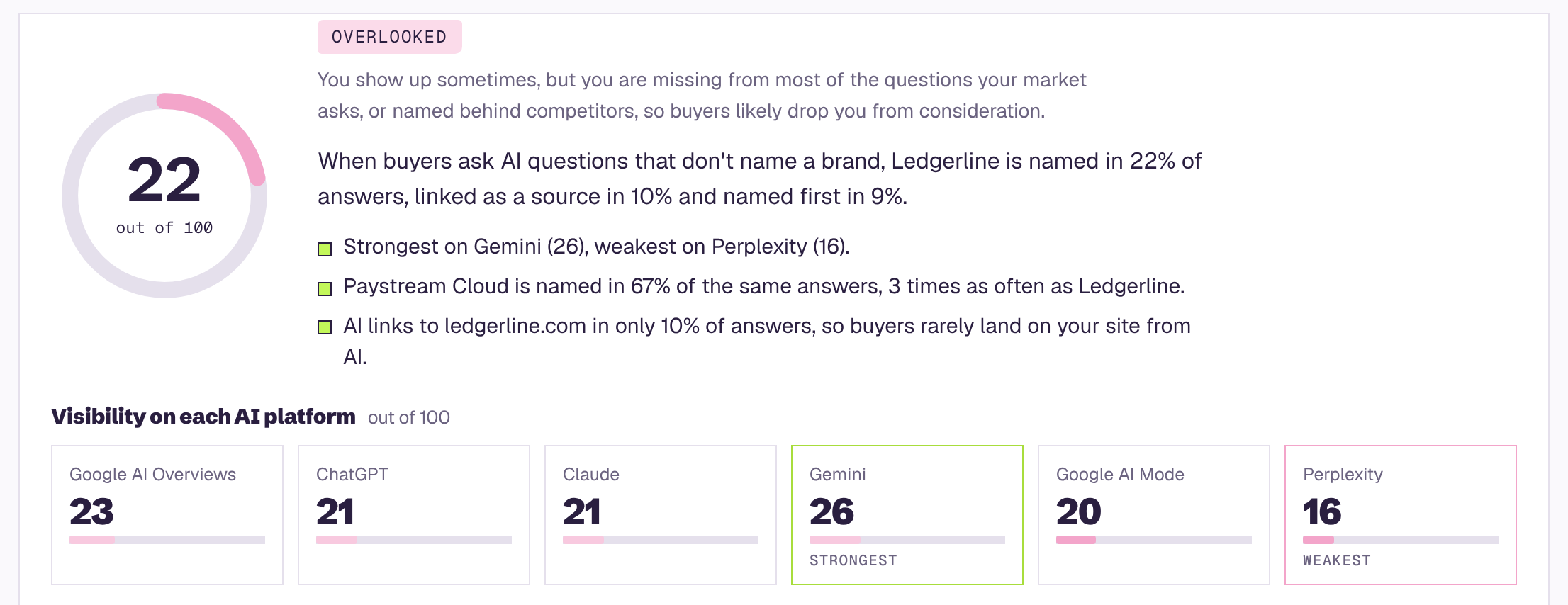
Here's what a Visible Queries report looks like for Ledgerline, the sample AP automation company from our guide. The questions are different for app makers, but the patterns are the same.
The report starts with one score out of 100, a score for each AI platform, and the competitor AI names most:
The gap is clearest side by side:
If you only fix three things
- Explain who your app is for, on your own website. Not only in the app store.
- Make pricing, trials and cancellation clear.
- Publish a plain-language privacy page.
People are asking AI which app to download. The app AI names will be the one it understands best.
Part of our guide: Why AI visibility matters for software companies
See what AI tells people about your app
Enter your website and get a free AI visibility report. It takes a few minutes, and you'll see:
- Your AI visibility score, overall and for ChatGPT, Gemini, Claude, Perplexity and Google's AI Overviews and AI Mode
- Which apps AI recommends instead of yours, and how often
- Which topics you win and lose, and how often each one is searched
- What AI gets wrong about you, and what to fix first
- Your biggest gaps: the buyer questions where AI leaves you out, and who it recommends instead
- A downloadable PDF you can share with your team