Built for our industry: how buyers choose vertical SaaS through AI
Owners and operators now ask AI which software is built for their industry, how it compares with general tools and how hard it is to switch. Here's what AI tells them, and how vertical SaaS companies get named.
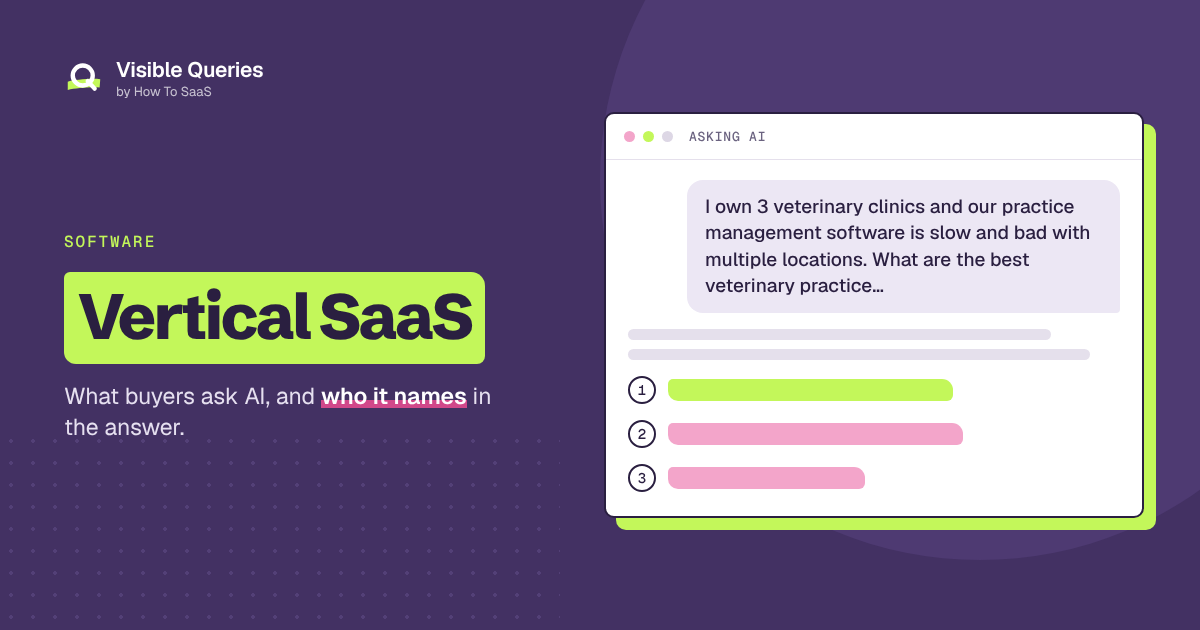
The owner of a three-location veterinary practice is frustrated with their practice management software. It's slow, it doesn't handle multiple locations well, and the online booking their clients want is an expensive add-on. They're not a software person, so they ask ChatGPT:
"I own 3 veterinary clinics and our practice management software is slow and bad with multiple locations. What are the best veterinary practice management systems for multi-location practices? Which have good online booking and client reminders? How hard is it to switch, and what does it cost?"
AI explains what to look for in veterinary practice management software, the difference between cloud and on-premise systems, multi-location features, integrations with labs and payment processors, typical pricing models, and how data migration usually works. Then it names four products. The owner books demos with two.
Vertical SaaS sells to a specific industry: veterinary clinics, restaurants, construction companies, law firms, dental practices, property managers, salons, churches, schools and many more. The buyers are usually owners and operators, not software experts. They ask AI in plain language, and they want software that understands their world.
Our software guide covers how software buyers research in general. This one goes through the questions that decide vertical SaaS deals, what AI usually says, and what companies can publish so AI names them.
Here are the questions at a glance:
| The question | What gets you named |
|---|---|
| "Best software for [industry]?" | Plain pages for the industry you serve |
| "Industry software or general tool?" | An honest comparison |
| "Does it do [workflow]?" | A page for each industry workflow |
| "How hard is it to switch?" | Migration steps and timelines |
| "How much does it cost?" | Pricing, or a clear range |
"What's the best software for [industry]?"
This is the defining question for vertical SaaS.
What AI usually says: It names products built for the industry, often grouped by business size or type.
What to publish: Pages for each segment of your industry you serve: single locations and multi-location groups, specialties (emergency vet, equine, exotics), and business models. Use the words your buyers use, not your internal product names.
"Industry software or a general tool?"
What AI usually says: It weighs built-in workflows, compliance and integrations against flexibility and cost.
What to publish: A clear explanation of what you do that general tools can't: industry workflows, compliance, integrations with industry partners, and terminology.
"Does it do [industry-specific workflow]?"
What AI usually says: It says whether products support workflows like lab integrations, inventory for controlled substances, job costing, trust accounting, recurring memberships or certification tracking.
Why it matters: These features decide deals. When AI gets them wrong, you lose buyers silently. Here's how a wrong fact shows up in the report:
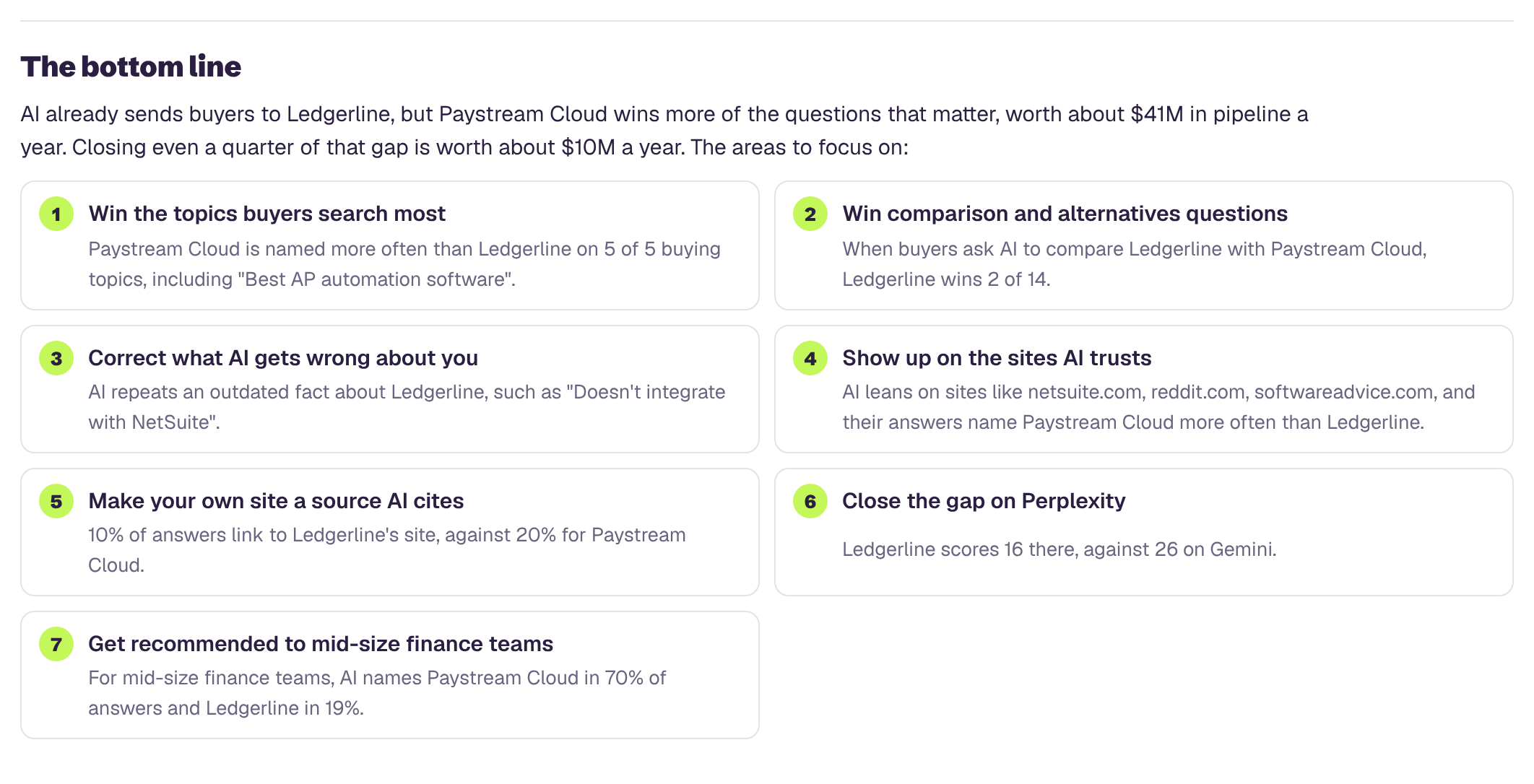
What to publish: A page for every important workflow and integration, written for the operator who does that work every day.
"How hard is it to switch?"
What AI usually says: It discusses data migration, training, downtime and contract terms.
What to publish: Your migration process, the systems you migrate from, timelines, training and support. Switching fear is often the biggest barrier, and clear answers lower it.
"How much does it cost?"
What to publish: Pricing by location, user or provider, add-ons, payment processing terms and contract length. Industry buyers compare costs closely.
Industry trust signals
Vertical buyers trust their peers and their industry. Publish customer stories from businesses like theirs, mention industry associations and partnerships, and describe your team's industry background. AI repeats these signals when operators ask whether a product understands their business.
Adjacent industries
Many vertical SaaS products serve several related industries, like salons and spas, or HVAC and plumbing. Each industry needs its own pages. AI matches "software for plumbing companies" to products that clearly say they serve plumbers.
What the sample report shows
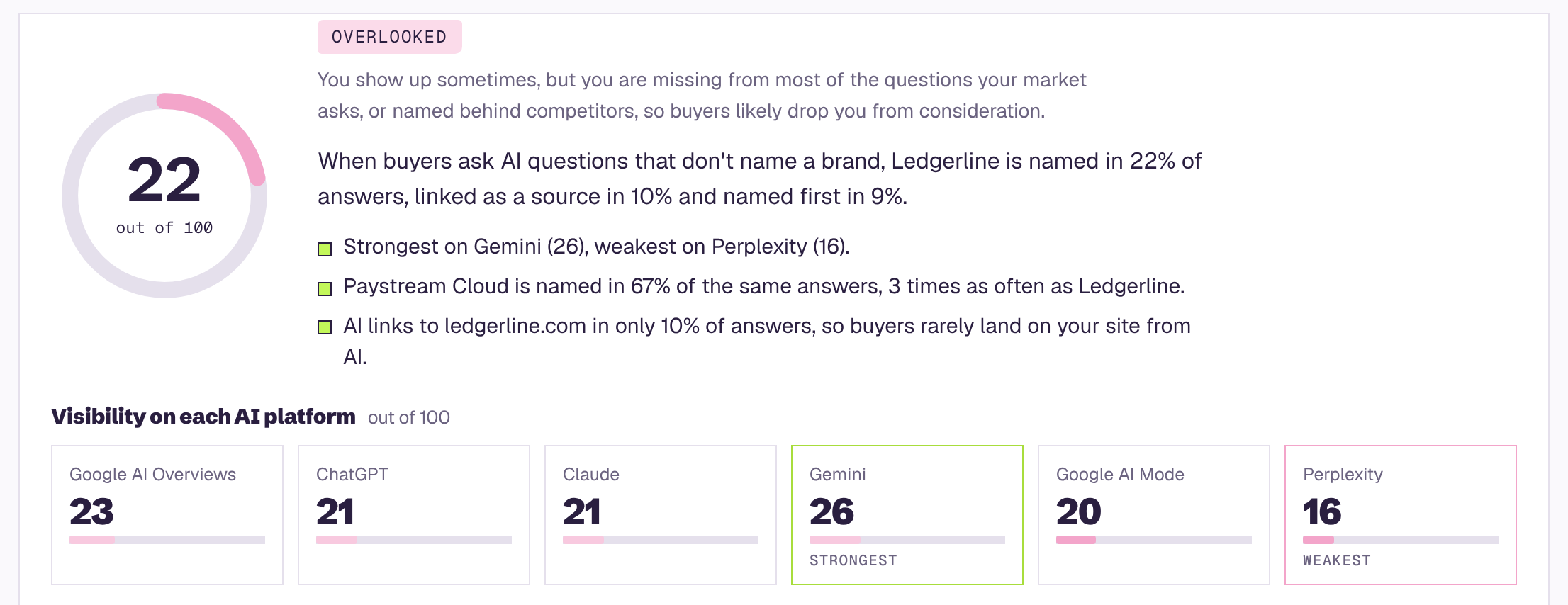
Here's what a Visible Queries report looks like for Ledgerline, the sample AP automation company from our guide. The questions are different for vertical software companies, but the patterns are the same.
The report starts with one score out of 100, a score for each AI platform, and the competitor AI names most:
The gap is clearest side by side:
If you only fix three things
- Give every industry segment and workflow its own page. In your buyers' words.
- Explain switching and pricing clearly.
- Show industry proof. Customer stories, partnerships and expertise.
Operators are asking AI which software is built for them. The product AI names will be the one that sounds like it understands their business.
Part of our guide: Why AI visibility matters for software companies
See what AI tells buyers in your industry about your product
Enter your website and get a free AI visibility report. It takes a few minutes, and you'll see:
- Your AI visibility score, overall and for ChatGPT, Gemini, Claude, Perplexity and Google's AI Overviews and AI Mode
- Which competitors AI recommends instead of you, and how often
- Which topics you win and lose, and how often each one is searched
- What AI gets wrong about you, and what to fix first
- Your biggest gaps: the buyer questions where AI leaves you out, and who it recommends instead
- A downloadable PDF you can share with your team