The contract question and six others: how people choose a gym through AI
People now ask AI which gym fits a beginner, what a membership should cost and how to avoid getting stuck in a contract. Here's what AI tells them, and how gyms and fitness clubs get named.
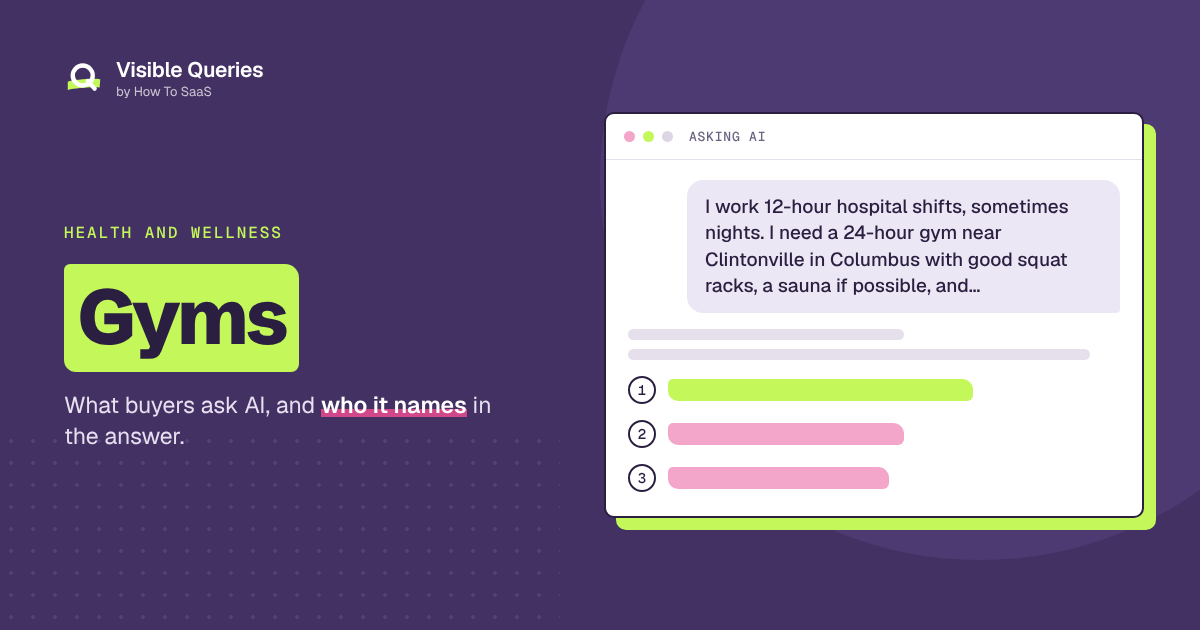
A nurse in Columbus just moved across town and their old gym is now a 25-minute drive. They work three twelve-hour shifts a week, sometimes nights. They want a gym with squat racks that aren't always taken, open 24 hours, no long contract, and ideally a sauna. They ask ChatGPT:
"I work 12-hour hospital shifts, sometimes nights. I need a 24-hour gym near Clintonville in Columbus with good squat racks, a sauna if possible, and no annual contract. What should I expect to pay, and which gyms fit?"
AI explains the difference between budget gyms, mid-tier clubs and premium clubs, what 24-hour access usually means (staffed or key-fob only), typical monthly prices and joining fees, and what to look for in cancellation terms. Then it names three gyms. The nurse tours one the next morning after a shift and signs up.
The gym business has always been about proximity, price and a moment of motivation. Proximity and price still matter. What's changed is who answers the question in that moment of motivation. More and more, it's AI.
Our health and wellness guide covers the journey across gyms, studios and salons. This one goes through the seven questions that decide gym memberships, what AI usually says, and what gyms can publish so AI names them.
Here are the questions at a glance:
| The question | What gets you named |
|---|---|
| "What kind of gym is right for me?" | A clear description of who your gym is for |
| "How much does a membership cost?" | Real prices, and what each tier includes |
| "How hard is it to cancel?" | Your contract and cancellation terms, in plain words |
| "Is it good for beginners?" | Onboarding, intro sessions and what a first visit looks like |
| "Is it crowded?" | Busy times, capacity and equipment counts |
| "What amenities do they have?" | A full amenities list with photos |
| "Which gym is best in [neighborhood]?" | Your location, parking and neighborhood in text |
1. "What kind of gym is right for me?"
What AI usually says: It sorts gyms into types: budget big-box gyms, full-service clubs with pools and classes, strength-focused gyms, coached small-group gyms, and premium or luxury clubs. It matches each to a kind of person and goal.
Why it matters: AI decides which type someone should look for before it names a single gym. If your gym doesn't clearly describe what kind of gym it is, AI can't put you in the right bucket.
What to publish: Say plainly who your gym is for. "A strength-focused gym with plenty of racks and platforms, for people who lift" or "a full-service family club with a pool, kids' programs and group classes." Then describe the equipment, the space and the atmosphere in words, not only in photos.
2. "How much does a gym membership cost?"
What AI usually says: Typical monthly ranges by type of gym, joining or enrollment fees, annual maintenance fees, and add-ons like personal training, classes, childcare and towel service. It often warns about fees that aren't mentioned upfront.
What to publish: Your real prices, every tier, and every fee. Gyms that hide prices behind "visit us for a tour" lose this question to gyms that publish them. If you run promotions, explain the regular price too, so AI doesn't repeat a January deal all year.
3. "Do they have contracts? How hard is it to cancel?"
This is the defining question for gyms.
What AI usually says: It warns that some gyms require long contracts, cancellation in person or by certified mail, and notice periods. It suggests reading the terms carefully and looking for month-to-month memberships.
Why it matters: Cancellation horror stories are some of the most common things people write about gyms online, and AI has read them. If AI thinks your gym has a strict contract, every hesitant person hears that before they visit. Here's how a wrong fact like that shows up in the report:
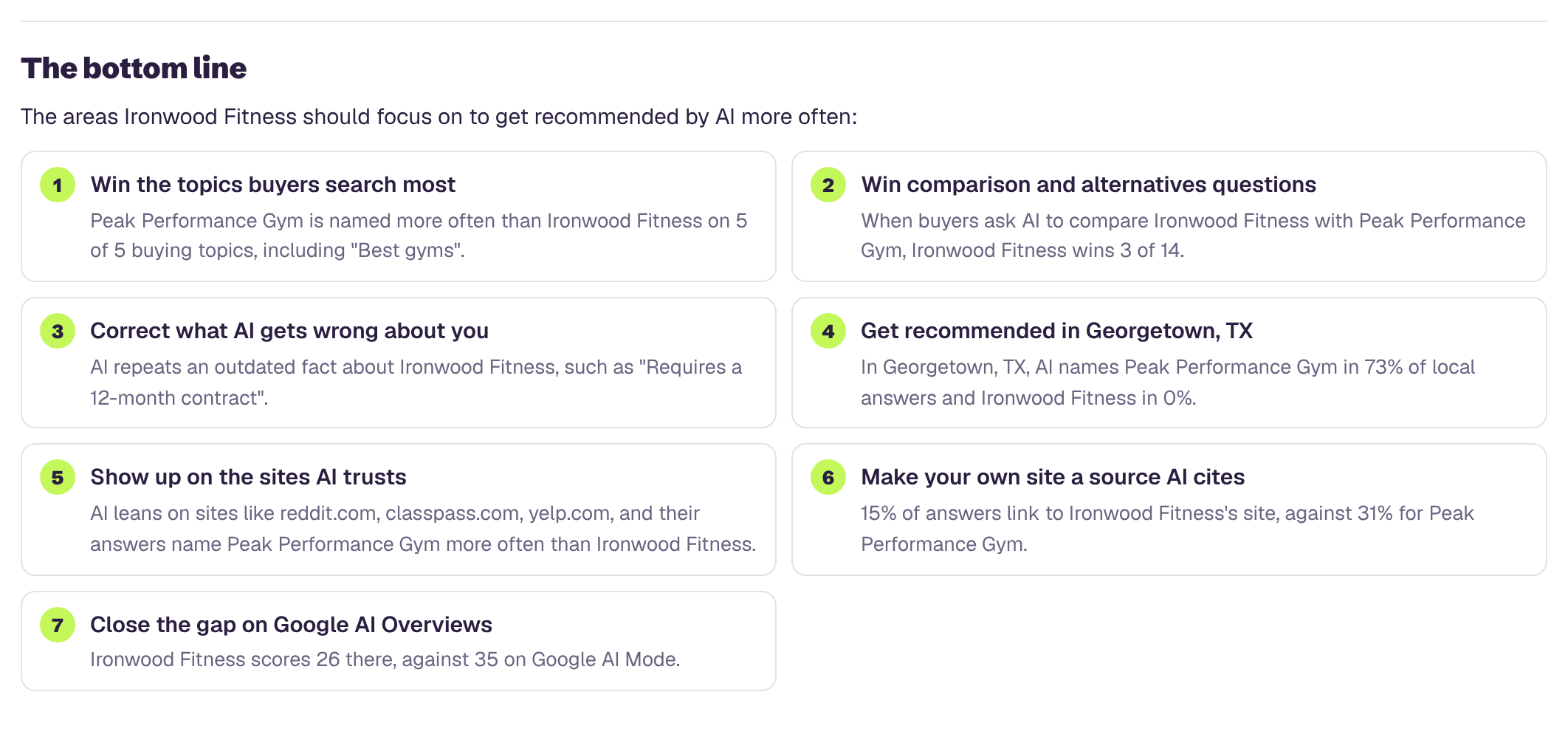
What to publish: A clear, friendly page about your membership terms: contract or no contract, how to cancel (ideally online), notice periods, freezes for travel or injury, and what happens with annual fees. If you used to have contracts and don't anymore, say so explicitly, because AI may still be repeating the old terms.
4. "Is it good for beginners? Will I feel intimidated?"
What AI usually says: It recommends gyms with orientations, intro sessions, beginner classes, staff on the floor and a welcoming atmosphere. It often suggests visiting at off-peak times first.
What to publish: Exactly what happens on someone's first visit: a tour, a free session with a trainer, an equipment orientation, a beginner program. Write about what the atmosphere is like, who your members are, and when it's quiet. This is how gyms win the people who've never belonged to one.
5. "Is it crowded? When's the best time to go?"
What AI usually says: It notes that most gyms are busiest early mornings and after work, and that crowding depends on the location and the number of members. It sometimes repeats reviews that mention waiting for equipment.
What to publish: Honest information about your busy and quiet times, how many racks, benches and machines you have, and how you manage capacity. If you've added equipment or space since crowding complaints, say so.
6. "What amenities do they have?"
What AI usually says: It lists amenities based on what it can find: pools, saunas, steam rooms, cold plunges, recovery rooms, childcare, classes, showers, parking and 24-hour access.
Why it matters: People ask very specific questions: "gym with a sauna and cold plunge in Columbus," "gym with childcare near me," "24-hour gym with staff overnight." AI can only match you if your amenities are written out clearly.
What to publish: A complete amenities page, with hours, childcare hours and age limits, pool schedules, which amenities each membership tier includes, and whether 24-hour access is staffed.
7. "Which gym is best in [neighborhood]?"
What AI usually says: It names a few gyms, usually with a line on each, often mixing local independents with national chains.
Why it matters: This is the shortlist. Chains have more pages and reviews online, so independents need to be specific to compete.
What to publish: A page for each location, with the neighborhood, parking, hours, equipment, classes, staff and reviews. Encourage members to mention specifics in reviews, like "the coaches," "always a rack open at 6 a.m.," "spotless locker rooms," because those details are what AI repeats.
Personal training is its own search
Many people searching for a gym are really looking for a coach. They ask AI questions like "personal trainer for women over 50 in Columbus," "trainer for knee rehab after physical therapy" or "how much does personal training cost?" If you offer personal training, give it its own pages, with trainer bios, specialties, certifications, prices and packages. Trainers with clear specialties are named much more often than "certified personal trainers available."
January, and every other month
New Year's resolutions still drive a big spike in gym questions, but they're not the only one. There are spring "get in shape for summer" questions, back-to-school questions from parents, and constant moving-related questions from people who just relocated. Content that answers "I just moved to [neighborhood], which gym should I join?" works all year.
What the sample report shows
Here's what a Visible Queries report looks like for Ironwood Fitness, the sample strength gym in the Austin area from our guide. The questions are different for gyms, but the patterns are the same.
Under the score, the report breaks visibility into the numbers that matter most:

The gap is clearest side by side:
If you only fix three things
- Publish prices, fees and contract terms clearly. Especially how to cancel.
- Describe what kind of gym you are and who it's for. Equipment, atmosphere and amenities in words.
- Make the first visit easy to understand. Intro sessions, orientations and beginner programs.
People are asking AI which gym they'll actually stick with. The gym AI names will be the one that answers that question most honestly.
Part of our guide: Why AI visibility matters for health and wellness businesses
See what AI tells people about your gym
Enter your website and get a free AI visibility report. It takes a few minutes, and you'll see:
- Your AI visibility score, overall and for ChatGPT, Gemini, Claude, Perplexity and Google's AI Overviews and AI Mode
- Which gyms AI recommends instead of you, and how often
- Your visibility in every city you serve, and the competitor AI names most in each one
- What AI gets wrong about you, and what to fix first
- Your biggest gaps: the buyer questions where AI leaves you out, and who it recommends instead
- A downloadable PDF you can share with your team