Hot or not, beginner or flow: how people choose a yoga studio through AI
People now ask AI which style of yoga suits them, whether a studio is beginner friendly and what a class pack should cost. Here's what AI tells them, and how yoga studios get named.
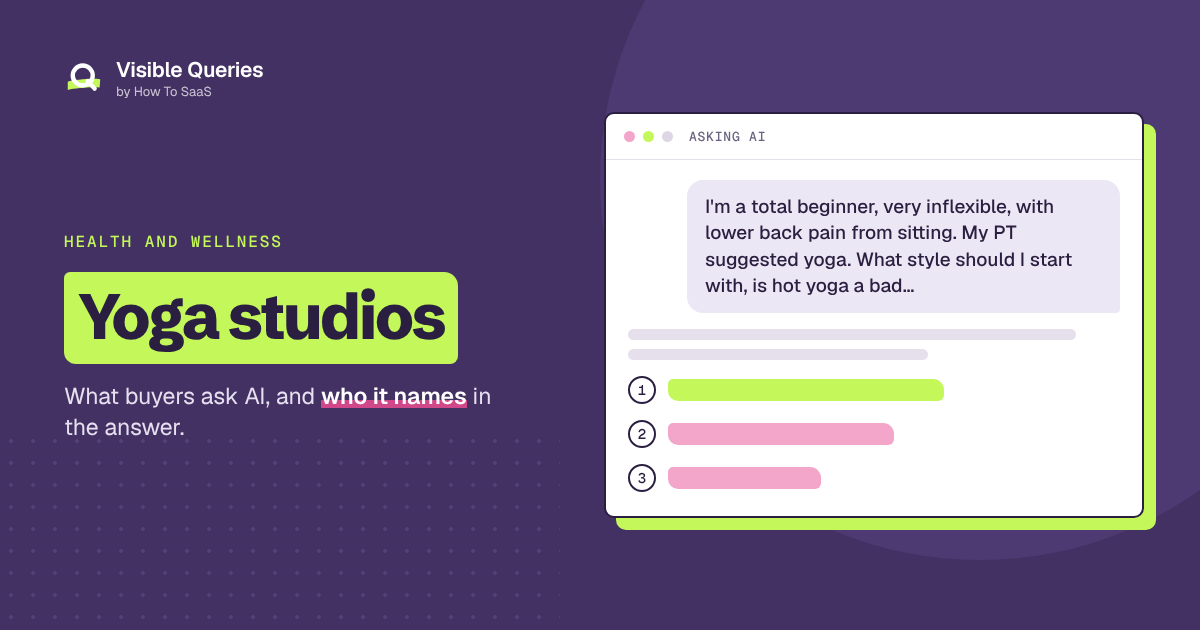
A software engineer in Portland has lower back pain from too many hours at a desk. Their physical therapist suggested yoga. They've never done it, they're not flexible, and the videos they've watched online all seem to feature people folding in half. They ask ChatGPT:
"I'm a total beginner, very inflexible, with lower back pain from sitting. My PT suggested yoga. What style should I start with, is hot yoga a bad idea, and which studios in Portland are good for beginners?"
AI explains the differences between hatha, vinyasa, yin, restorative, Iyengar and hot yoga, suggests slower, alignment-focused classes for back pain, says to tell the teacher about any injury, and recommends trying beginner series or intro offers. Then it names three studios. The engineer buys a new-student pass at the first one that night.
Yoga studios are small, local and personal. People choose them by style, teacher, atmosphere and schedule, and they often feel nervous before the first class. AI now answers many of those nervous questions before anyone walks in.
Our health and wellness guide covers the journey across gyms, studios and salons. This one goes through the questions that decide yoga students, what AI usually says, and what studios can publish so AI names them.
Here are the questions at a glance:
| The question | What gets you named |
|---|---|
| "What kind of yoga is right for me?" | A guide to each class style you teach |
| "Is hot yoga safe for beginners?" | Honest guidance on heat, hydration and starting out |
| "Is this studio beginner friendly?" | Beginner classes, intro offers and what to bring |
| "How much do classes cost?" | Drop-in, pack and membership prices |
| "Who are the teachers?" | Teacher bios with training and specialties |
"What kind of yoga is right for me?"
What AI usually says: It explains the main styles in plain language, matches them to goals like flexibility, stress, strength, back pain or pregnancy, and usually suggests beginners start with slower classes.
Why it matters: AI decides which style someone looks for before it names a studio. If your class descriptions are vague, like "Flow 1" or "Sunrise Session," AI can't tell what they are.
What to publish: Clear descriptions for every class type: the style, pace, heat, level, who it's for and what to expect. "A slow, alignment-focused class for beginners and anyone with tight hips or back pain" is the kind of sentence AI can repeat.
"Is hot yoga safe? Is it right for beginners?"
What AI usually says: It explains typical temperatures, the benefits people report, and cautions for people who are pregnant, have heart conditions or are sensitive to heat. It recommends hydrating and starting slowly.
What to publish: If you teach hot yoga, explain your room temperature and humidity, how you help beginners, what to bring, and who should check with a doctor first. If you don't, say that too. Many people search for "non-heated yoga" specifically.
"Is this studio beginner friendly?"
What AI usually says: It recommends studios with beginner series, intro classes, smaller class sizes and teachers who give modifications. It often repeats what reviews say about how welcoming a studio feels.
What to publish: A "new to yoga" page: what happens in the first class, what to wear and bring, whether mats are available, how early to arrive, how teachers handle beginners and injuries, and which classes to start with. Beginner series or workshops deserve their own pages.
"How much do yoga classes cost?"
What AI usually says: Typical drop-in prices, class packs, monthly unlimited memberships and new-student intro offers, with a note that prices vary by city.
What to publish: All your prices, including intro offers, class packs, memberships and expiration terms. Pricing that's only visible in a booking app is often invisible to AI.
"Who are the teachers?"
What AI usually says: When it knows them, it mentions teachers by name or by background. For many people, the teacher is the reason they stay.
What to publish: Teacher bios with their training, styles, specialties (prenatal, trauma-informed, therapeutic, athletes, seniors), and which classes they teach. Specialized teachers are a big reason studios get named for specific questions.
Where you're named, city by city
Yoga studios usually draw from a few neighborhoods. AI's answers can change a lot from one to the next:
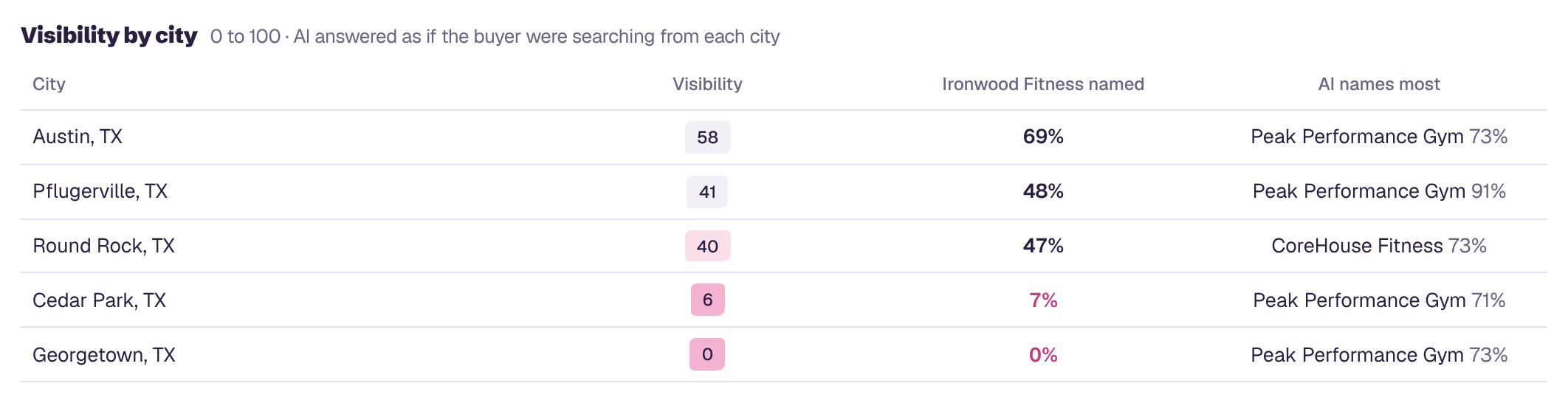
For yoga, the topics to watch are "best-of" and buyer questions: "best yoga studios in [neighborhood]," "beginner yoga near me." If a studio two neighborhoods away is named first, your pages likely don't make your location and neighborhood clear enough.
Specialty classes and audiences
Some of the most valuable yoga questions are narrow:
- "Prenatal yoga in Portland."
- "Yoga for seniors with balance issues."
- "Yoga for runners near me."
- "Trauma-informed yoga classes."
- "Yoga teacher training programs in Oregon."
Each one is a separate search, often from someone ready to buy. A page for each specialty you offer, with the teacher, schedule and what to expect, gives AI a reason to name you. Teacher training programs, in particular, are high-value and heavily researched, so give them detailed pages: curriculum, certification, schedule, cost and who it's for.
Online classes, retreats and workshops
People also ask AI about online yoga memberships, weekend workshops and retreats. If you offer them, make them visible on your site, not only in emails and social posts. A retreat page with dates, location, price and what's included can be cited months before the trip.
What the sample report shows
Here's what a Visible Queries report looks like for Ironwood Fitness, the sample strength gym in the Austin area from our guide. The questions are different for yoga studios, but the patterns are the same.
And it shows the actual questions, platform by platform, with who was named:
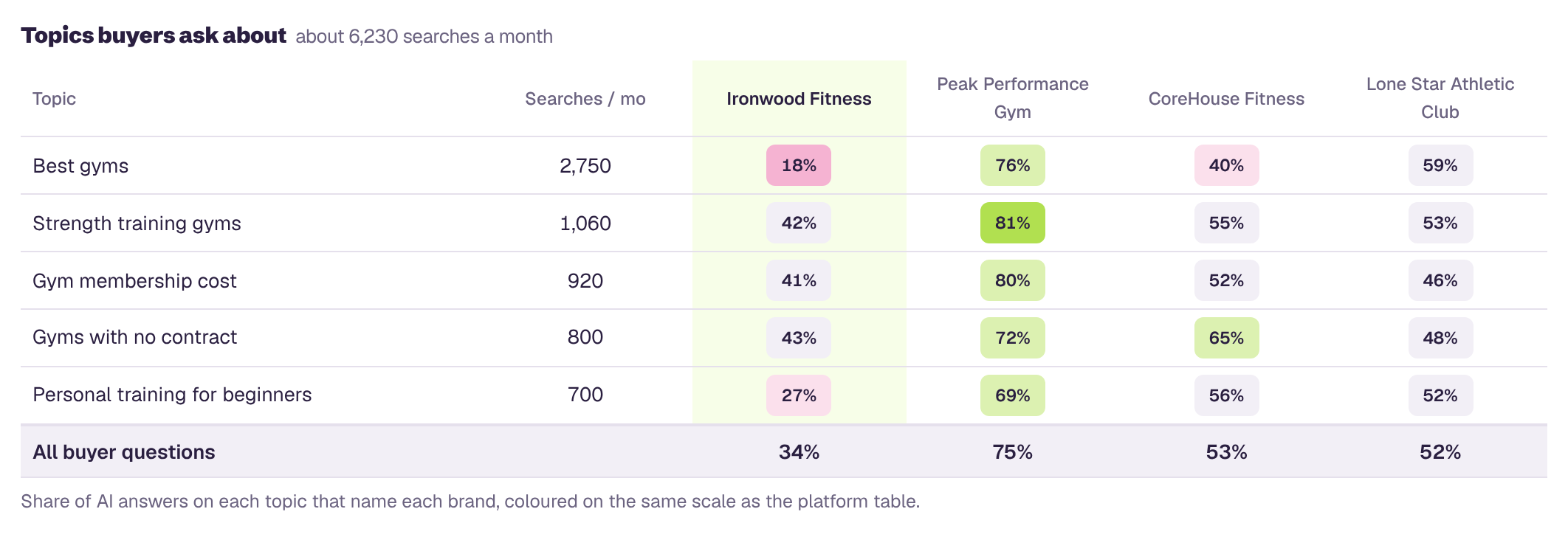
The gap is clearest side by side:
If you only fix three things
- Describe every class clearly. Style, pace, heat, level and who it's for.
- Make beginners feel welcome on paper. A "new to yoga" page with what to expect, plus your intro offer and prices.
- Give each specialty and each teacher its own page. Prenatal, seniors, athletes, teacher training and more.
People are asking AI where to take their first yoga class. The studio AI names will be the one that answers the nervous questions best.
Part of our guide: Why AI visibility matters for health and wellness businesses
See what AI tells people about your yoga studio
Enter your website and get a free AI visibility report. It takes a few minutes, and you'll see:
- Your AI visibility score, overall and for ChatGPT, Gemini, Claude, Perplexity and Google's AI Overviews and AI Mode
- Which yoga studios AI recommends instead of you, and how often
- Your visibility in every city you serve, and the competitor AI names most in each one
- What AI gets wrong about you, and what to fix first
- Your biggest gaps: the buyer questions where AI leaves you out, and who it recommends instead
- A downloadable PDF you can share with your team