Reformer, barre, cycle or HIIT: how people choose a boutique fitness studio through AI
People now ask AI whether reformer Pilates is worth the price, which boutique class suits them and how intro offers work. Here's what AI tells them, and how Pilates, barre, cycling and HIIT studios get named.
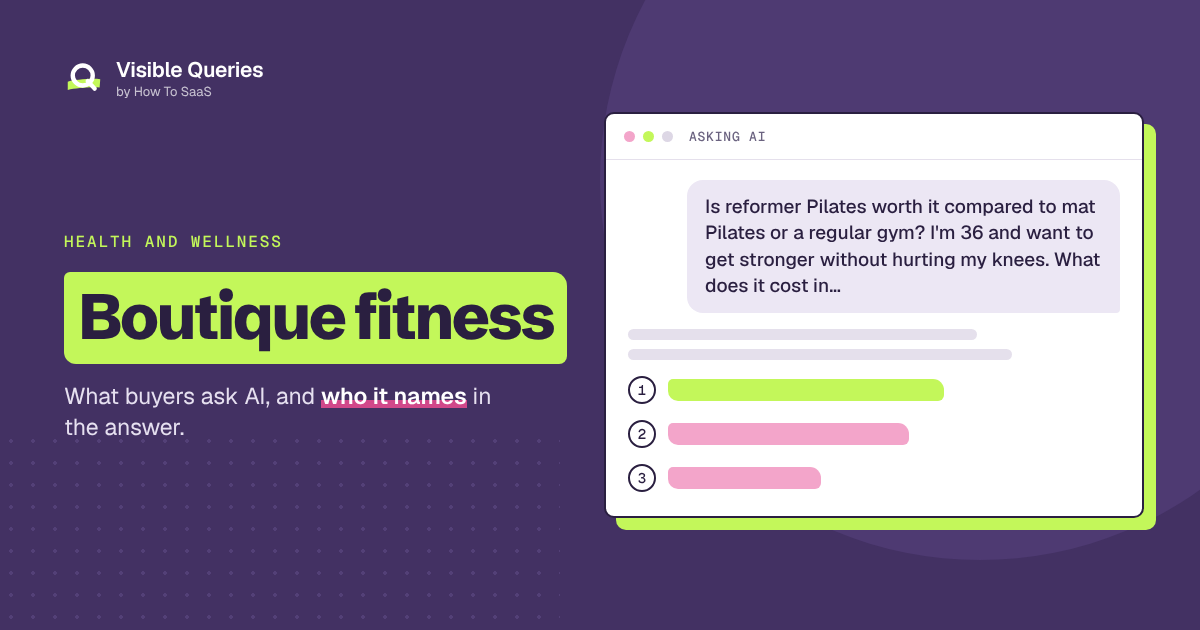
A marketing director in Scottsdale keeps seeing reformer Pilates everywhere. Three friends swear by it. It also costs more per class than their entire gym membership. Before booking, they ask ChatGPT:
"Is reformer Pilates worth it compared to mat Pilates or a regular gym? I'm 36 and want to get stronger without hurting my knees. What does it cost in Scottsdale, and which studios are good for beginners?"
AI explains what reformer machines do, how they differ from mat classes, why people with joint issues often like them, what private and group classes typically cost, and why beginners usually start with an intro class or private session. Then it names three studios. The director books a new-client special at one of them for Saturday.
Boutique fitness covers reformer and mat Pilates, barre, indoor cycling, rowing, HIIT and bootcamp-style studios. These studios charge premium prices, depend on full classes, and compete on experience, community and instructors. The people choosing them are researching more carefully than ever, and AI is part of that research.
Our health and wellness guide covers the journey across gyms, studios and salons. This one goes through the questions that decide boutique fitness clients, what AI usually says, and what studios can publish so AI names them.
Here are the questions at a glance:
| The question | What gets you named |
|---|---|
| "Is it worth the price?" | What makes a class worth it: class size, coaching and equipment |
| "Reformer or mat? Barre or Pilates?" | Honest comparisons of your formats |
| "Is it good for beginners?" | Intro classes and how instructors adjust |
| "What does it cost?" | Class, pack and membership prices |
| "Can I do it with an injury or pregnant?" | Which classes suit which conditions, and instructor training |
"Is it worth the price?"
This is the defining question for boutique fitness.
What AI usually says: It weighs the benefits people report (coaching, smaller classes, motivation, community, low-impact strength) against the cost, and suggests trying intro offers or class packs before committing to a membership.
Why it matters: People who ask this are on the fence. The studio that gives AI the clearest reasons is the one AI describes when it says "it can be worth it if..."
What to publish: A clear explanation of what makes your classes different: class size, instructor training, equipment, programming and the results members report in their own words. Don't overclaim. Specific, believable details persuade more than big promises.
"Reformer vs mat Pilates? Barre vs Pilates? Cycling vs HIIT?"
What AI usually says: Comparisons of each format: what it works, how intense it is, how beginner friendly it is and what it costs.
What to publish: Your own honest comparisons, especially if you offer more than one format. "Which of our classes is right for you?" pages are perfect material for AI.
"Is it good for beginners? Will I keep up?"
What AI usually says: It suggests beginner or foundations classes, private intro sessions for reformer, arriving early, and telling the instructor about injuries.
What to publish: What a first class looks like, step by step: arrival, setup, how instructors help new people, modifications and what to wear (grip socks, cycling shoes). Make the beginner path obvious.
"What does it cost?"
What AI usually says: Typical drop-in, class pack, private session and unlimited membership prices, with intro specials.
What to publish: All your pricing, including the intro offer, packs, memberships, expiration and cancellation policies, and late-cancel fees. Studios with prices only inside a booking app are often described by AI with vague ranges, or with a competitor's prices.
"Can I do it with an injury, pregnant or postpartum?"
What AI usually says: It often suggests Pilates for low-impact strength and rehab, recommends checking with a doctor, and suggests private sessions or instructors with relevant training.
What to publish: Pages for prenatal and postpartum classes, rehab-friendly or clinical Pilates, and instructors with physical therapy or specialized backgrounds. These are high-intent questions and AI names studios that clearly serve them.
Which topics AI gives to competitors
Boutique studios usually win or lose on specific questions. Here's how that looks in a real report:
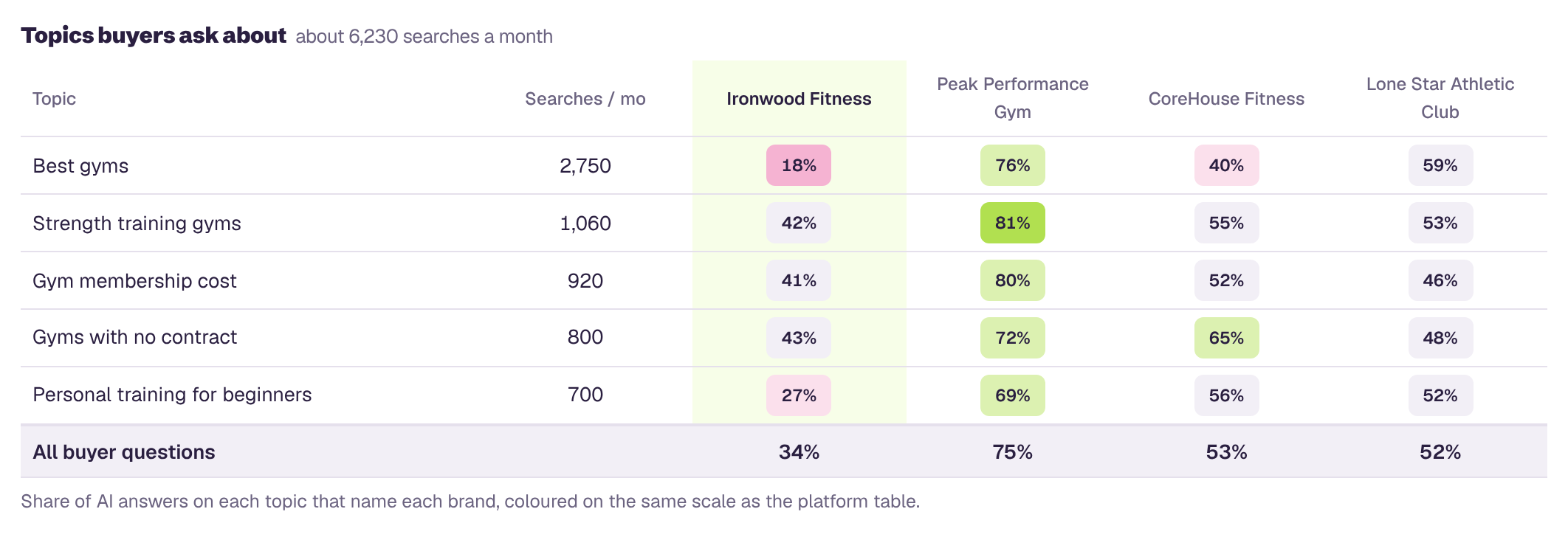
Watch the comparison and "alternatives" rows. Boutique clients often know one big brand and ask AI, "what's better than [studio chain] in Scottsdale?" Independent studios win these questions when AI can clearly see what makes them different.
Franchises and independents
Boutique fitness has many franchise brands. AI often knows the national brand well but confuses its local studios, mixing up addresses, schedules, instructors and prices. Franchise studios need strong local pages: address, neighborhood, parking, instructors, local reviews and any local pricing.
Independent studios have a different challenge. They need to make their own story clear enough that AI includes them alongside better-known brands.
Membership and retention
The questions don't stop after people join. Members ask AI things like "how often should I do reformer Pilates?", "can I combine barre and strength training?", "how do I freeze my membership?" and "is it normal to be sore after Pilates?" Studios that answer these on their own site keep members engaged and give AI more reasons to trust them.
What the sample report shows
Here's what a Visible Queries report looks like for Ironwood Fitness, the sample strength gym in the Austin area from our guide. The questions are different for boutique fitness studios, but the patterns are the same.
The report then picks out your biggest gaps: the buyer questions where AI leaves you out, and who it recommends instead:
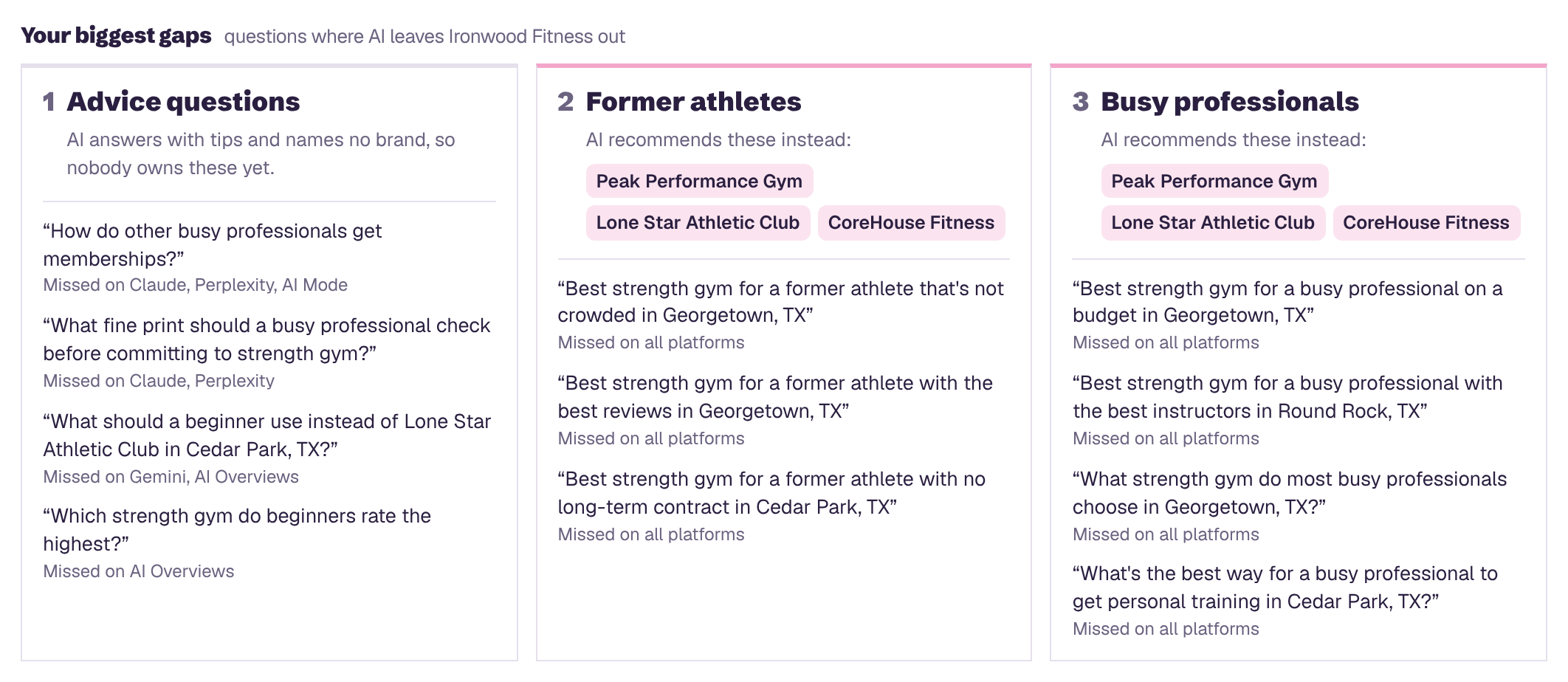
The gap is clearest side by side:
If you only fix three things
- Explain why your classes are worth it. Class size, instructors, equipment and programming, with real member stories.
- Publish every price and policy. Intro offers, packs, memberships and cancellation terms.
- Make the beginner and special-needs paths obvious. First-class guides, prenatal, postpartum and rehab-friendly classes.
People are asking AI whether boutique fitness is worth the money. The studio AI names will be the one that makes the case most clearly.
Part of our guide: Why AI visibility matters for health and wellness businesses
See what AI tells people about your studio
Enter your website and get a free AI visibility report. It takes a few minutes, and you'll see:
- Your AI visibility score, overall and for ChatGPT, Gemini, Claude, Perplexity and Google's AI Overviews and AI Mode
- Which studios AI recommends instead of you, and how often
- Your visibility in every city you serve, and the competitor AI names most in each one
- What AI gets wrong about you, and what to fix first
- Your biggest gaps: the buyer questions where AI leaves you out, and who it recommends instead
- A downloadable PDF you can share with your team