Outgrowing the garage: how brands choose a 3PL or logistics partner through AI
Ecommerce brands and shippers now ask AI when to outsource fulfillment, what 3PLs charge and which providers fit their products. Here's what AI tells them, and how logistics and 3PL companies get named.
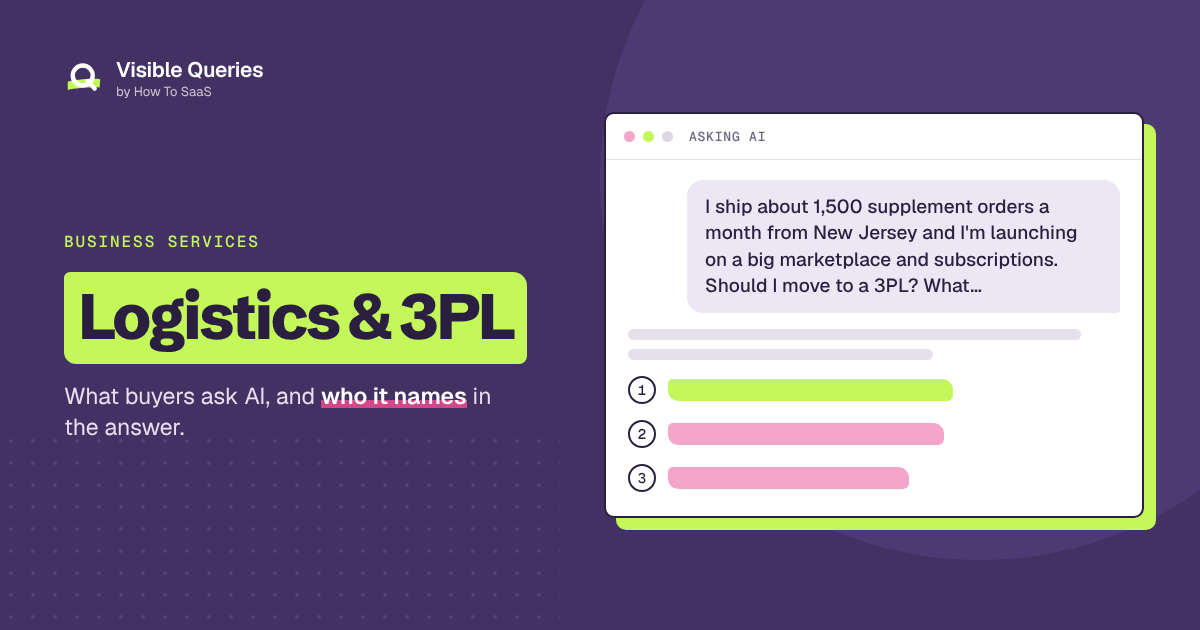
The founder of a supplements brand is shipping 1,500 orders a month out of a rented warehouse unit in New Jersey. They're about to launch on a big marketplace and add subscriptions. They can't hire fast enough, and shipping to the West Coast takes too long. They ask ChatGPT:
"I ship about 1,500 supplement orders a month from New Jersey and I'm launching on a big marketplace and subscriptions. Should I move to a 3PL? What do 3PLs charge for receiving, storage, pick and pack? Do I need multiple warehouses? Which 3PLs are good for supplements and lot tracking?"
AI explains when brands typically outsource fulfillment, how 3PL pricing usually works, the benefits of multiple warehouse locations, why supplements need lot and expiration tracking, integration questions, and what to ask about accuracy, cutoffs and contracts. Then it names several providers. The founder requests quotes from three.
Logistics buyers range from small ecommerce brands to large manufacturers. They're choosing partners that will touch every order, so accuracy, speed and integrations matter. AI is increasingly where they start.
Our business services guide covers how businesses choose service firms in general. This one goes through the questions that decide logistics clients, what AI usually says, and what providers can publish so AI names them.
Here are the questions at a glance:
| The question | What gets you named |
|---|---|
| "When should I move to a 3PL?" | Honest signs it's time |
| "What do 3PLs charge?" | Your pricing structure, line by line |
| "3PLs for [product or channel]?" | Pages for the products and channels you handle |
| "Does it integrate with my platform?" | A full integrations list |
"When should I move to a 3PL?"
What AI usually says: It suggests signs like order volume, space, staffing, shipping speed and growth plans.
What to publish: Honest guidance on when brands are ready, your minimums, and how onboarding works.
"What do 3PLs charge?"
What AI usually says: It explains receiving, storage, pick and pack, packaging, shipping and account management fees, with typical ranges.
What to publish: Your pricing structure, minimums, and example costs for typical clients. Transparent pricing helps you stand out.
"Which 3PLs specialize in [product or channel]?"
This is the defining question for the category.
What AI usually says: It names providers that clearly handle the product type or channel: supplements, cosmetics, apparel, food, oversized items, hazmat, subscriptions, B2B retail, marketplaces.
What to publish: A page for every product type, channel and certification you handle, with the specific capabilities: lot tracking, temperature control, kitting, retail compliance and marketplace programs.
"Does it integrate with my platform?"
What to publish: Every ecommerce platform, marketplace and system you integrate with, and how integrations work.
Where you're named, region by region
Logistics buyers often search by region, and AI's answers change by place:
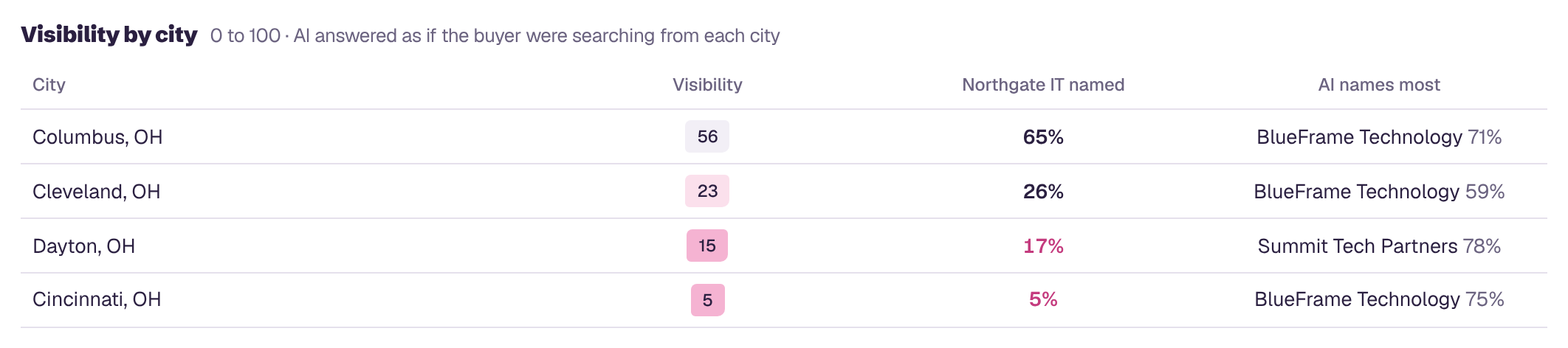
Give every warehouse location its own page, with its capabilities, size, shipping reach and services.
Freight, trucking and brokers
Freight brokers, trucking companies and freight forwarders get different questions: lanes, equipment types, reliability, tracking and rates. Give each service and lane its own page.
What the sample report shows
Here's what a Visible Queries report looks like for Northgate IT, the sample managed IT provider in Ohio from our guide. The questions are different for 3PLs and logistics providers, but the patterns are the same.
The report then picks out your biggest gaps: the buyer questions where AI leaves you out, and who it recommends instead:
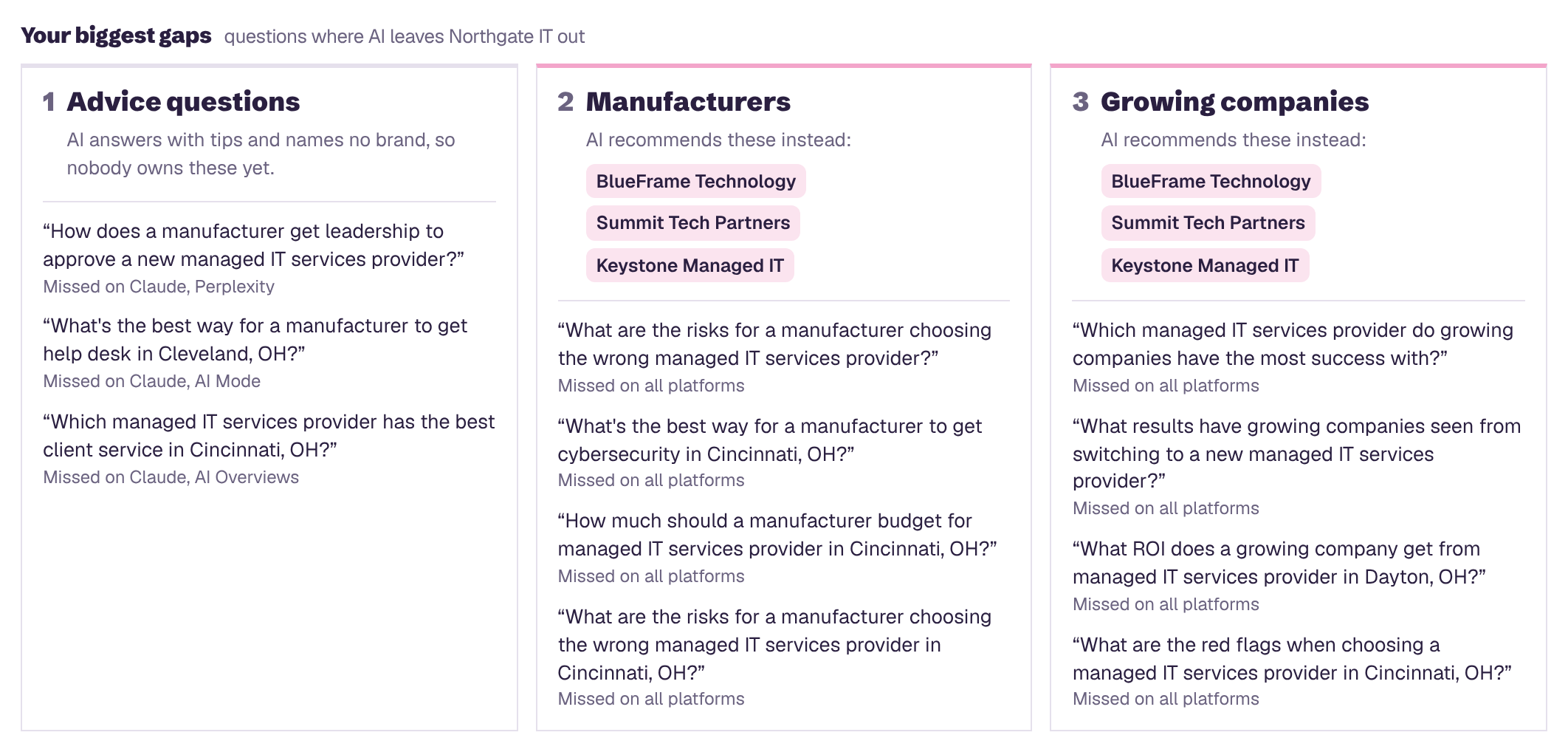
The gap is clearest side by side:
If you only fix three things
- Publish pricing, minimums and onboarding.
- Give every product type, channel and location its own page.
- List every integration clearly.
Brands are asking AI who can ship their orders reliably. The provider AI names will be the one that explains its capabilities most clearly.
Part of our guide: Why AI visibility matters for business services firms
See what AI tells shippers about your logistics company
Enter your website and get a free AI visibility report. It takes a few minutes, and you'll see:
- Your AI visibility score, overall and for ChatGPT, Gemini, Claude, Perplexity and Google's AI Overviews and AI Mode
- Which providers AI recommends instead of you, and how often
- Your visibility in every city you serve, and the competitor AI names most in each one
- What AI gets wrong about you, and what to fix first
- Your biggest gaps: the buyer questions where AI leaves you out, and who it recommends instead
- A downloadable PDF you can share with your partners