Winning the 'where should I buy it' question: how shoppers choose multi-brand online retailers through AI
Shoppers ask AI which product to buy, then where to buy it. Here's what AI tells them about online stores that sell other brands, and how specialty e-tailers get named as the place to buy.
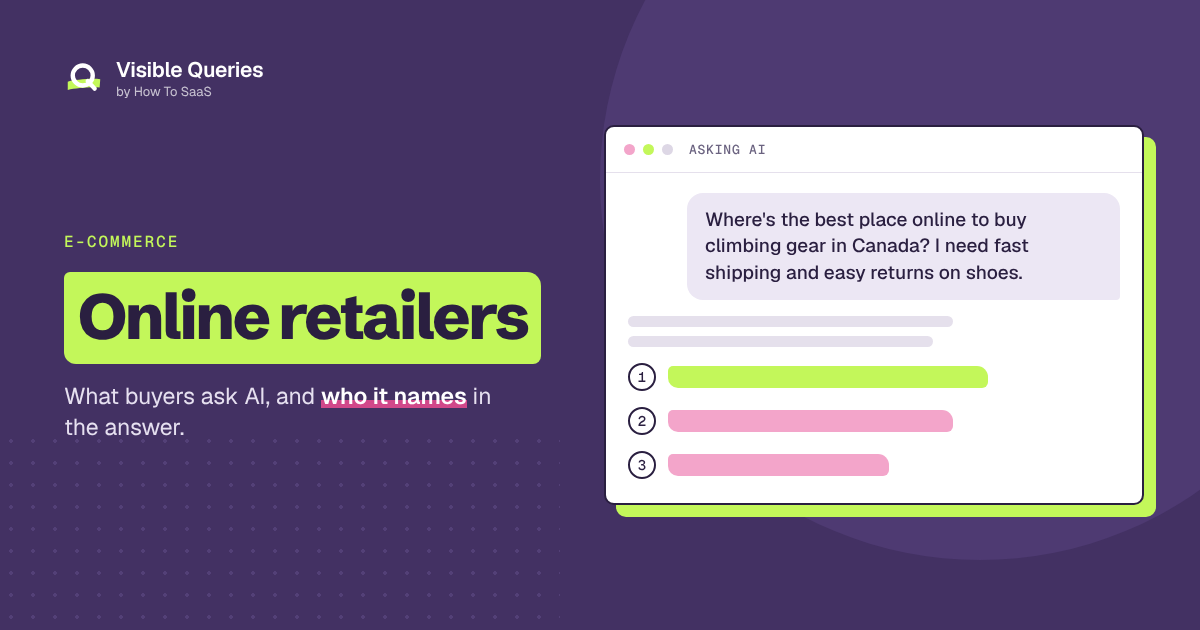
A climber in Vancouver needs a new harness and a pair of shoes before a trip to Squamish. They've narrowed it down to two harness models after reading a few reviews. Now they need somewhere to buy both, with shipping fast enough to arrive in a week and a return policy that covers shoes that don't fit. They ask Perplexity:
"Where's the best place online to buy climbing gear in Canada? I need fast shipping and easy returns on shoes."
AI names four online stores. It notes which one has free shipping over $99, which has a 60-day return window on unworn shoes, which has expert fitting advice by chat, and which is cheapest but slow to ship. Two of the store names link to their sites. The climber orders from the one with the fitting chat.
Online retailers that sell other companies' products face a two-part question. Shoppers first ask AI which product to buy, then where to buy it. You don't control the product, and you're competing with the brand's own store, Amazon, and every other retailer that stocks it. Our e-commerce guide covers how online shoppers research in general. This one goes through the questions that decide where shoppers buy, what AI usually says, and what multi-brand online retailers can publish to get named.
Here are the questions at a glance:
| The question | What gets your store named |
|---|---|
| "Where's the best place to buy [category] online?" | A clear reason to buy from you, published as fact |
| "Who has [product] in stock with fast shipping?" | Accurate stock, shipping and delivery times |
| "Which [product] should I buy?" | Expert buying guides and honest comparisons |
| "Is [store] reliable?" | Policies in plain text and reviews about service |
| "Is [store] cheaper than Amazon or the brand?" | Price matching or value you can state plainly |
"Where's the best place to buy [category] online?"
What AI usually says: It names a few stores and gives each a reason: best selection, best prices, fastest shipping, best returns, best advice.
Why it matters: AI needs a reason to pick you. If it can't find one, it defaults to the biggest names or to the brand's own store.
What to publish: One or two clear reasons to buy from you, stated as facts AI can repeat: "free shipping across Canada over $99," "60-day returns on unworn footwear," "gear experts available by chat seven days a week," "price match with any Canadian retailer." Put them on your homepage, About page and policy pages, in text.
"Which [product] should I buy?"
This question comes before the "where" question, and the stores that help answer it often win both.
What AI usually says: It compares products using reviews, specs and expert guides. The sources it trusts most get cited.
Why it matters: If your buying guide is the one AI learns from, your store is the natural next step. In the sample report from our e-commerce guide, AI leans on sites like seriouseats.com, youtube.com and amazon.com when shoppers ask about coffee, and those answers name the sample brand's competitors more often. Expert content is how a store becomes one of those trusted sites.
What to publish: Buying guides written by people who know the category, honest product comparisons, "best for" picks by use and budget, and fit and sizing advice. Don't just list everything you sell. Explain which product suits which person, including products you don't make much margin on.
"Who has [product] in stock with fast shipping?"
What AI usually says: It works from whatever product and stock information it can find, which may be out of date.
What to publish: Product pages that show availability, price, and delivery time to the shopper's region in plain text. Keep your product feed and Google Merchant Center data accurate. When something is out of stock, say when it's expected back rather than removing the page.
"Is [store] reliable?"
What AI usually says: It summarizes reviews about shipping speed, packaging, customer service and returns. A single bad holiday season can define you for years.
What to publish: Clear shipping and returns pages, a real About page, contact details, and visible responses to reviews. Fix the problems behind recurring complaints, then make the fix public.
The facts AI gets wrong about stores
Stores change policies more often than brands do, and AI keeps the old versions. The most common wrong facts:
- Shipping regions, especially after you start shipping to a new country
- Free shipping thresholds after a change
- Return windows and who pays return shipping
- Brands you carry, after you add or drop one
- Store locations, if you also have physical stores
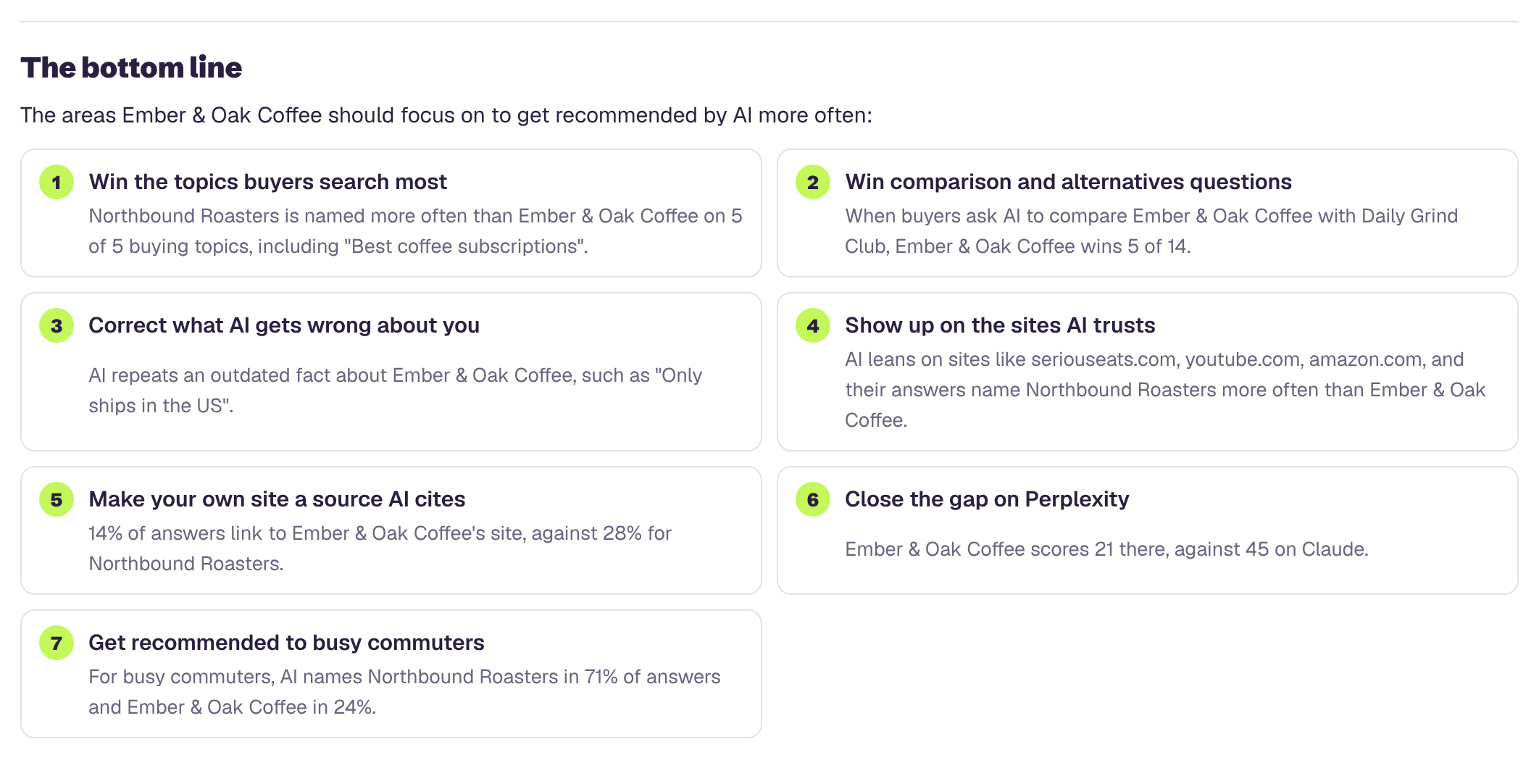
In the sample, AI tells shoppers the brand only ships in the US, so Canadian shoppers are told it isn't an option. The same thing happens to online retailers all the time. Keep a dated policy page and update every profile and listing the day a policy changes.
What the sample report shows
The sample Ember & Oak Coffee report shows how one competitor can dominate a whole category across every topic, even the one closest to "where should I buy it":
Want to see whether AI names your store as the place to buy? Get your free AI visibility score from just your website address.
If you only fix three things
- Give AI a reason to recommend your store, and state it as fact.
- Publish expert buying guides. Help shoppers pick the product, and they'll buy it from you.
- Keep shipping, returns and stock facts current everywhere.
Shoppers are asking AI where to buy. The online stores that win will be the ones AI can describe as the best place to get it, for a reason it can repeat.
See what your report covers on our e-commerce page.
Part of our guide: How people shop online now, and why AI visibility decides which store gets the sale
See if AI names your store as the place to buy
Enter your website and get a free AI visibility report. It takes a few minutes, and you'll see:
- Your AI visibility score, overall and for ChatGPT, Gemini, Claude, Perplexity and Google's AI Overviews and AI Mode
- Which stores AI recommends instead of you, and how often
- Which sites AI trusts in your category, and who they name
- What AI gets wrong about you, like shipping, returns and prices
- A downloadable PDF you can share with your team