EV chargers, warm outlets and panel upgrades: what homeowners ask AI before they hire an electrician
Homeowners now ask AI whether an electrical problem is dangerous, whether their panel can handle an EV charger or heat pump, and which electrician to trust. Here's what AI tells them, and how electricians get named.
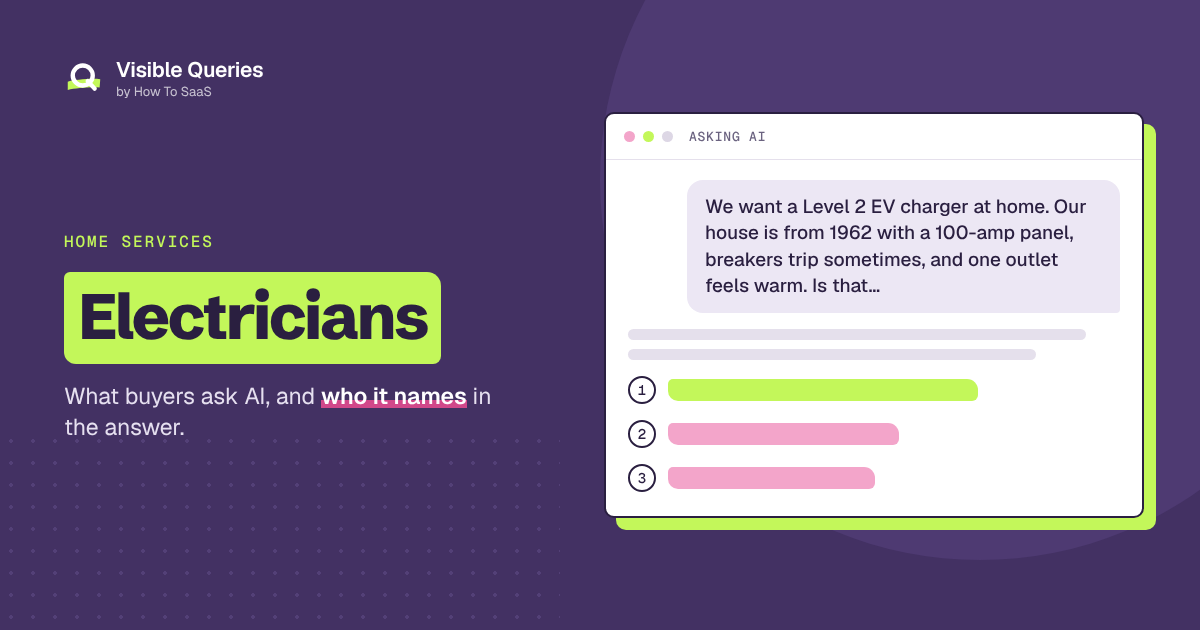
A family in Columbus just bought an electric SUV. Their 1962 house has a 100-amp panel, the kitchen breaker trips when the microwave and toaster run together, and one living room outlet is warm to the touch. Before calling anyone, they ask ChatGPT:
"We want a Level 2 EV charger at home. Our house is from 1962 with a 100-amp panel, breakers trip sometimes, and one outlet feels warm. Is that dangerous? Do we need a panel upgrade, what does it cost, and who are good electricians in Columbus?"
AI tells them the warm outlet is a real warning sign. It explains load calculations, when a 200-amp upgrade is needed, rough costs for the charger and the panel, permits and inspections, and possible utility rebates. Then it names three local electricians. The first one gets a $5,500 job.
Electrical work is different from most home services. It's dangerous, it's regulated, and most homeowners know not to touch it. That puts trust and credentials at the center, and it makes AI's answers to "is this dangerous?" and "who should I call?" unusually powerful.
Our home services guide covers the homeowner's journey in general. This one goes through the questions that decide electrical jobs, what AI usually says, and what electricians can publish so AI names them.
Here are the questions at a glance:
| The question | What gets you named |
|---|---|
| "Is this dangerous?" | A warning-signs page sorted into "call now," "call this week" and "probably fine" |
| "Do I need a panel upgrade for an EV charger?" | Plain guides to EV chargers, heat pumps and panel upgrades |
| "How much does it cost to [job]?" | Local price ranges with real examples |
| "Can I do this myself? Can a handyman?" | What homeowners can legally do, and what needs a license |
| "Is [electrician] licensed? Do they pull permits?" | License numbers, insurance and permit policy on a clear page |
| "Generator or battery backup?" | An honest comparison for local outages |
| "My home inspector flagged something." | Common inspection findings, with honest seriousness ratings |
"Is this dangerous?"
Warm outlets, flickering lights, buzzing panels, burning smells, breakers that keep tripping, a shock from a light switch. These are the questions that start many electrical calls.
What AI usually says: It explains likely causes, like overloaded circuits, loose connections, failing breakers or damaged wiring. It says which signs mean "turn it off and call an electrician today" and which can wait for an appointment. It strongly discourages DIY.
Why it matters: This is a fear-driven moment, and the electrician whose explanation calms the homeowner down, while being honest about the risk, is the one they trust.
What to publish: A warning-signs page that sorts symptoms into "call now," "call this week" and "probably fine," written in plain language. Add what to do in the meantime, like switching off the circuit, not using the outlet and testing smoke detectors.
"Do I need a panel upgrade for an EV charger, heat pump or induction range?"
This is the fastest-growing question in residential electrical work.
What AI usually says: It explains that it depends on the panel's capacity and the home's existing load, describes load calculations and load management devices, and gives rough costs for a 200-amp upgrade and for charger installs. It mentions permits and utility coordination.
Why it matters: Electrification is sending homeowners to electricians who never needed one before. The electrician who explains it clearly becomes the expert AI relies on, and the company it names.
What to publish: A plain guide to "what your home needs for an EV charger," another for heat pumps, and one for panel upgrades. Include local permit requirements, typical timelines, utility rebates and whether a load management device could avoid a full upgrade. Honest alternatives build credibility.
"How much does it cost to [upgrade a panel / rewire a house / install a generator]?"
What AI usually says: A broad national range, with the factors that move it: panel size, service drop changes, utility fees, wall access, house age, permits and materials.
Why it matters: Homeowners anchor on AI's number. If yours is higher and nobody has explained why, you're starting from behind.
What to publish: Local price ranges for your common jobs, what's included and what drives the price up, with a couple of real examples like "1950s ranch, 100 to 200 amp upgrade with new meter base."
"Can I do this myself? Can a handyman do it?"
What AI usually says: It usually advises against DIY electrical work beyond replacing a light fixture or switch, and notes that many places require a licensed electrician and a permit for most work. It mentions insurance and resale problems with unpermitted work.
Why it matters: This is the moment a homeowner decides whether to hire a pro at all. Here's how that moment looks in a real report:
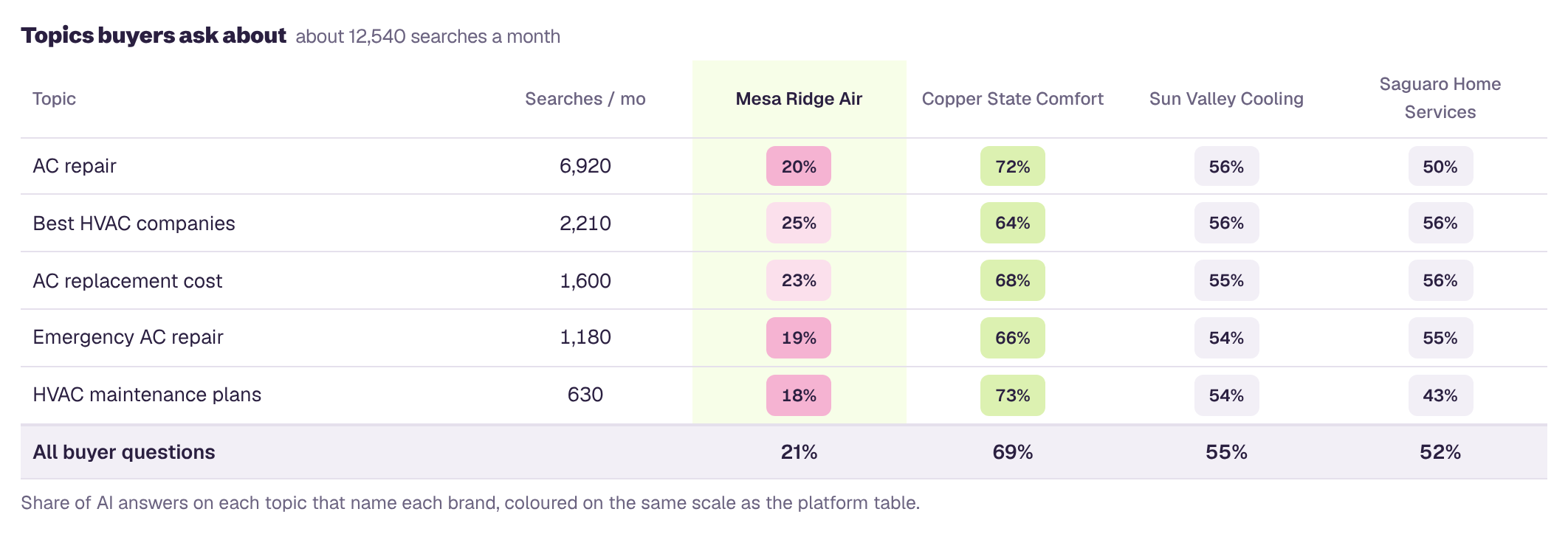
In electrical work, the honest answer to "is a handyman good enough?" is usually no. The electrician who has written that answer clearly, with the reasons and the local rules, is much more likely to be named in it.
What to publish: A clear page on what homeowners can legally and safely do themselves in your area, and what requires a licensed electrician and permit.
"Is [electrician] licensed? Do they pull permits?"
What AI usually says: What it can find about licensing, insurance, years in business and reviews. If it can't verify a license, it often tells homeowners to check with the state or provincial licensing board.
Why it matters: Credentials matter more in electrical work than almost any other trade, and AI weighs them heavily.
What to publish: License numbers, master electrician status, insurance and bonding on a clear "about us" page and in your footer. A plain statement that you pull permits, and what that protects the homeowner from: failed inspections, insurance claims denied and problems at resale.
"Generator or battery backup?"
What AI usually says: It compares standby generators, portable generators and home batteries on cost, run time, fuel, noise, maintenance and whether they pair with solar.
Why it matters: After every big outage, these questions spike. They're big-ticket jobs, and the electrician whose comparison AI trusts gets named.
What to publish: An honest comparison for your area, including how long outages typically last there, which systems you install and service, and what a typical install costs.
"My home inspector flagged something electrical."
Home inspections generate a lot of electrical work, on a deadline:
- "Federal Pacific or Zinsco panel. Do I need to replace it before closing?"
- "Double-tapped breakers. Is that serious?"
- "Knob and tube wiring in the house we want to buy. What will it cost?"
- "Aluminum branch wiring from the 1970s. Is it dangerous?"
- "No GFCI outlets in the kitchen and bathrooms."
What AI usually says: It explains what each finding means, how serious it is, typical fixes and costs, and suggests getting an electrician's quote before closing.
What to publish: A page on common inspection findings in your area's housing stock, with honest seriousness ratings and price ranges, plus fast quotes for real estate deadlines. Local real estate agents will notice, and so will AI.
The electrification wave is a visibility opportunity
Electrification is changing the electrical trade faster than anything in decades. EVs, heat pumps, induction cooking, solar, batteries and smart panels all add load or complexity, and many homes need a panel or service upgrade to handle them. Utilities and governments keep changing rebates and requirements.
That churn creates a lot of questions homeowners can't answer on their own, and AI looks for current, local, credible explanations. An electrician who keeps a few pages genuinely up to date, like "EV charger rebates in Ohio this year" or "do you need a permit for a heat pump circuit in Toronto?", becomes the source AI cites. Date your updates, so it's clear the information is current.
It also helps to be specific about the equipment you work with. Homeowners ask AI about particular chargers, panels, batteries and generators. If you're a certified installer for a brand, say so plainly, because that's a fact AI can repeat.
Residential, commercial and new construction
Electrical contractors often do far more than residential service. Business owners ask AI about tenant improvements, lighting retrofits, EV charging for employee parking and backup power for server rooms. Property managers ask about maintenance contracts. Builders ask about new construction subcontractors. If your website only shows residential work, AI only recommends you for residential work. Give each line of business a page, with your credentials, the buildings you work in and a few project examples.
What the sample report shows
Here's what a Visible Queries report looks like for Mesa Ridge Air, the sample Phoenix-area HVAC company from our guide. The questions are different for electricians, but the patterns are the same.
Under the score, the report breaks visibility into the numbers that matter most:

The gap is clearest side by side:
If you only fix three things
- Put credentials and permits front and center. License numbers, insurance and a plain promise that you pull permits.
- Own the electrification questions. Current, local guides to EV chargers, heat pumps, panel upgrades and rebates.
- Publish warning signs and inspection guides. Honest, plain-language answers to "is this dangerous?" and "is this a big deal?"
Homeowners are asking AI about their wiring before they ask anyone else. The electrician AI names will be the one it understands best: licensed, current, local and clear.
Part of our guide: Why AI visibility matters for home services companies
See what AI tells homeowners about your electrical company
Enter your website and get a free AI visibility report. It takes a few minutes, and you'll see:
- Your AI visibility score, overall and for ChatGPT, Gemini, Claude, Perplexity and Google's AI Overviews and AI Mode
- Which electricians AI recommends instead of you, and how often
- Your visibility in every city you serve, and the competitor AI names most in each one
- What AI gets wrong about you, and what to fix first
- Your biggest gaps: the buyer questions where AI leaves you out, and who it recommends instead
- A downloadable PDF you can share with your team