Glasses, LASIK and hearing aids: how patients choose an eye care or hearing clinic through AI
Patients now ask AI whether LASIK is worth it, where to get an eye exam that takes their insurance and how much hearing aids should cost. Here's what AI tells them, and how eye care and hearing clinics get named.
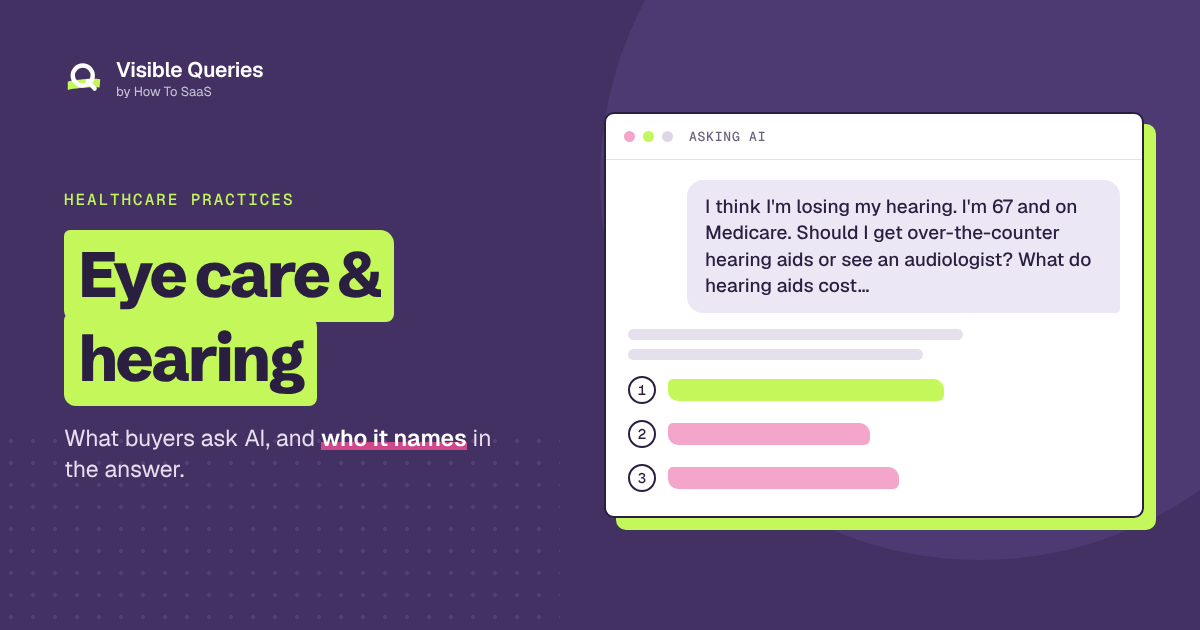
A 67-year-old retiree in Tampa keeps asking people to repeat themselves. Their spouse finally said something about the TV volume. A friend bought hearing aids online for a few hundred dollars. Another paid several thousand at an audiologist. They ask ChatGPT:
"I think I'm losing my hearing. I'm 67 and on Medicare. Should I get over-the-counter hearing aids or see an audiologist? What do hearing aids cost, does Medicare cover them, and which hearing clinics in Tampa are trustworthy?"
AI explains the difference between over-the-counter and prescription hearing aids and who each suits, why a hearing test is a good first step, typical price ranges, what Original Medicare and Medicare Advantage plans often do and don't cover, and what to look for in a clinic, including trial periods and follow-up care. Then it names three clinics. The retiree books a hearing test.
Eye care and hearing care have a lot in common. Both mix health care with retail products. Both have big price ranges, confusing insurance, and a growing set of online and over-the-counter options. And both are researched carefully, especially for big decisions like LASIK, cataract surgery or hearing aids.
Our healthcare guide covers how patients choose practices in general. This one goes through the questions that decide eye care and hearing patients, what AI usually says, and what clinics can publish so AI names them.
Here are the questions at a glance:
| The question | What gets you named |
|---|---|
| "Where can I get an eye exam with my insurance?" | The plans you accept and how to book |
| "Optometrist or ophthalmologist?" | Who does what in your practice |
| "Is LASIK worth it?" | Candidacy, costs and honest outcomes |
| "Which cataract lens should I choose?" | Plain comparisons of lens options |
| "OTC or prescription hearing aids?" | An honest guide to who needs which |
| "How much do hearing aids cost?" | Price ranges and what's included |
Eye care: the questions that decide appointments
"Where can I get an eye exam that takes my insurance?"
What AI usually says: It explains the difference between routine vision plans and medical insurance, what each usually covers, and suggests checking with the clinic.
What to publish: The vision plans and medical insurers you accept, what a routine exam includes, how contact lens exams differ, and self-pay prices.
"Optometrist or ophthalmologist?"
What AI usually says: It explains that optometrists handle eye exams, glasses, contacts and many eye conditions, while ophthalmologists are medical doctors who also perform surgery.
What to publish: Who's on your team, what each provider does, and when you refer. Practices with both should explain how patients are routed.
"Is LASIK worth it? Am I a candidate?"
What AI usually says: It explains LASIK and alternatives like PRK and SMILE, who's usually a good candidate, typical cost ranges, risks and recovery, and suggests a consultation.
What to publish: Honest candidacy guides, the procedures you offer, the surgeon's experience, total pricing (including what's included in follow-up), financing and what recovery looks like. Avoid overpromising. AI repeats cautions about clinics that do.
"Cataract surgery: which lens should I choose?"
What AI usually says: It explains standard versus premium lenses, what insurance typically covers, and what patients pay out of pocket for upgrades.
What to publish: A plain guide to lens options, costs, and how you help patients choose. Many patients ask their adult children to help research, so write for both.
"Kids' eye exams," "dry eye treatment," "glaucoma specialist"
Each is its own search. Give each condition or service its own page, with what you do and who does it.
Hearing: the questions that decide appointments
"Over-the-counter or prescription hearing aids?"
This is the defining question in hearing care right now.
What AI usually says: It explains that over-the-counter aids are meant for perceived mild to moderate hearing loss in adults, while prescription aids are fitted and programmed by a professional and cover a wider range. It suggests a hearing test first.
What to publish: An honest comparison, including when over-the-counter aids are a reasonable choice. Clinics that are fair about this earn more trust, and more of the patients who need professional care.
"How much do hearing aids cost? Does insurance cover them?"
What AI usually says: Ranges for different technology levels, whether prices are bundled with fittings and follow-ups, and what insurance, Medicare Advantage or veterans' benefits may cover.
What to publish: Your pricing structure, what's included (testing, fittings, adjustments, warranties, batteries or charging), trial periods and return policies, financing and the benefits you work with.
"What happens at a hearing test?"
What to publish: A simple explanation of the appointment, how long it takes, whether it's free and what happens next. Many people delay for years, and a clear, low-pressure explanation helps them finally book.
How often AI names you, and how early
Eye and hearing clinics often find they're known, but not listed first:

A low citation rate usually means AI is answering questions like "is LASIK worth it?" from other sources. Publishing your own clear guides gives AI a reason to link to you.
Retail chains and independents
National optical and hearing chains are well known to AI. Independent clinics compete by being specific: the doctor, the technology, the care after the sale, and the local community. Make those things easy to read on your site.
What the sample report shows
Here's what a Visible Queries report looks like for Lakeside Family Dental, the sample family dental group in the Dallas–Fort Worth area from our guide. The questions are different for eye care and hearing practices, but the patterns are the same.
And it shows the actual questions, platform by platform, with who was named:
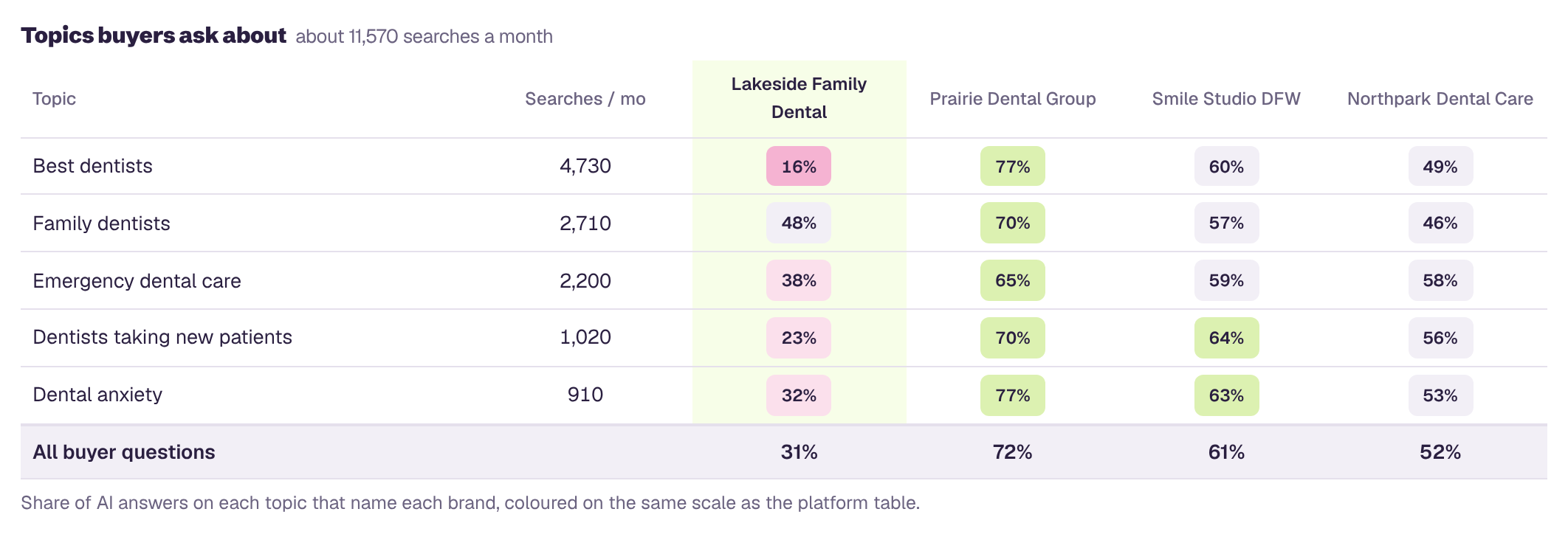
The gap is clearest side by side:
If you only fix three things
- Publish insurance, pricing and what's included. For exams, glasses, LASIK, cataract lenses and hearing aids.
- Write honest comparisons. Optometrist vs ophthalmologist, LASIK vs alternatives, over-the-counter vs prescription aids.
- Explain the first appointment. Eye exams and hearing tests, step by step.
Patients are asking AI how to see and hear better without overpaying. The clinic AI names will be the one that explains the options most honestly.
Part of our guide: Why AI visibility matters for healthcare practices
See what AI tells patients about your clinic
Enter your website and get a free AI visibility report. It takes a few minutes, and you'll see:
- Your AI visibility score, overall and for ChatGPT, Gemini, Claude, Perplexity and Google's AI Overviews and AI Mode
- Which clinics AI recommends instead of you, and how often
- Your visibility in every city you serve, and the competitor AI names most in each one
- What AI gets wrong about you, and what to fix first
- Your biggest gaps: the buyer questions where AI leaves you out, and who it recommends instead
- A downloadable PDF you can share with your team