Back pain, knee surgery and the referral question: how patients choose a physical therapist or chiropractor through AI
Patients now ask AI whether they need a physical therapist or a chiropractor, whether they need a referral and who treats their injury nearby. Here's what AI tells them, and how PT and chiropractic clinics get named.
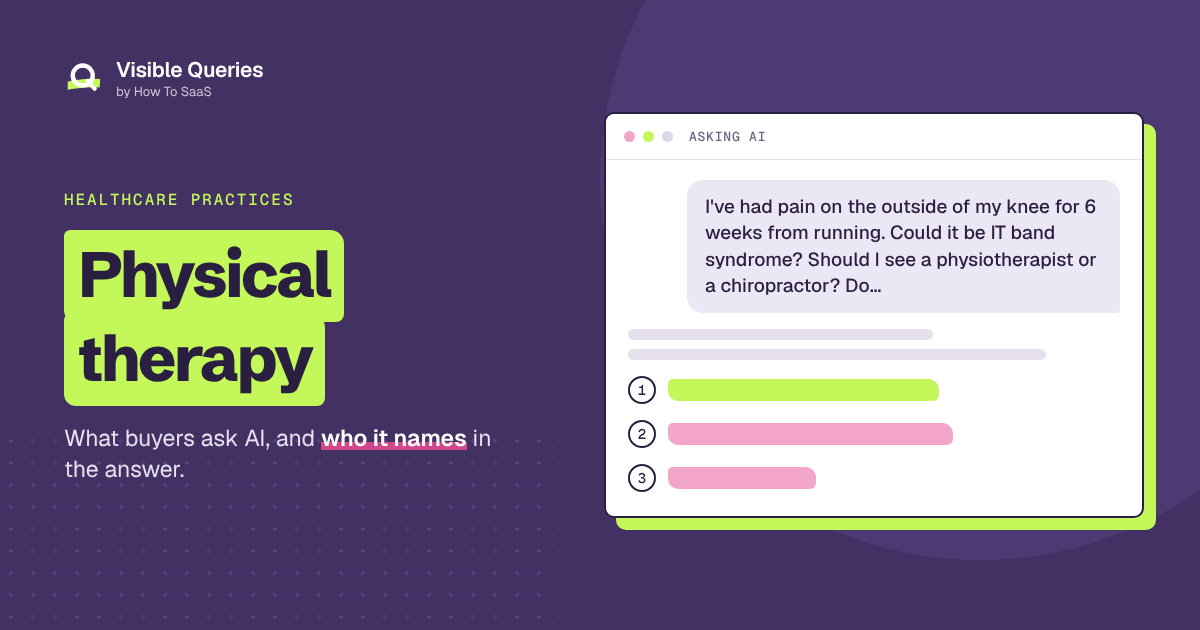
A recreational runner in Ottawa has had pain on the outside of their knee for six weeks. It started during a half-marathon training block. Rest helped a bit, but it comes back after a few kilometres. Their family doctor's next opening is a month away. They ask ChatGPT:
"I've had pain on the outside of my knee for 6 weeks from running. Could it be IT band syndrome? Should I see a physiotherapist or a chiropractor? Do I need a referral in Ontario, will my work benefits cover it, and which clinics in Ottawa are good for runners?"
AI explains common causes of outer knee pain in runners, what a physiotherapist and a chiropractor each typically do, that many people can see a physiotherapist directly without a referral (though some insurance plans want one), how extended health benefits often cover visits, and what to look for in a clinic that treats running injuries. Then it names three clinics. The runner books an assessment for the next day.
Physical therapy and chiropractic are often the first places people go for pain. Patients choose by condition, specialty, location, insurance and availability, and many don't know which kind of provider they need. AI is now where a lot of them start figuring it out.
Our healthcare guide covers how patients choose practices in general. This one goes through the questions that decide PT and chiropractic patients, what AI usually says, and what clinics can publish so AI names them.
Here are the questions at a glance:
| The question | What gets you named |
|---|---|
| "Physical therapist or chiropractor?" | An honest explanation of what each is for |
| "Do I need a referral? Is it covered?" | Referral rules and the insurance you accept |
| "Who's good for my condition?" | Pages for the conditions you treat most |
| "How many sessions will I need?" | Typical plans and what happens at a first visit |
| "Is chiropractic safe?" | Calm, evidence-based answers about safety |
"Physical therapist or chiropractor?"
This is the defining question for the category.
What AI usually says: It explains the general focus of each: physical therapists use exercise, manual therapy and rehabilitation for injuries, surgery recovery and movement problems; chiropractors focus on the spine and joints, often using adjustments. It often suggests choosing based on the condition and the clinician's approach, and notes that some clinics offer both.
Why it matters: AI decides which kind of clinic the patient looks for before it names any. If your site doesn't explain what you treat and how, AI can't match you.
What to publish: A clear explanation of your approach, your clinicians' training, and the conditions you treat. If you're a multidisciplinary clinic, explain how patients are matched to the right clinician.
"Do I need a referral? Will insurance cover it?"
What AI usually says: It explains that direct access rules vary by state or province, that some insurance plans require referrals or limit visits, and that patients should check their coverage.
What to publish: Whether patients can book directly, which insurers and benefit plans you bill, how you handle auto insurance and workers' compensation claims, and your self-pay prices. This is one of the most practical questions patients ask, and few clinics answer it well.
"Who's good for my condition?"
What AI usually says: It names clinics that clearly treat the condition: back pain, sciatica, sports injuries, ACL rehab, shoulder pain, pelvic floor issues, vertigo, concussion, post-surgical recovery.
What to publish: A page for each condition you treat, written for patients: what it is, how you assess it, what treatment usually involves, how long recovery usually takes and which clinicians specialize in it. This is how a clinic gets named for "pelvic floor physiotherapy in Ottawa" instead of only "physiotherapy near me."
"How many sessions will I need? What happens at the first visit?"
What AI usually says: It describes a typical assessment and says the number of sessions depends on the condition and progress.
What to publish: What happens in an initial assessment, how long it takes, what to wear, and how you set goals and measure progress. Patients who know what to expect are more likely to book.
"Is chiropractic safe?"
What AI usually says: It summarizes what's generally known about benefits and risks, and suggests talking to the chiropractor about their approach, especially for neck adjustments or specific health conditions.
What to publish: Your approach, the techniques you use, how you screen patients, and when you refer to other providers. Chiropractors who explain this clearly are more likely to be recommended by AI to cautious patients.
Where you're named, city by city
Clinics usually draw from a few nearby neighborhoods or suburbs, and AI's answers can change a lot between them:
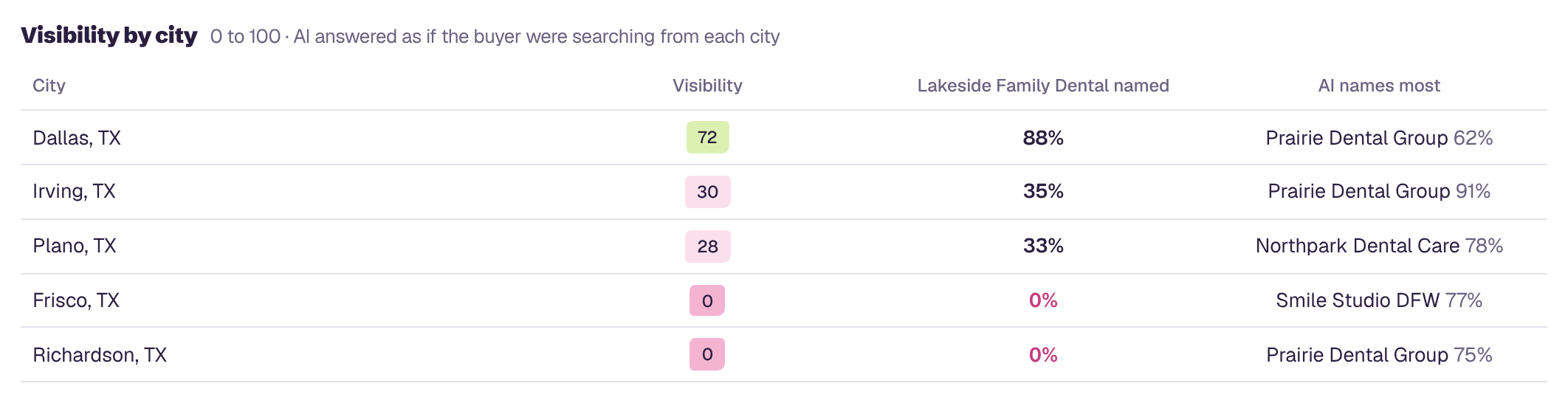
Multi-location clinic groups need a page for each location, with its clinicians, specialties, hours, insurance and local reviews.
Sports, workplace and post-surgery patients
Some of the most valuable patients come through specific paths: athletes and teams, workplace injury programs, auto accident claims, and surgeons referring post-operative patients. Each is a separate search, like "physio for hockey players," "WSIB physiotherapy," or "ACL rehab after surgery." Give each its own page, and explain how referrals and claims work.
What the sample report shows
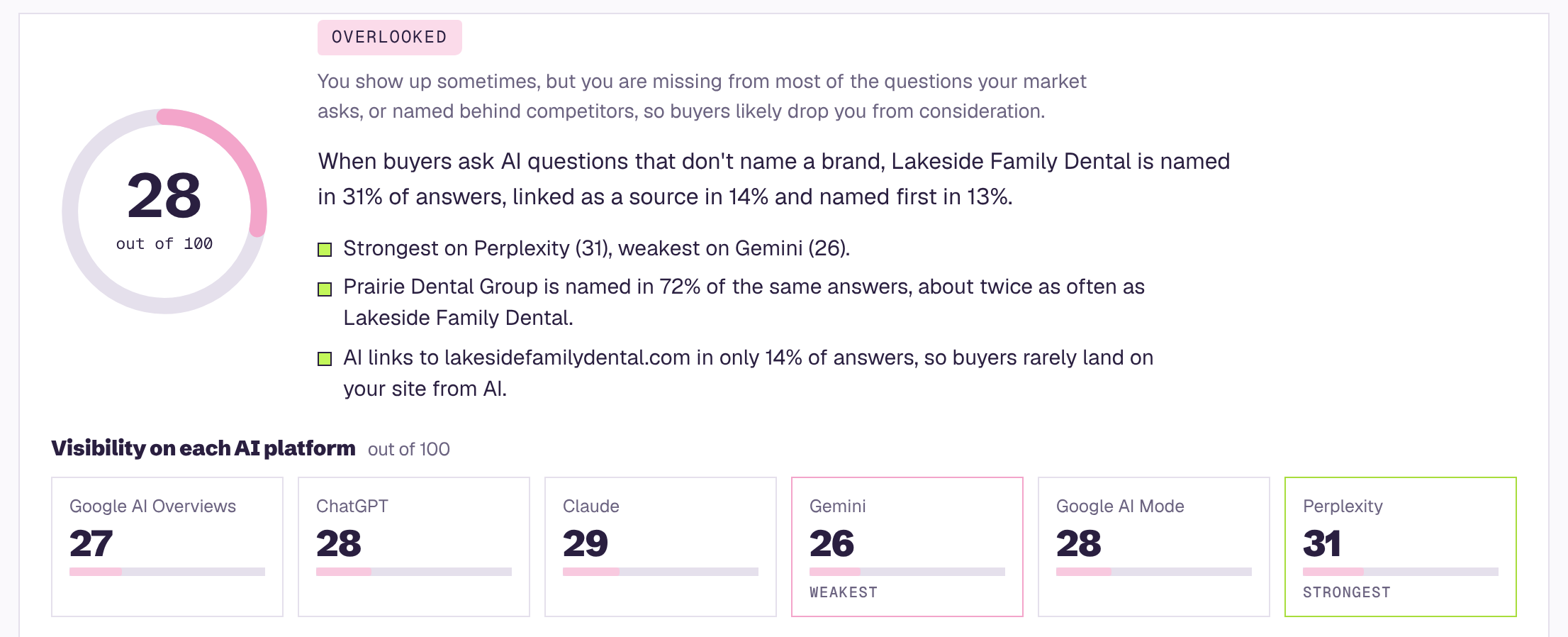
Here's what a Visible Queries report looks like for Lakeside Family Dental, the sample family dental group in the Dallas–Fort Worth area from our guide. The questions are different for physical therapy and chiropractic clinics, but the patterns are the same.
The report starts with one score out of 100, a score for each AI platform, and the competitor AI names most:
The gap is clearest side by side:
If you only fix three things
- Explain what you treat and how. A page per condition, with the clinicians who specialize in it.
- Answer the referral and insurance questions clearly. Direct access, benefit plans, auto and workplace claims, and self-pay prices.
- Describe the first visit and what to expect. Assessment, treatment plans and progress.
Patients are asking AI who can fix their pain. The clinic AI names will be the one that describes the problem and the plan most clearly.
Part of our guide: Why AI visibility matters for healthcare practices
See what AI tells patients about your clinic
Enter your website and get a free AI visibility report. It takes a few minutes, and you'll see:
- Your AI visibility score, overall and for ChatGPT, Gemini, Claude, Perplexity and Google's AI Overviews and AI Mode
- Which clinics AI recommends instead of you, and how often
- Your visibility in every city you serve, and the competitor AI names most in each one
- What AI gets wrong about you, and what to fix first
- Your biggest gaps: the buyer questions where AI leaves you out, and who it recommends instead
- A downloadable PDF you can share with your team