Is this an emergency? How pet owners choose a veterinary clinic through AI
Pet owners now ask AI whether a symptom needs a vet tonight, what a visit should cost and which clinics are good with cats or exotic pets. Here's what AI tells them, and how veterinary clinics get named.
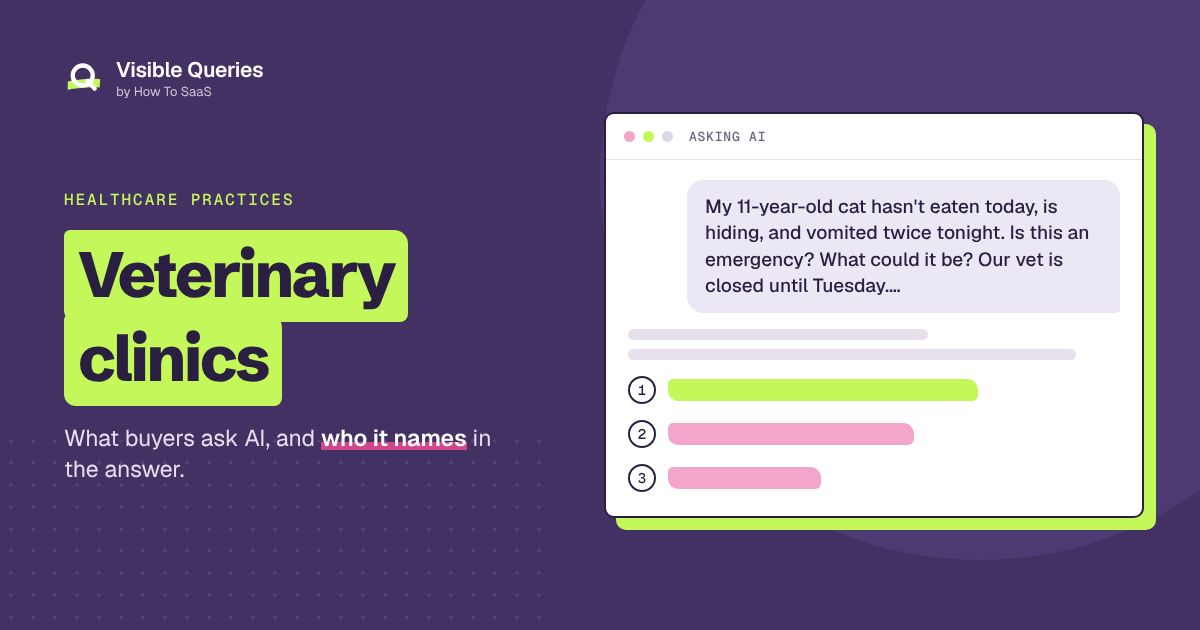
It's 9 p.m. on a Sunday in Kansas City. A family's 11-year-old cat has been hiding all day, skipped dinner and just threw up twice. The family vet is closed until Tuesday because of a holiday. They ask ChatGPT:
"My 11-year-old cat hasn't eaten today, is hiding, and vomited twice tonight. Is this an emergency? What could it be? Our vet is closed until Tuesday. Where's an emergency vet or urgent care for pets in Kansas City, and what will it cost?"
AI lists warning signs that mean a pet should be seen right away, explains that older cats not eating can become serious quickly, describes the difference between a 24-hour emergency hospital and a veterinary urgent care, and gives rough cost ranges for an emergency exam. Then it names two nearby options. The family drives to one of them within the hour.
People treat their pets like family, and they research vets that way. They choose by location, availability, trust, cost, and how the clinic treats their particular animal. Emergencies, new pets, moves and bad experiences all send owners looking, and AI is increasingly their first stop.
Our healthcare guide covers how patients choose practices in general. This one goes through the questions that decide veterinary clients, what AI usually says, and what clinics can publish so AI names them.
Here are the questions at a glance:
| The question | What gets you named |
|---|---|
| "Is this an emergency?" | A clear guide to when to come in now |
| "How much does a vet visit cost?" | Exam and common procedure prices |
| "Which vets are good with cats?" | Species you see and how you handle them |
| "Accepting new clients? Can I get in this week?" | Current availability and booking |
| "Is [clinic] good?" | Specific reviews and replies to them |
"Is this an emergency?"
What AI usually says: It lists symptoms that need urgent care (trouble breathing, repeated vomiting, not eating, suspected poisoning, bloating, injuries, not urinating) and recommends calling a vet or emergency clinic. It's careful not to diagnose.
Why it matters: The clinic whose guidance AI repeats is the one owners trust in that moment, and emergencies often turn into long-term clients.
What to publish: A clear "when to call us, when to go to the ER" page, your same-day sick appointment policy, after-hours instructions, and which emergency hospital you partner with. If you're an urgent care or emergency hospital, explain your hours, what you treat and how triage works.
"How much does a vet visit cost?"
What AI usually says: Ranges for exams, vaccines, dental cleanings, spay and neuter, and emergency visits, with a note that prices vary by region and clinic.
What to publish: Price ranges for common services, wellness plans with what they include, payment options and whether you accept pet insurance or third-party financing. Cost is one of owners' biggest worries, and clinics that address it openly earn trust.
"Which vets are good with cats?" "Exotic pet vet near me?"
What AI usually says: It suggests cat-friendly practices with separate waiting areas and low-stress handling, and specialists for birds, reptiles, rabbits and other exotics.
What to publish: Pages for the species you treat and how you handle them. Cat-friendly certifications, fear-free practices, separate entrances and exotic animal experience are all specific reasons AI names a clinic.
"Are they accepting new clients? Can I get in this week?"
What AI usually says: It often says many clinics have long waits and suggests calling several. Wrong or outdated information here is common.
What to publish: Whether you're accepting new clients, how to book, typical wait times for wellness visits, and same-day sick appointments. Keep it current.
"Is [clinic] good? Any complaints?"
What AI usually says: A summary of reviews. In veterinary care, reviews often focus on compassion, communication, cost surprises and how end-of-life care was handled.
What to publish: Your approach to communication, estimates before treatment, follow-up calls, and end-of-life care. Respond to reviews with compassion. AI picks up on tone.
Visibility by city
Pet owners don't usually drive far for routine care, and in an emergency they want the nearest option. AI's answers change a lot by city:
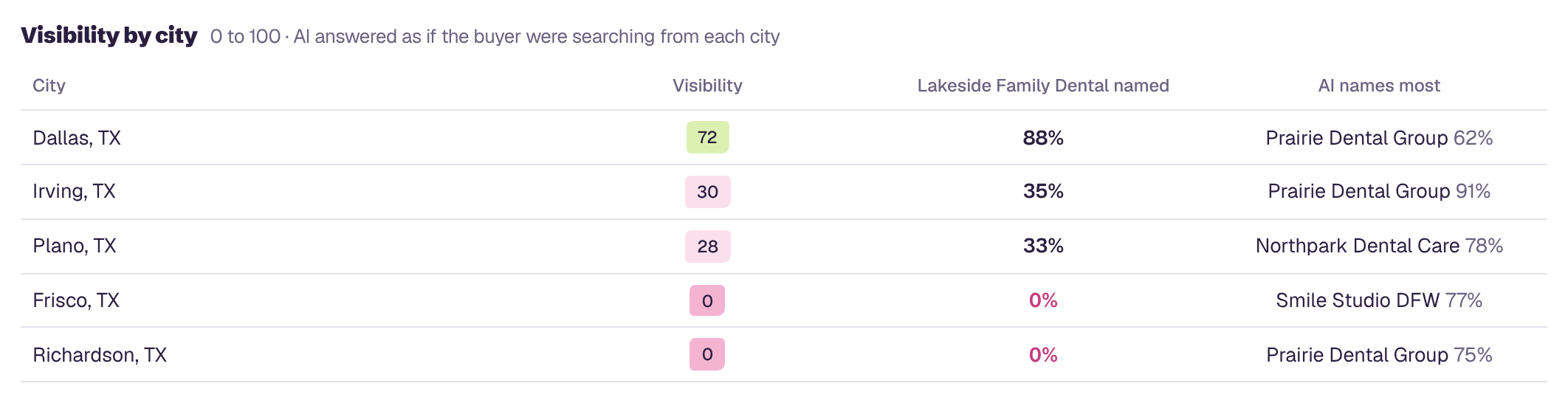
Clinic groups and corporate-owned practices need a page for each location, with its vets, services, hours and reviews. AI often mixes up locations within the same group.
Specialty and referral care
Veterinary specialists, including surgery, oncology, cardiology, dermatology, dentistry, ophthalmology, behavior and rehabilitation, get many patients from referrals but also from owners researching on their own. "Veterinary oncologist in Kansas City," "TPLO surgery cost" and "dog behaviorist for aggression" are all common questions. Give every specialty a page, with the specialist's credentials and what referral looks like.
Mobile vets and end-of-life care
Mobile vets and in-home euthanasia services are growing searches, especially for older pets and anxious animals. Owners ask AI gently worded questions at hard moments. Clear, compassionate pages about what you offer, how it works and what it costs help the right families find you.
What the sample report shows
Here's what a Visible Queries report looks like for Lakeside Family Dental, the sample family dental group in the Dallas–Fort Worth area from our guide. The questions are different for veterinary clinics, but the patterns are the same.
Under the score, the report breaks visibility into the numbers that matter most:

The gap is clearest side by side:
If you only fix three things
- Explain when to call and what to do after hours. With same-day availability and your emergency partner.
- Publish costs, wellness plans and payment options. Including pet insurance.
- Describe the animals you treat and how. Cats, exotics, anxious pets and specialties.
Pet owners are asking AI what to do when their pet is sick. The clinic AI names will be the one that answers with clarity and care.
Part of our guide: Why AI visibility matters for healthcare practices
See what AI tells pet owners about your clinic
Enter your website and get a free AI visibility report. It takes a few minutes, and you'll see:
- Your AI visibility score, overall and for ChatGPT, Gemini, Claude, Perplexity and Google's AI Overviews and AI Mode
- Which clinics AI recommends instead of you, and how often
- Your visibility in every city you serve, and the competitor AI names most in each one
- What AI gets wrong about you, and what to fix first
- Your biggest gaps: the buyer questions where AI leaves you out, and who it recommends instead
- A downloadable PDF you can share with your team