Visas, green cards and permanent residence: how people choose an immigration lawyer through AI
People now ask AI which visa or immigration path fits, whether they need a lawyer and how to avoid fraud. Here's what AI tells them, and how immigration lawyers get named.
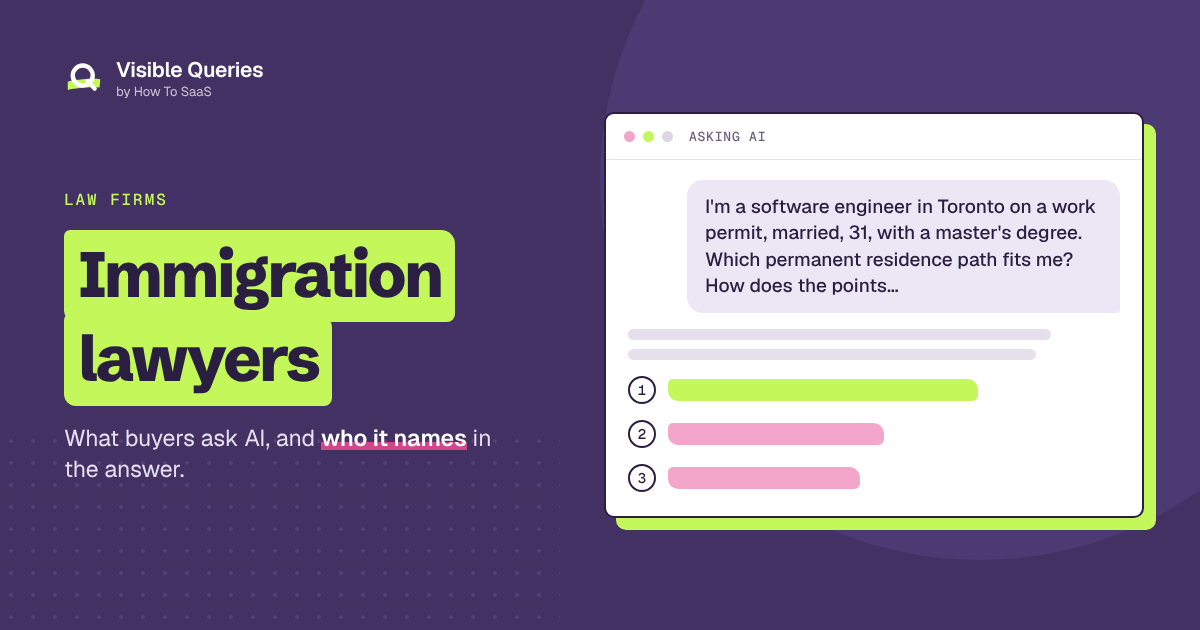
A software engineer in Toronto is working on a temporary work permit. Their employer wants to keep them, and they want to stay in Canada permanently with their spouse. The government website lists several programs they might qualify for, but they don't understand which one fits or how points work. They ask ChatGPT:
"I'm a software engineer in Toronto on a work permit, married, 31, with a master's degree. Which permanent residence path fits me? How does the points system work? Do I need an immigration lawyer or a consultant, what does it cost, and how do I find someone trustworthy in Toronto?"
AI explains the main economic immigration pathways in general terms, how a points-based system typically weighs age, education, language and work experience, the role of provincial programs, the difference between lawyers and licensed consultants, why to verify someone's licence, typical fee structures, and warning signs of immigration fraud. It notes that rules change and it can't give legal advice. Then it names several practices. The engineer books a consultation.
Immigration decisions are life-changing. People are deciding where they and their families will live, often under deadlines, often in a second language and often with a lot of conflicting information from forums and friends. AI is increasingly where they start.
Our legal services guide covers how people choose law firms in general. This one goes through the questions that decide immigration clients, what AI usually says, and what practices can publish so AI names them.
Here are the questions at a glance:
| The question | What gets you named |
|---|---|
| "Which visa or path fits me?" | Plain guides to each path you handle |
| "Do I need a lawyer?" | Honest guidance on when one helps |
| "How much does it cost?" | Fees by case type, plus government fees |
| "How long will it take?" | Realistic timelines |
| "Lawyer who speaks [language]" | The languages your team speaks, stated clearly |
"Which visa or immigration path fits me?"
What AI usually says: It outlines the main categories for the person's situation, such as family sponsorship, employment-based visas, permanent residence programs, student visas, investor programs, asylum or humanitarian paths, and suggests professional advice for specifics.
What to publish: Clear guides to every path you handle, who's eligible, the steps, timelines and common problems. Immigration rules change often, so date your content and update it.
"Do I need a lawyer?"
This is the defining question for the category.
What AI usually says: It explains that some simple applications are filed without representation, but that complex cases, past refusals, criminal records, removal proceedings or employer petitions often benefit from a lawyer. In Canada, it notes licensed immigration consultants as another option. It warns about unlicensed "notarios" or advisors.
What to publish: An honest explanation of when people need help and what you do, plus your credentials and how people can verify them.
"How much does an immigration lawyer cost?"
What AI usually says: It explains that many immigration lawyers charge flat fees per application, and that government filing fees are separate.
What to publish: Your fees by service, what's included, payment plans, and which government fees clients pay separately.
"How long will it take?"
What AI usually says: It points to official processing times and notes that they change.
What to publish: Realistic timelines, how you keep clients updated, and what can slow things down.
"Immigration lawyer who speaks [language]"
Many clients prefer a lawyer who speaks their language, and they ask AI in that language. If your team speaks other languages, say so clearly and publish real content in those languages.
Where you're named, city by city
Immigration practices often serve clients across a region or country, but many people still search locally. Here's how the report shows local visibility:
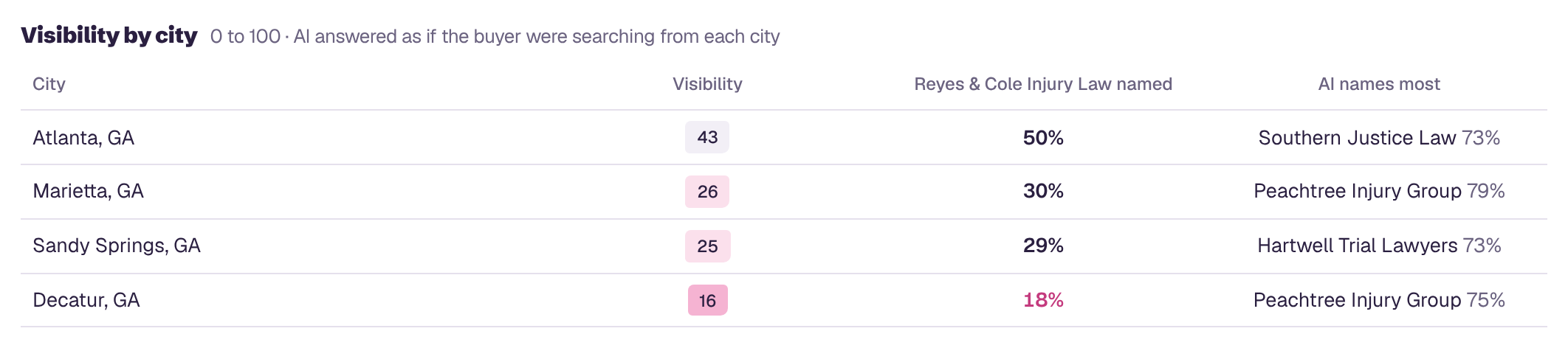
If you serve clients remotely, say so, and explain how consultations and filings work for people outside your city.
Employers are a separate audience
Companies hiring international workers ask AI about work visas, labour market assessments, intracompany transfers and compliance. If you help employers, give them their own pages, with services, timelines and how you work with HR teams.
When the news changes
Immigration policy changes often, and every change sends people to AI with urgent questions: "what does the new rule mean for my application?" Firms that publish fast, clear explanations become the sources AI cites. Date every update.
What the sample report shows
Here's what a Visible Queries report looks like for Reyes & Cole, the sample personal injury firm in the Atlanta area from our guide. The questions are different for immigration firms, but the patterns are the same.
Under the score, the report breaks visibility into the numbers that matter most:

The gap is clearest side by side:
If you only fix three things
- Publish clear, current guides to every path you handle. Dated and updated.
- Show your credentials, fees and how to verify you.
- Serve clients in their language. With real pages, not only a note.
People are asking AI how to build a life in a new country. The immigration lawyer AI names will be the one with the clearest, most current answers.
Part of our guide: Why AI visibility matters for law firms
See what AI tells people about your immigration practice
Enter your website and get a free AI visibility report. It takes a few minutes, and you'll see:
- Your AI visibility score, overall and for ChatGPT, Gemini, Claude, Perplexity and Google's AI Overviews and AI Mode
- Which firms AI recommends instead of you, and how often
- Your visibility in every city you serve, and the competitor AI names most in each one
- What AI gets wrong about you, and what to fix first
- Your biggest gaps: the buyer questions where AI leaves you out, and who it recommends instead
- A downloadable PDF you can share with your team