After the crash: how injured people choose a personal injury lawyer through AI
Injured people now ask AI whether they need a lawyer, how contingency fees work and what their case might be worth. Here's what AI tells them, and how personal injury firms get named.
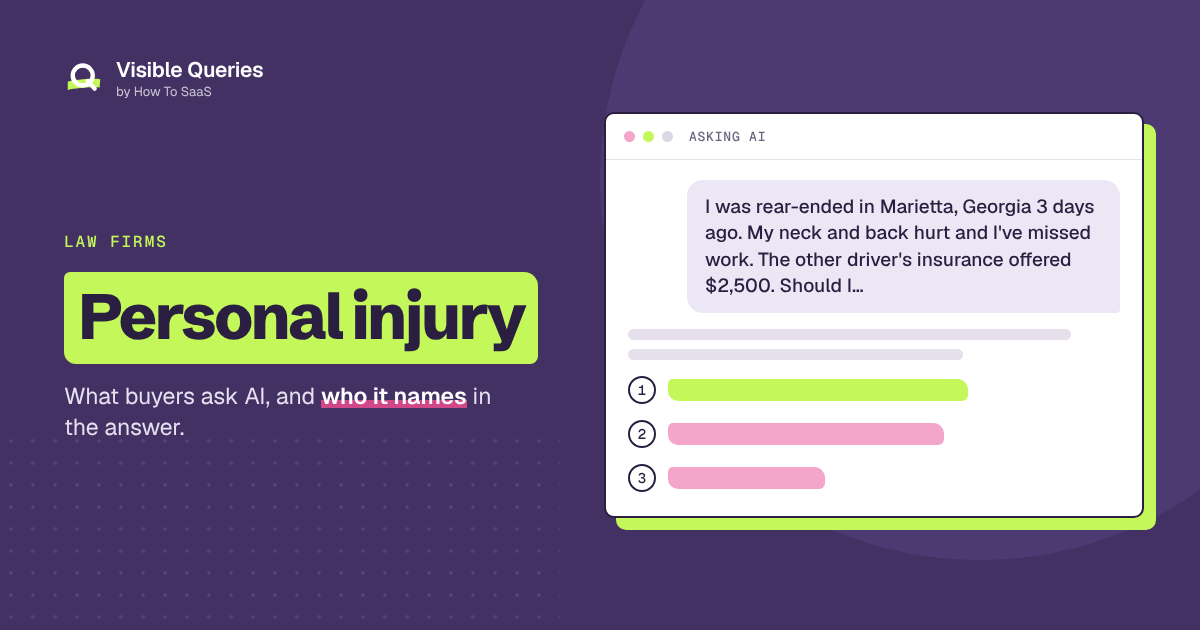
Three days ago, someone in Marietta was rear-ended at a red light. Their neck and back hurt, they've missed work, and the other driver's insurance adjuster has already called offering $2,500 to "settle this quickly." They don't know if that's fair, and they're worried a lawyer will cost more than they'd get. They ask ChatGPT:
"I was rear-ended in Marietta, Georgia 3 days ago. My neck and back hurt and I've missed work. The other driver's insurance offered $2,500. Should I take it? Do I need a lawyer? How do contingency fees work, and which personal injury lawyers near Marietta are good for car accidents?"
AI explains why people are often advised not to accept a quick offer before understanding their injuries, why getting medical care and documenting everything matters, how contingency fees generally work, that most personal injury lawyers offer free consultations, that there are deadlines for filing claims, and what to look for in a firm. It notes it can't give legal advice. Then it names three local firms. The injured driver calls one that afternoon.
Personal injury is one of the most competitive areas of law. Firms spend heavily on billboards, TV and search ads. But injured people are increasingly starting with a private question to AI, and the answer decides which firms they call first.
Our legal services guide covers how people choose law firms in general. This one goes through the questions that decide personal injury clients, what AI usually says, and what firms can publish so AI names them.
Here are the questions at a glance:
| The question | What gets you named |
|---|---|
| "Do I need a lawyer?" | Honest guidance on when a lawyer helps |
| "How do contingency fees work?" | Your fee terms, with an example |
| "What is my case worth?" | What drives case value, explained plainly |
| "What should I do after an accident?" | A step-by-step guide for your state |
| "Best car accident lawyer near me?" | Pages for each case type and office |
"Do I need a lawyer?"
What AI usually says: It explains when people often benefit from a lawyer, such as significant injuries, disputed fault, low settlement offers, commercial vehicles or uninsured drivers, and when a small claim might be handled directly.
What to publish: An honest guide to when hiring a lawyer makes sense, and what you do for clients. Firms that are straightforward about this earn trust.
"How do contingency fees work?"
This is the defining question for the category.
What AI usually says: It explains that personal injury lawyers usually charge a percentage of the recovery, that the percentage can vary by stage of the case, and that case costs may be handled differently. It suggests asking for the fee agreement in writing.
Why it matters: Fee fears stop many people from calling a lawyer. If AI gets your fee structure wrong, it can turn those people away. Here's how a wrong fact like that shows up in the report:
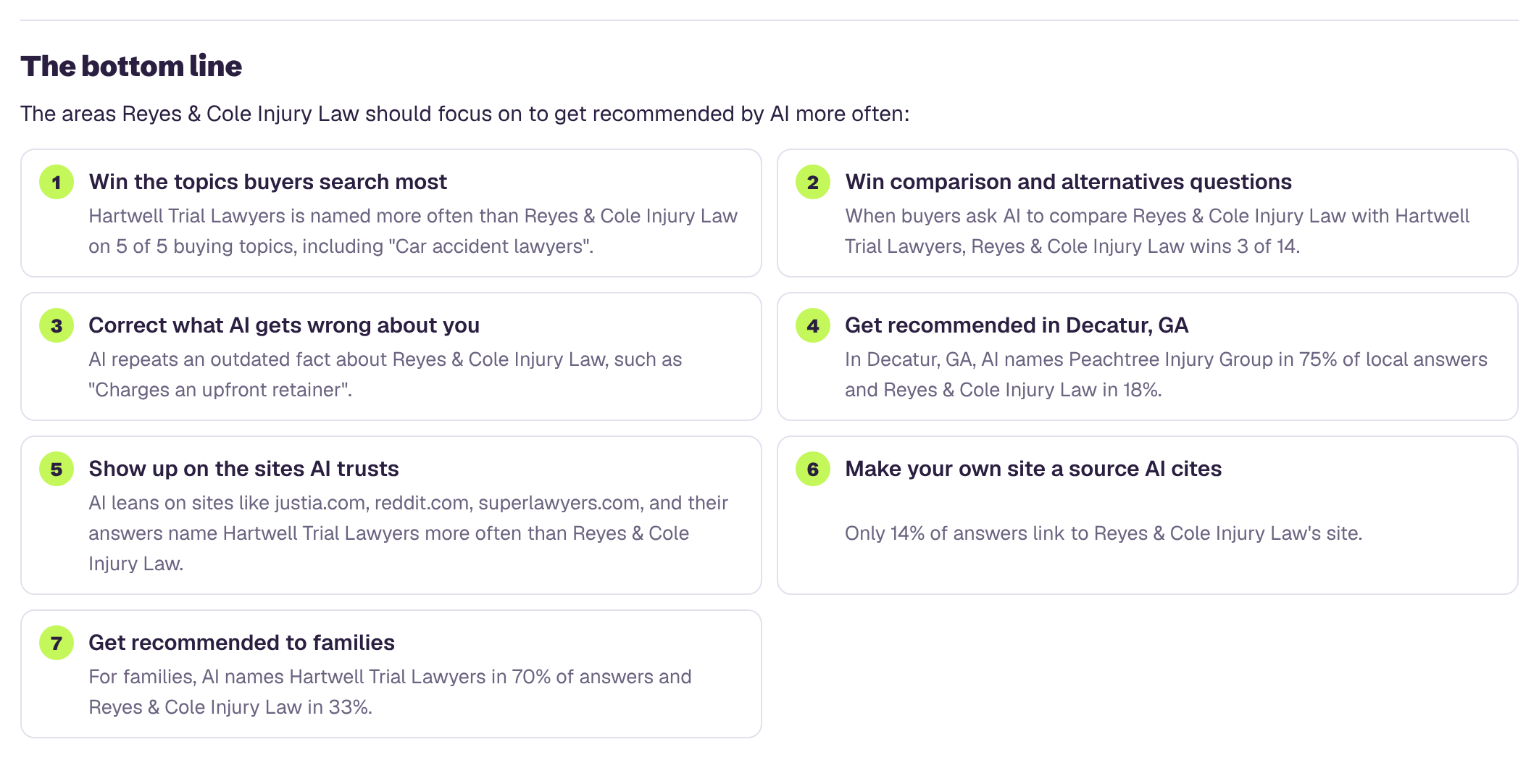
What to publish: A clear page on how you charge, including whether you charge anything upfront, how percentages work, how costs are handled and what happens if there's no recovery, in line with your state's rules.
"What is my case worth?"
What AI usually says: It explains the factors that affect value, like medical bills, lost wages, pain and suffering, insurance limits and fault, and says no one can give an exact number without reviewing the case.
What to publish: Educational content on how cases are valued, what affects settlements and how long cases usually take. Avoid promising results. Bar rules and AI both treat that cautiously.
"What should I do after an accident?"
What AI usually says: It lists steps: get medical care, document the scene and injuries, get the police report, avoid giving recorded statements, keep records and talk to a lawyer before signing anything.
What to publish: Step-by-step guides for each type of accident you handle: car, truck, motorcycle, rideshare, bicycle, pedestrian, slip and fall, dog bite, workplace and wrongful death. These are some of the most-searched legal questions, and AI cites firms that explain them well.
"Who's the best car accident lawyer near me?"
What AI usually says: It names a few firms, usually with notes about focus, experience and reviews.
What to publish: A page for every case type and every location you serve, with your attorneys, case results described within your state's advertising rules, and client reviews. Make it clear who will actually handle the case.
Advertising rules shape what you can say
Lawyer advertising rules differ by state and province. Some limit testimonials, case results or words like "specialist" and "expert." The good news is that the content AI rewards most is educational: explaining processes, fees, deadlines and what to expect. That's usually the easiest content to publish within the rules.
Spanish-speaking and other language clients
Many injured people prefer to talk to a lawyer in their own language, and they ask AI in that language. If your firm serves clients in Spanish or other languages, have real pages in those languages, not only a note that "se habla español."
What the sample report shows
Here's what a Visible Queries report looks like for Reyes & Cole, the sample personal injury firm in the Atlanta area from our guide. The questions are different for personal injury firms, but the patterns are the same.
For a business that serves more than one city, the report checks each one separately:
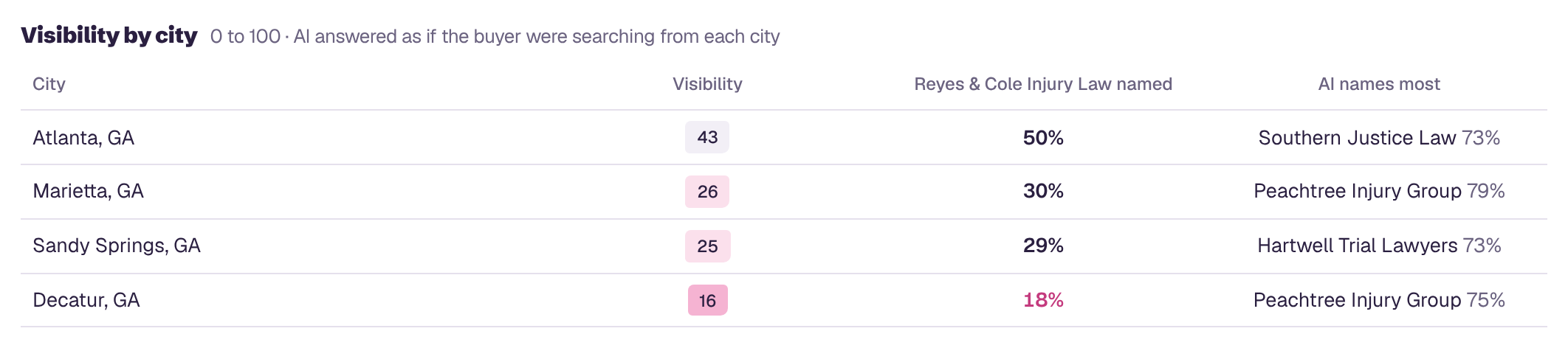
The gap is clearest side by side:
If you only fix three things
- Explain your fees clearly. Contingency, costs and what happens if there's no recovery.
- Publish guides for every type of accident. What to do, how cases work and how long they take.
- Give every case type and location its own page. With who handles the case.
Injured people are asking AI whether they can afford a lawyer. The firm AI names will be the one that answers that question most clearly.
Part of our guide: Why AI visibility matters for law firms
See what AI tells injured people about your firm
Enter your website and get a free AI visibility report. It takes a few minutes, and you'll see:
- Your AI visibility score, overall and for ChatGPT, Gemini, Claude, Perplexity and Google's AI Overviews and AI Mode
- Which firms AI recommends instead of you, and how often
- Your visibility in every city you serve, and the competitor AI names most in each one
- What AI gets wrong about you, and what to fix first
- Your biggest gaps: the buyer questions where AI leaves you out, and who it recommends instead
- A downloadable PDF you can share with your team