Moving day and decluttering: how people choose movers and junk removal companies through AI
People now ask AI what a move should cost, how to avoid moving scams and who can haul away a garage full of junk. Here's what AI tells them, and how moving and junk removal companies get named.
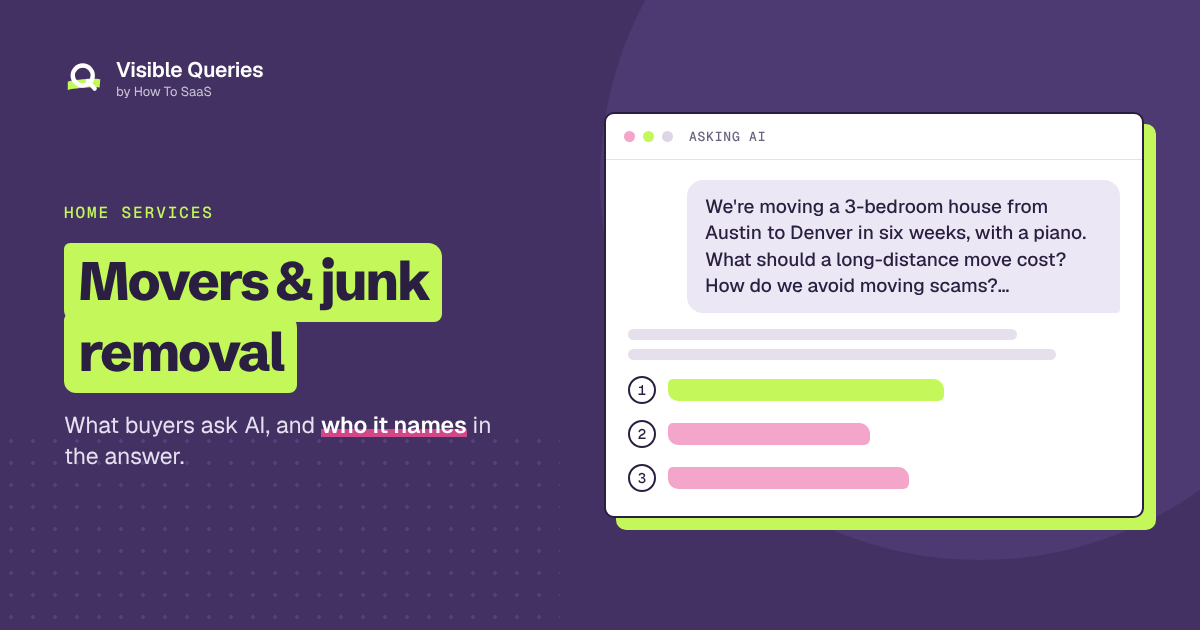
A couple in Austin is moving to Denver in six weeks for a new job. They have a three-bedroom house, a piano, two kids and a lot of stuff in the garage they don't want to take. They've read online horror stories about movers who held belongings hostage for more money. They ask ChatGPT:
"We're moving a 3-bedroom house from Austin to Denver in six weeks, with a piano. What should a long-distance move cost? How do we avoid moving scams? Should we get rid of junk first, and who does junk removal in Austin? Which movers are trustworthy for this route?"
AI explains typical cost ranges for interstate moves, the difference between binding and non-binding estimates, why in-home or video surveys matter, how to check a mover's federal registration and complaint history, the warning signs of rogue movers, and why decluttering first lowers the cost. It names two local junk removal companies and three movers. Both kinds of company get booked that week.
Moving and junk removal are different businesses, but they share a lot: life events trigger them, price is a big worry, and trust matters because a stranger is handling everything you own. AI is now where many of these decisions start.
Our home services guide covers the homeowner's journey in general. This one goes through the questions that decide moving and junk removal jobs, what AI usually says, and what companies can publish so AI names them.
Here are the questions at a glance:
| The question | What gets you named |
|---|---|
| "How much does it cost to move?" | Real price ranges by home size and distance, with what's included |
| "How do I avoid moving scams?" | Your licensing, estimate type and deposit policy |
| "Full-service, container or truck?" | An honest comparison of when each makes sense |
| "How much does junk removal cost?" | Pricing by load size, with examples |
| "Will they take [item]? Where does it go?" | What you take, and how much you donate and recycle |
| "Same-day junk removal near me?" | Your real same-day availability and service area |
Moving: the questions that decide the job
"How much does it cost to move a [size] home from [city] to [city]?"
What AI usually says: Ranges for local and long-distance moves by home size, with what moves the price: distance, weight or volume, stairs and elevators, packing, specialty items like pianos, storage and the time of year. It notes that summer and end-of-month dates cost more.
What to publish: Real price ranges for your common move types and routes, what's included, and what costs extra. "Typical Austin-to-Denver moves for a three-bedroom home" is far more useful, and more citable, than "contact us for a free quote."
"How do I avoid moving scams?"
This is the defining question of the category.
What AI usually says: It lists warning signs: very low quotes with no survey, large cash deposits, no physical address, unclear company names, and estimates that aren't in writing. It explains that interstate movers in the US must be registered with the federal government and that people can look up a mover's registration and complaint history, and that Canadian moves have their own consumer protections. It suggests getting several written estimates.
Why it matters: AI is effectively handing customers a checklist to judge you by.
What to publish: Answer the checklist directly on your site: your registration numbers, your address, how you estimate (in-home or video survey), binding vs non-binding estimates, deposit policy, insurance and valuation options, and how claims work if something breaks.
"Full-service movers, a moving container or a rental truck?"
What AI usually says: It compares cost, effort, timing and risk for each option, and when each makes sense.
What to publish: An honest comparison, with the cases where you'd recommend another option. Movers who say "for a studio apartment going 20 miles, a rental truck is probably fine" earn trust for the jobs that need them.
"Do movers handle pianos, safes, art or hot tubs?"
What AI usually says: It notes that specialty items often need specialty movers or extra fees, and suggests asking about experience and insurance.
What to publish: A page for each specialty service you offer, with experience, equipment and pricing. Specialty moves are high-margin and specific, and AI names companies that clearly do them.
"Is [moving company] legit? Any complaints?"
What AI usually says: A summary of reviews, registration and complaints. In this category, reviews focus on damage, delays, surprise charges and how claims were handled.
What to publish: Clear policies on damage and claims, and responses to reviews that explain what you did to make things right. AI reads both the complaint and the reply.
Junk removal: the questions that decide the job
"How much does junk removal cost?"
What AI usually says: Pricing is usually based on how much of the truck the load fills, plus surcharges for heavy items like concrete or appliances. It gives rough ranges and suggests getting an on-site quote.
What to publish: Your pricing by truckload fraction, minimums, common item prices (mattresses, couches, hot tubs, appliances) and what's included, like loading, sweeping and disposal fees.
"Will they take [item]? What happens to it?"
What AI usually says: It explains what junk removal companies typically take and what they don't, such as hazardous waste, paint and chemicals, and mentions that many donate or recycle usable items.
What to publish: A clear list of what you take and don't take, and what happens to items, including donation partners, recycling and responsible disposal. "Eco-friendly junk removal" is a common search, and AI recommends companies that clearly describe how they handle it.
"Same-day junk removal near me?"
What AI usually says: It names a few local companies, often big franchises, unless it knows enough about local independents.
What to publish: Your same-day policy, service area by city, and online booking. Independents compete with national franchises on this question, and specifics are how they win.
"Estate cleanout, hoarding cleanup or construction debris?"
What AI usually says: It notes that these jobs often need specialized crews, more time, and sometimes coordination with estate executors, realtors or contractors.
What to publish: Pages for each specialty: estate cleanouts with sensitivity and sorting, hoarding cleanups with discretion, construction and renovation debris, and commercial cleanouts. These are bigger jobs, and the people asking are often real estate agents, attorneys and property managers who refer repeatedly.
Where you're winning and losing, city by city
Both businesses are local, even for long-distance movers, whose customers start their search where they live today. The report shows how AI's answers change by city:
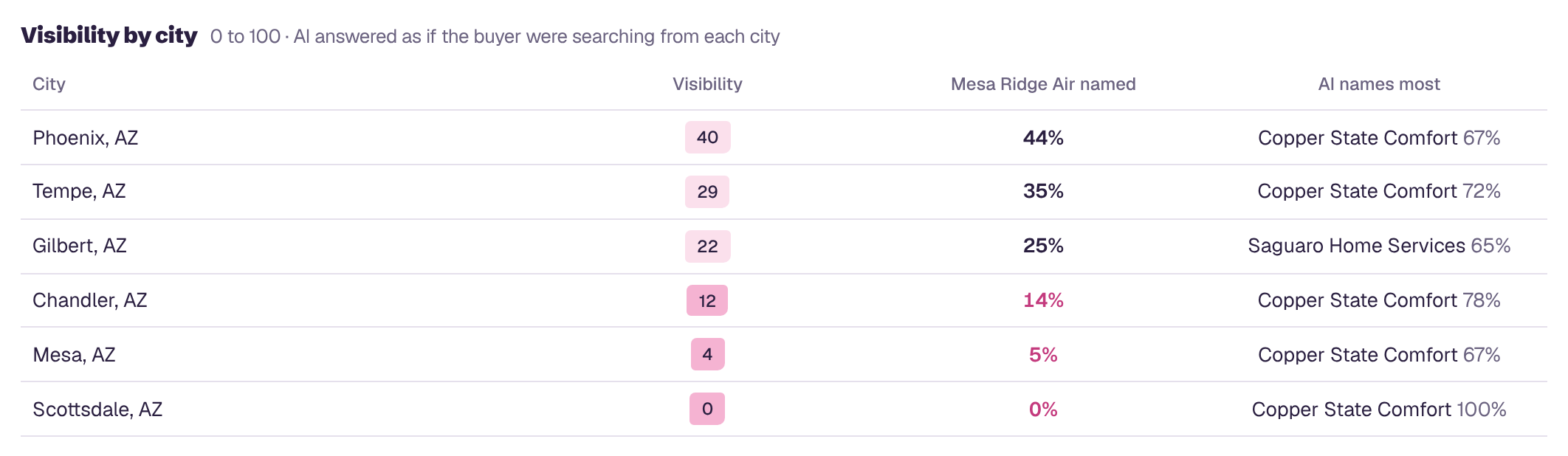
For movers, "alternatives to competitors" questions matter a lot, because people often get one quote and then ask AI for "better movers than [company]." For junk removal, best-of lists and "same-day" buyer questions decide most jobs.
Seasons and life events
Moving demand peaks in summer and at the end of each month, especially around school calendars. Junk removal rises with spring cleaning, move-outs, estate settlements and renovation season. College towns have their own spikes at move-in and move-out. Publishing ahead of the peaks, with guides like "how to book movers for a summer move" or "spring garage cleanout checklist," helps AI see you as the timely, local expert.
What the sample report shows
Here's what a Visible Queries report looks like for Mesa Ridge Air, the sample Phoenix-area HVAC company from our guide. The questions are different for movers and junk removal companies, but the patterns are the same.
The report then picks out your biggest gaps: the buyer questions where AI leaves you out, and who it recommends instead:
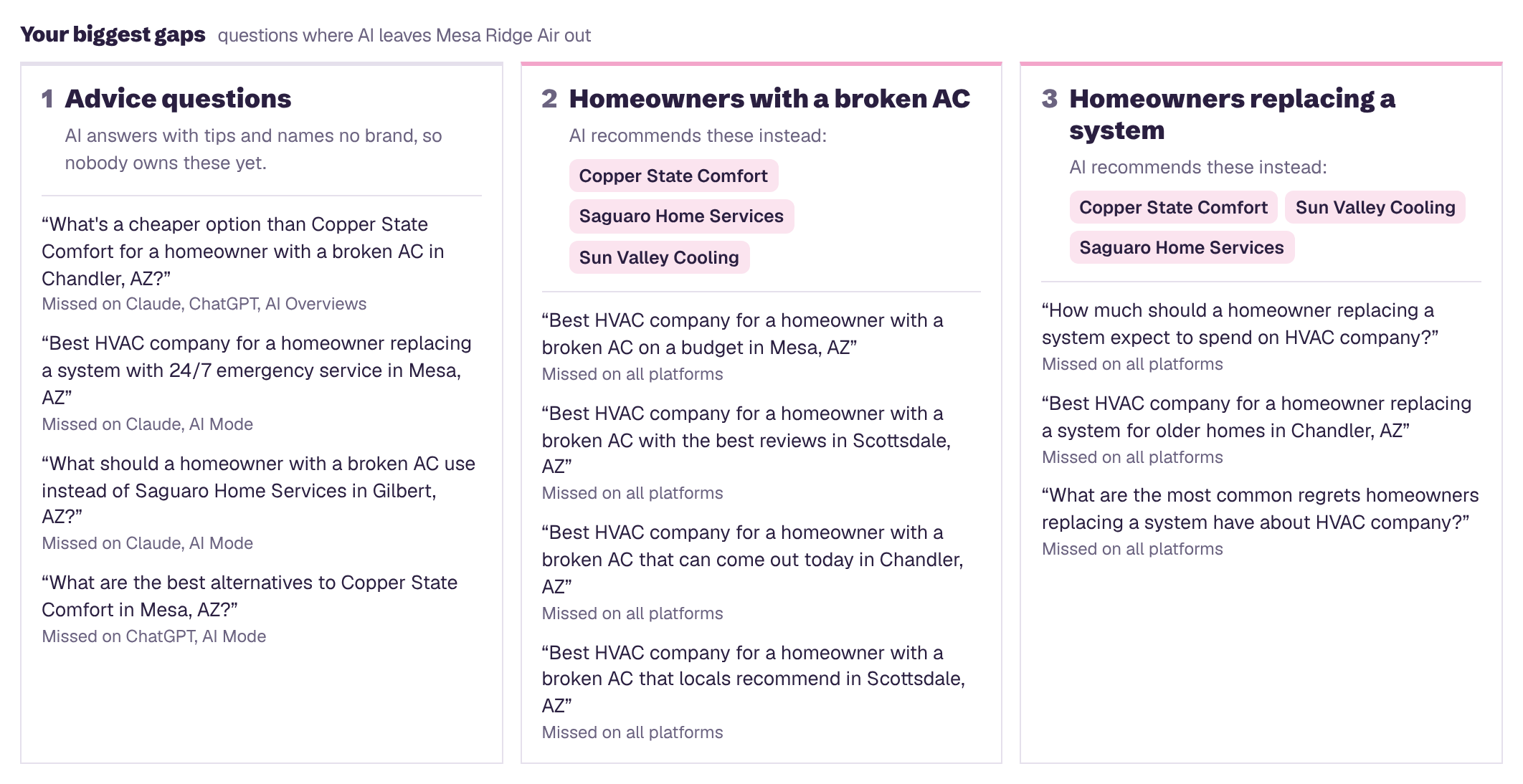
The gap is clearest side by side:
If you only fix three things
- Publish real pricing. Move types and routes for movers, truckload fractions and common items for junk removal.
- Answer the trust checklist on your own site. Registration, address, estimates, deposits, insurance, claims, and what happens to hauled items.
- Give every specialty and every city its own page. Pianos, estates, same-day, commercial, and every area you serve.
People are asking AI how to move without getting scammed and how to clear out a garage this weekend. The companies AI names will be the ones that answer most clearly.
Part of our guide: Why AI visibility matters for home services companies
See what AI tells customers about your moving or junk removal company
Enter your website and get a free AI visibility report. It takes a few minutes, and you'll see:
- Your AI visibility score, overall and for ChatGPT, Gemini, Claude, Perplexity and Google's AI Overviews and AI Mode
- Which movers or haulers AI recommends instead of you, and how often
- Your visibility in every city you serve, and the competitor AI names most in each one
- What AI gets wrong about you, and what to fix first
- Your biggest gaps: the buyer questions where AI leaves you out, and who it recommends instead
- A downloadable PDF you can share with your team