Water in the basement, smoke in the walls: how homeowners choose a restoration company through AI
After a flood, fire or mold discovery, homeowners ask AI what to do first, what insurance covers and who to call. Here's what AI tells them, and how water, fire and mold restoration companies get named.
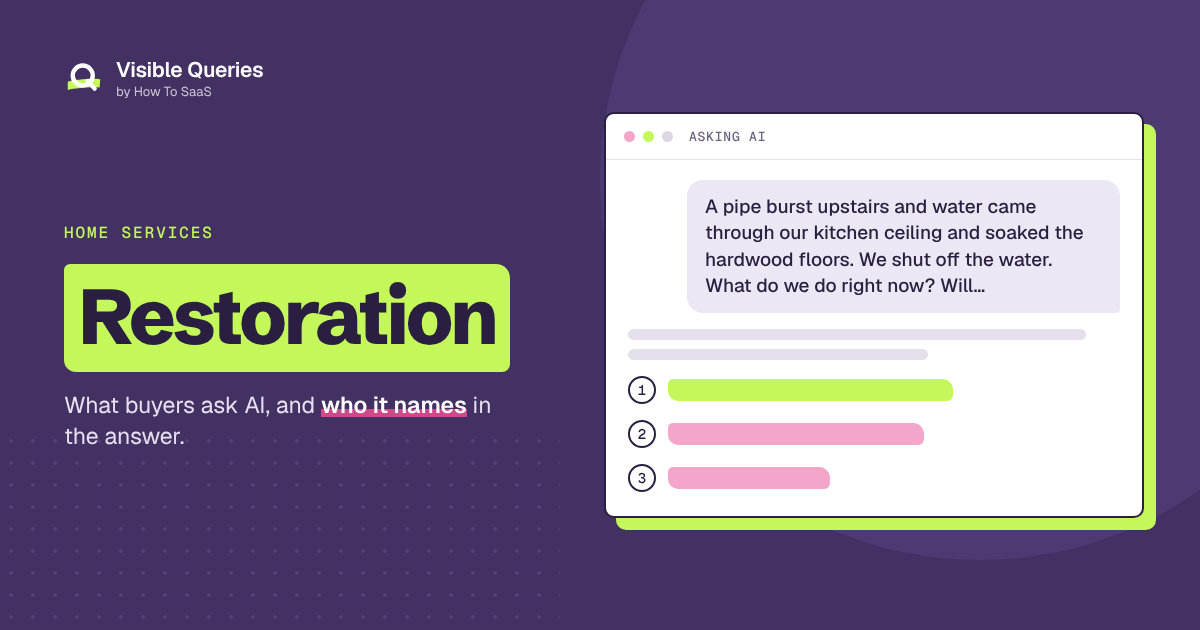
It's 2 a.m. in Nashville. A supply line behind the upstairs toilet burst while the family was asleep. By the time anyone noticed, water had come through the kitchen ceiling and soaked the hardwood. The water is off now. Everyone is standing in the kitchen in the dark, wondering what happens next. One of them asks ChatGPT:
"A pipe burst upstairs and water came through our kitchen ceiling and soaked the hardwood floors. We shut off the water. What do we do right now? Will insurance cover it? Do we need a water damage company tonight, and who in Nashville comes out 24/7?"
AI tells them to turn off electricity to the wet areas if it's safe, take photos and video of everything, move valuables, avoid using fans on wet ceilings that might fall, and call their insurance company. It explains that drying in the first 24 to 48 hours helps prevent mold, that policies usually cover sudden water damage, and that a restoration company can document the damage and often work with the insurer. Then it names three local companies with 24/7 emergency response.
The first one arrives within the hour. The job ends up at $22,000, mostly paid by insurance.
Restoration is the most urgent and stressful corner of home services. Water, fire, smoke, mold and storm damage happen suddenly, often at night, often to people who have never filed a claim. In that moment, they want a calm, trustworthy answer and a company that will come now.
Our home services guide covers the homeowner's journey in general. This one goes through the questions that decide restoration jobs, what AI usually says, and what restoration companies can publish so AI names them.
Here are the questions at a glance:
| The question | What gets you named |
|---|---|
| "What do I do right now?" | Calm "first hour" guides for water, fire and storm damage |
| "Does insurance cover this?" | An honest guide to how claims work and how you bill |
| "Can I dry it out myself?" | When DIY is enough, and why hidden water matters |
| "Is this mold dangerous?" | Regional mold guides and your remediation process |
| "What happens after a house fire?" | A step-by-step fire recovery guide |
| "Is [company] legit?" | Certifications, response times and what homeowners sign |
| "Who comes out 24/7 near me?" | Real response times and service area, stated the same way everywhere |
"What do I do right now?"
What AI usually says: Step-by-step safety and damage-control advice: stop the source, cut power to wet areas, document everything, protect valuables, call insurance, and get professional drying quickly to limit mold.
Why it matters: This is the first contact, and it happens at the worst moment of the homeowner's year. The company whose guidance AI repeats is the one that feels like a lifeline.
What to publish: Calm, skimmable "first hour" guides for burst pipes, flooded basements, sewage backups, kitchen fires and storm damage. Include what not to do. Make them easy to read on a phone at 2 a.m.
"Does insurance cover this?"
What AI usually says: It explains that coverage depends on the policy and the cause: sudden pipe bursts are usually covered, gradual leaks and flooding from outside often aren't without separate flood coverage, and sewer backup may need an add-on. It suggests calling the insurer and documenting everything.
Why it matters: Insurance is the biggest worry after safety. Restoration companies that understand the claims process, and explain it honestly, are the ones homeowners want.
What to publish: An honest guide to how claims typically work for water, fire and mold damage, how you document damage, whether you bill insurers directly, and what the homeowner pays out of pocket. Never promise coverage. AI warns homeowners about companies that do.
"Do I need a professional, or can I dry it out myself?"
What AI usually says: Small, clean-water spills caught quickly can sometimes be handled with fans and dehumidifiers. Large areas, water inside walls or under floors, sewage, or anything wet for more than a day or two usually needs professional drying and moisture testing.
What to publish: A plain explanation of when DIY is enough, what moisture testing reveals, and why hidden water causes mold later. Honest guidance earns the bigger calls.
"Is this mold dangerous? Who does mold remediation?"
What AI usually says: It explains common health concerns, when to test, how remediation differs from cleaning, and that large areas or HVAC contamination usually need professionals. It may mention that some areas regulate mold assessment and remediation.
What to publish: Clear mold guides for your region, your remediation process, containment and air quality testing, certifications, and the difference between assessment and remediation if your area treats them separately.
"What happens after a house fire?"
What AI usually says: It covers safety, when it's okay to go back in, dealing with insurance, board-up services, smoke and soot cleaning, content cleaning and storage, and odor removal.
What to publish: A fire recovery guide, step by step, plus your services: board-up, smoke and soot cleanup, content pack-out and cleaning, odor removal and reconstruction. Families after a fire need a clear map, and the company that provides it gets the call.
"Is [restoration company] legit? Any complaints?"
What AI usually says: A summary of reviews and reputation. Common complaints in this industry are about billing surprises, slow reconstruction, insurance disputes and companies that pressure homeowners to sign authorizations on the spot.
What to publish: Your certifications, licensing, insurance, response times, how you price and bill, what homeowners sign and why, and your reconstruction process. Transparency about paperwork matters a lot in this category.
"Who comes out 24/7 near me?"
What AI usually says: It names a few local companies with emergency response, often with notes about response times.
Why it matters: Restoration is a race. Whoever is named first, close by and available tonight usually gets the job. That makes visibility by city especially important:
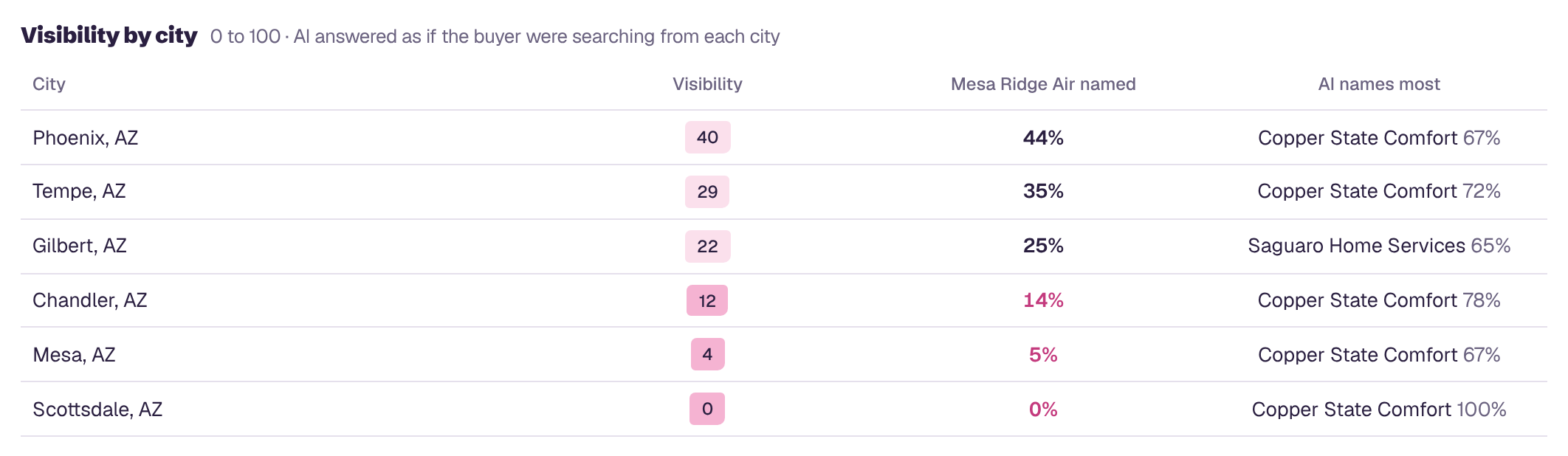
Franchise restoration brands have a particular challenge here. AI often knows the national brand but not the local location, or mixes up neighboring territories. Each location needs its own detailed page, with its service area, response times, local crews and local reviews.
Storm season and catastrophe response
Hurricanes, floods, ice storms and wildfires create sudden surges in questions, all from the same region at once: "flood cleanup companies near me," "who can tarp my roof after the hurricane," "smoke damage cleaning after the wildfire." AI is cautious after catastrophes, because out-of-town contractors and fraud spike too.
Local companies that publish clear catastrophe-response pages, including what they handle, how they prioritize, what homeowners should do while waiting and how to spot fraudulent contractors, earn AI's trust when it matters most.
Commercial restoration
Property managers, hotels, schools, hospitals and businesses have their own questions: "commercial water damage response for a 100-unit apartment building," "who handles restoration for restaurants after a fire," "restoration companies with emergency service agreements." If you do commercial work, give it a page, with response agreements, capacity and examples.
What the sample report shows
Here's what a Visible Queries report looks like for Mesa Ridge Air, the sample Phoenix-area HVAC company from our guide. The questions are different for restoration companies, but the patterns are the same.
And it shows the actual questions, platform by platform, with who was named:
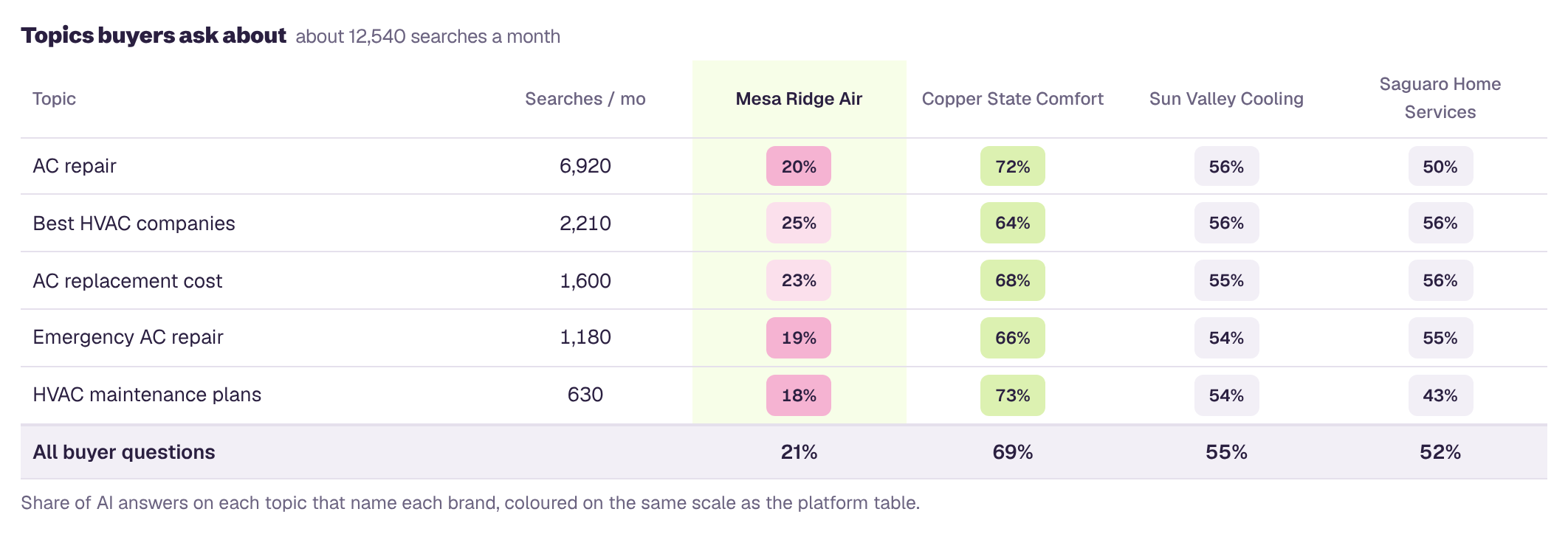
The gap is clearest side by side:
If you only fix three things
- Publish calm "first hour" guides. For water, fire, mold and storms, easy to read on a phone in a crisis.
- Explain insurance and paperwork honestly. How claims usually work, how you bill, and what homeowners sign.
- Make 24/7 response and service areas impossible to get wrong. A page per city or territory, with response times.
The next burst pipe is already waiting to happen. When it does, the restoration company AI names will be the one that seemed calm, local and trustworthy in the answer.
Part of our guide: Why AI visibility matters for home services companies
See what AI tells homeowners about your restoration company
Enter your website and get a free AI visibility report. It takes a few minutes, and you'll see:
- Your AI visibility score, overall and for ChatGPT, Gemini, Claude, Perplexity and Google's AI Overviews and AI Mode
- Which restoration companies AI recommends instead of you, and how often
- Your visibility in every city you serve, and the competitor AI names most in each one
- What AI gets wrong about you, and what to fix first
- Your biggest gaps: the buyer questions where AI leaves you out, and who it recommends instead
- A downloadable PDF you can share with your team