Urgent care, the ER or a new family doctor: how patients choose primary and urgent care through AI
Patients now ask AI whether to go to urgent care or the ER, how long the wait will be and which doctors are accepting new patients. Here's what AI tells them, and how urgent care and primary care practices get named.
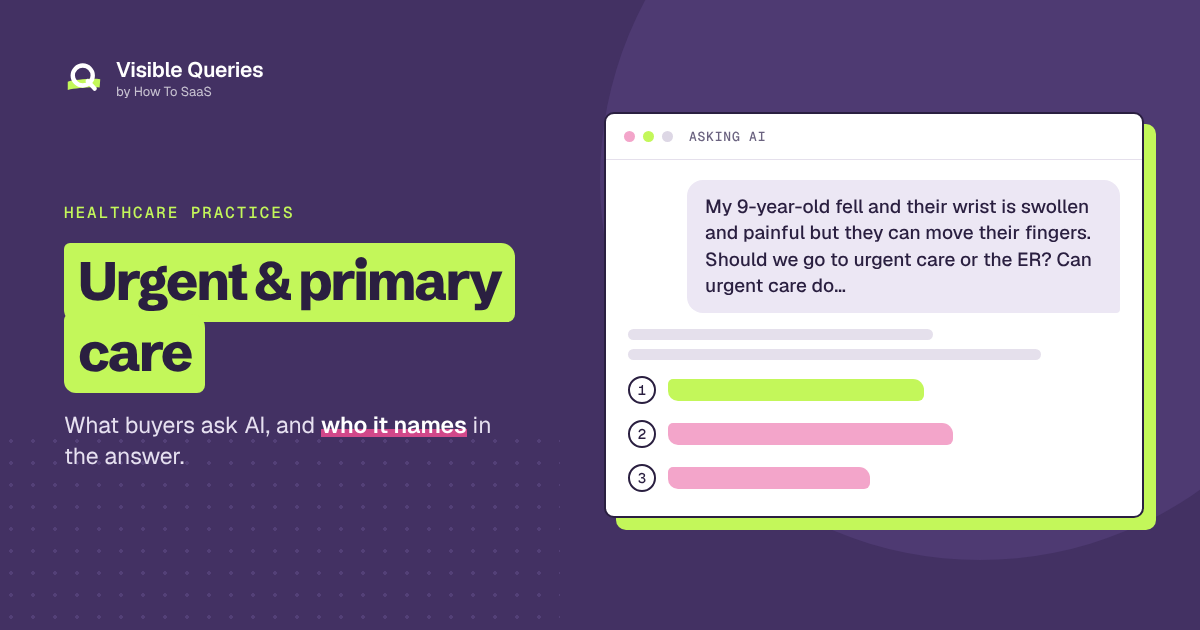
A parent in Nashville has a nine-year-old who fell off the monkey bars at 5:30 p.m. The wrist is swollen and the child is in a lot of pain, but can move their fingers. The pediatrician's office just closed. They ask ChatGPT:
"My 9-year-old fell and their wrist is swollen and painful but they can move their fingers. Should we go to urgent care or the ER? Can urgent care do X-rays? Which urgent cares near East Nashville see kids and are open now, and how long are the waits?"
AI explains signs that mean the ER is the right choice, what urgent care can usually handle, that many urgent cares do X-rays and splinting, how to check wait times and whether a clinic sees children, and what to bring. Then it names two urgent care clinics. The family checks in online at one and is seen within the hour.
Primary and urgent care are where most people enter the health system. Urgent care is chosen in a hurry, by location, hours, wait time and insurance. Primary care is chosen slowly, by insurance, availability, the doctor and the practice's approach. AI now shapes both.
Our healthcare guide covers how patients choose practices in general. This one goes through the questions that decide urgent and primary care patients, what AI usually says, and what practices can publish so AI names them.
Here are the questions at a glance:
| The question | What gets you named |
|---|---|
| "Urgent care or the ER?" | A clear guide to what you treat |
| "Is it open now? How long is the wait?" | Hours and wait times, kept current |
| "Do they see kids? Take my insurance?" | Ages you see, plans you accept and self-pay prices |
| "Which doctors are accepting new patients?" | A current answer for each doctor |
| "Is concierge medicine worth it?" | What your model includes and costs |
Urgent care: the questions that decide visits
"Urgent care or the ER?"
This is the defining question for urgent care.
What AI usually says: It lists symptoms that need the ER (chest pain, trouble breathing, stroke signs, severe bleeding, major injuries) and those urgent care can usually handle (minor injuries, infections, sprains, fevers, cuts that need stitches). It always says to call emergency services when in doubt.
What to publish: A clear "what we treat" page, a list of what should go to the ER instead, and the services you have on site: X-rays, stitches, splints, lab tests, IV fluids, COVID and flu testing. Honest guidance here is what AI quotes.
"Is it open now? How long is the wait?"
What AI usually says: Hours from listings, often incomplete, and suggestions to check online wait times or reserve a spot.
What to publish: Hours for every location, holiday hours, online check-in, and live wait times if you have them. Make it impossible for AI to say you're closed when you're open.
"Do they see kids?" "Do they take my insurance?" "How much without insurance?"
What to publish: Age limits for pediatric patients, insurers you accept, and self-pay prices for common visits. Self-pay pricing is a frequent question, and practices that publish it get named.
Primary care: the questions that decide new patients
"Which doctors are accepting new patients?"
What AI usually says: It often says that many practices have waitlists and suggests checking insurer directories and calling practices.
What to publish: Whether each doctor is accepting new patients, how to become a patient, typical wait times for a first appointment, and whether you offer telehealth. Keep it current, because outdated information sends patients elsewhere.
"What's a good family doctor for [need]?"
What AI usually says: It names doctors and practices when it can match a need: women's health, LGBTQ+ friendly care, chronic disease management, sports medicine, seniors, languages spoken.
What to publish: Detailed doctor bios with their interests, languages, training and approach. Patients look for someone who'll understand them, and AI matches on those details.
"Is direct primary care or concierge medicine worth it?"
What AI usually says: It explains how membership-based models work, what they cost, what's included and who might benefit.
What to publish: If you offer one, explain the membership, the price, what's included, how it works with insurance, and how access differs from traditional practices.
What the report's headline shows
For many urgent and primary care practices, the report's headline tells a clear story:
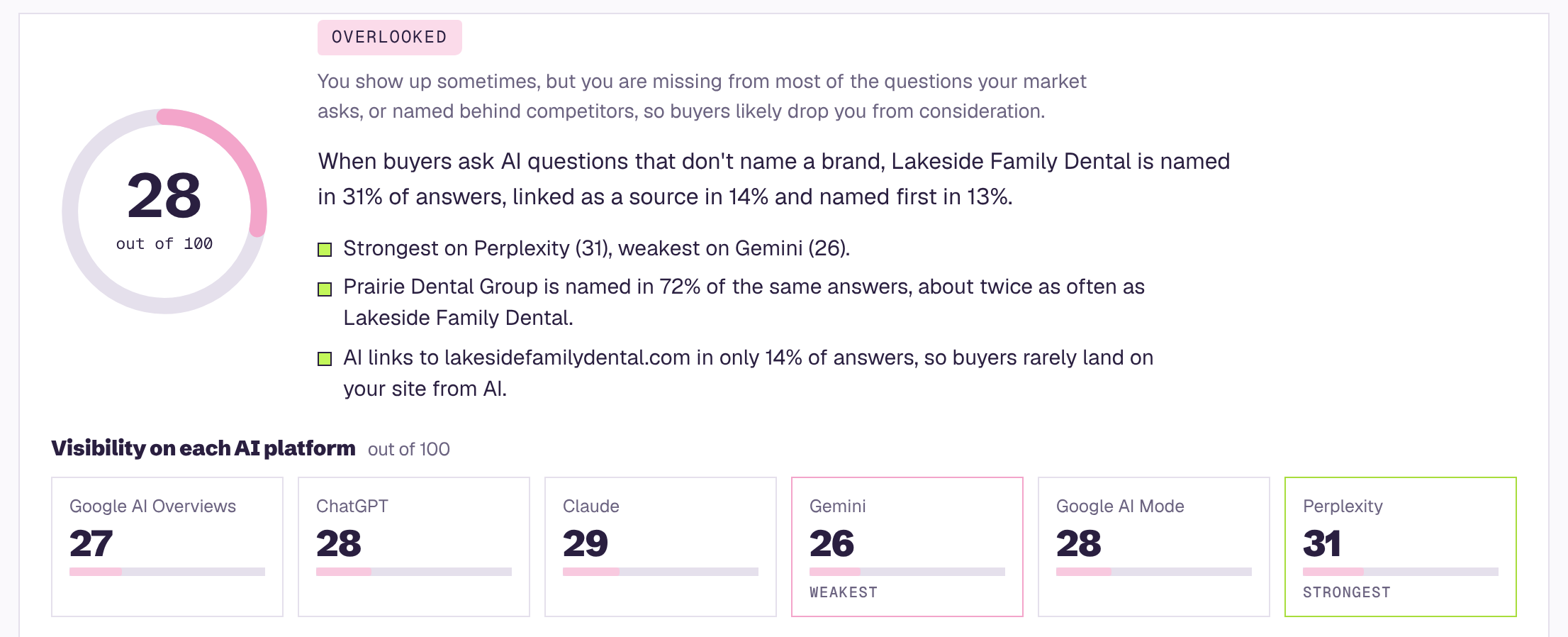
The common pattern is that AI knows the practice by name but rarely recommends it for open questions like "urgent care that does X-rays near me" or "family doctor accepting new patients." Specific service and availability pages close that gap.
Here's more from the same kind of report, for Lakeside Family Dental, a fictional family dental group in the Dallas–Fort Worth area.
The report then picks out your biggest gaps: the buyer questions where AI leaves you out, and who it recommends instead:
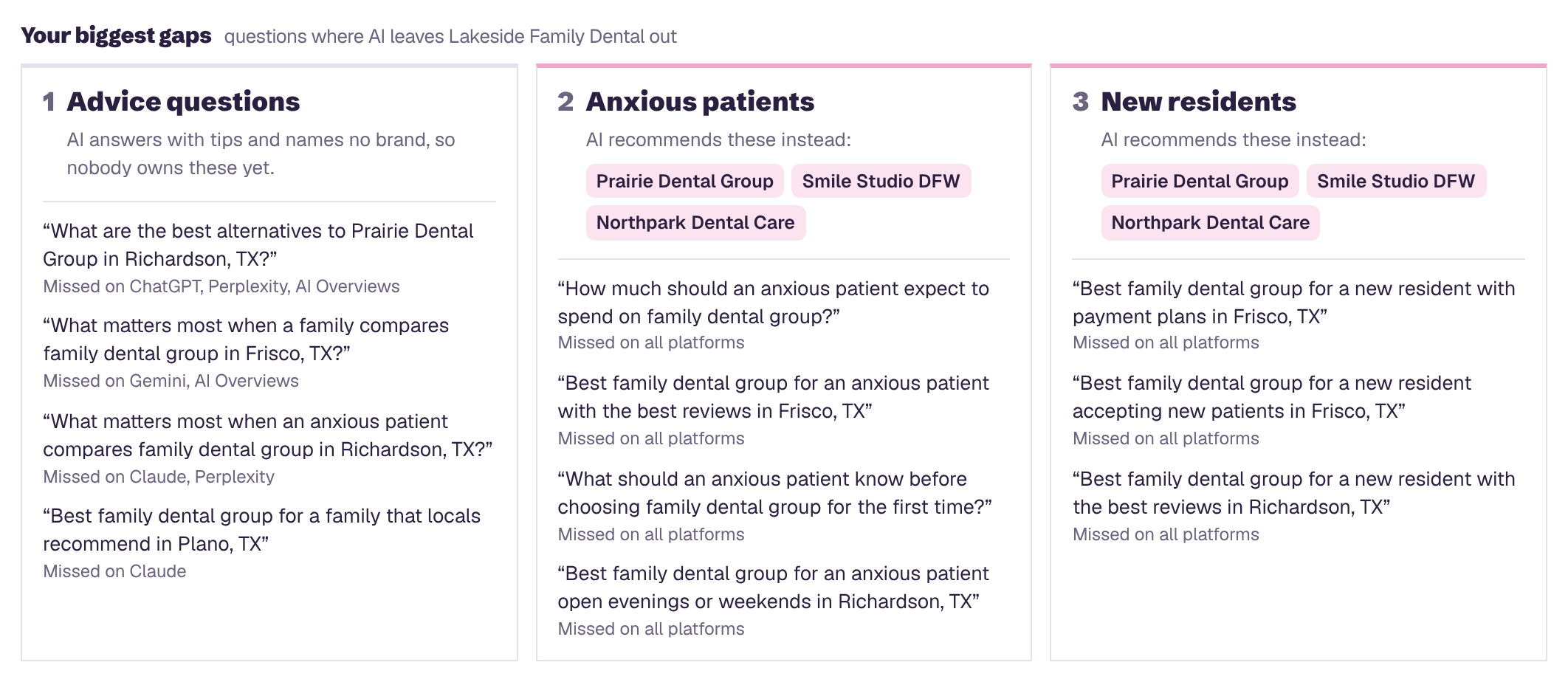
The gap is clearest side by side:
Telehealth and virtual care
Patients ask AI whether they can be seen virtually for things like rashes, prescriptions, urinary tract infections, mental health check-ins or follow-ups. If you offer telehealth, explain what it's for, which states or provinces you can see patients in, cost and insurance coverage, and how to book.
Occupational health and employer services
Employers ask AI about drug testing, physicals, workplace injury care and pre-employment screening near their sites. Many urgent cares serve this market. A clear page for employers, with services, turnaround times and billing, opens a valuable channel.
If you only fix three things
- Make hours, wait times and services impossible to get wrong. For every location.
- Publish insurance, self-pay prices and new-patient availability.
- Give every doctor and service its own detailed page. Interests, languages, X-rays, pediatrics, telehealth and more.
Patients are asking AI where to go right now and who will be their doctor for years. The practice AI names will be the one that answers both questions clearly.
Part of our guide: Why AI visibility matters for healthcare practices
See what AI tells patients about your practice
Enter your website and get a free AI visibility report. It takes a few minutes, and you'll see:
- Your AI visibility score, overall and for ChatGPT, Gemini, Claude, Perplexity and Google's AI Overviews and AI Mode
- Which practices AI recommends instead of you, and how often
- Your visibility in every city you serve, and the competitor AI names most in each one
- What AI gets wrong about you, and what to fix first
- Your biggest gaps: the buyer questions where AI leaves you out, and who it recommends instead
- A downloadable PDF you can share with your team